




Public Sector Fleet Management: Will Online Reverse Auctions Ultimately Replace Competitive Bidding in Government Procurement?
Approximately $151 million was spent by states using reverse auctions in fiscal year (FY) 2004. This dollar volume is anticipated to increase 300 percent by FY2007 to more than $450 million as more states adopt reverse auctions, according to a report released last December by INPUT, a government market intelligence company headquartered in Reston, Va.


Approximately $151 million was spent by states using reverse auctions in fiscal year (FY) 2004. This dollar volume is anticipated to increase 300 percent by FY2007 to more than $450 million as more states adopt reverse auctions, according to a report released last December by INPUT, a government market intelligence company headquartered in Reston, Va. The report finds that state agencies across the nation are exploring reverse auctions as a way to dramatically reduce expenditures on procurements. “Many states and some localities recognize these (reverse) auctions can save time and money when compared to the competitive bid process,” said Marcus Fedill, manager, state & local opportunity products at INPUT. According to the report, states considered to be early adopters of the reverse auction procurement process include Massachusetts, Minnesota, Pennsylvania, Texas, and Wisconsin. For those unfamiliar with a reverse auction, it allows prequalified bidders to watch online, in real-time, as competing suppliers make bids. Participating suppliers submit online successively lower bids against one another until the buyer accepts a final bid. The bidding process is live and is held for a defined period, usually an hour or so. However, multiple brief extensions are allowed if bidding is still active at the end of the initial time period or if the buyer requests a best and final offer. The U.S. General Services Administration (GSA) first implemented reverse auctions in FY03 and has seen a 12- to 48-percent savings over the past few years with the Defense Finance and Accounting service, Air Force, and Coast Guard. The first federal agency to use an online reverse auction was the U.S. Postal Service in 2000, when it awarded contracts for fuel and leases on truck trailers. The most recent reverse auction was held in January as part of the California Strategic Sourcing Initiative, which negotiated with car dealers to reduce their prices for police pursuit vehicles used by state and local public safety agencies. The new one-year contracts, awarded Jan. 26 to Folsom Lake Ford and Coalinga Motors, are projected to save state and local agencies a combined $1.1 million. The California Strategic Sourcing Initiative is an effort to improve the state's procurement system and obtain better values on goods and services the state is already buying. The Department of General Services is leading the California Strategic Sourcing Initiative with the support of fellow state agencies and consulting firms under contract to the state. In strategic sourcing, the buying organization conducts a detailed analysis of its purchasing patterns, market conditions, and available suppliers. Then it uses that information – plus new technologies and contracting techniques – to find the best values available in the marketplace. The two-part process used by California included an online reverse auction using an interactive computer system to allow for real-time bidding. The second part included negotiations with all participating dealers, which resulted in further price reductions. The new contracts call for California to pay $21,465 for each new Ford Crown Victoria Police Interceptor and $16,859 for each new Chevrolet Impala police package. The Crown Victoria Police Interceptor is used by the California Highway Patrol, which, ac-cording to state officials, hasn’t paid a price this low for new law enforcement pursuit vehicles since 1997. Reverse Auctions Turn Fleet into a Commodity
In the first years of its introduction, reverse auctions were successfully used by corporations to purchase commodities, such as raw materials. However, for the past four years, reverse auctions have been used by fleet operations to negotiate pricing for new-vehicle acquisitions. Also, some corporate commercial fleets are using reverse auctions to negotiate fleet management services. The biggest problem in using a reverse auction for new-vehicle pricing negotiations is that vehicles are not commodities since they do not share common option packages or configurations. Vehicles are highly configurable and different models do not match up identically among different manufacturers. In the case of traditional full-size vans, where there are currently only two manufacturers, some question the need for reverse auctions. In addition, reverse auctions can be misused if there is inadequate up-front planning, unclear term specifications, and ambiguous auction rules. However, proponents claim that reverse auctions can lower the cost of procuring products and services by as much as 20 percent. In order to harness the value of reverse auctions, you need to determine which products and services are most appropriate to acquire via this system. Let me know what you think. mike.antich@bobit.com
More Operations
What Fleet Managers Really Want From Vendors
From customer service frustrations and technology breakdowns to RFQs, change management, and the growing impact of turnover across the industry, this conversation pulls back the curtain on the real operational challenges fleet managers are navigating every day.
Read More →
Fleet Safety Masterclass: Industry Leaders on Storytelling, Strategy & Innovation
In this special masterclass episode, industry leaders break down what it really takes to build safer fleets in today’s increasingly distracted and data-driven world.
Read More →
Integrating Legacy Fleet Systems and Historical Data
In this episode, we bring together fleet and technology leaders to unpack the realities of data integration, system migrations, and the evolving role of AI in fleet management.
Read More →

From Resistance to Results: Change Management Strategies for Fleets
From new technologies and safety programs to evolving regulations, fleets are under constant pressure to adapt. But as Dr. Betz explains, success isn’t about the system you implement—it’s about whether your people actually use it.
Read More →
Where We're Headed: A Practical Look at AI in Fleet
Discover how AI is actually being deployed in fleets, not just marketed, including practical use cases and emerging risks.
Read More →
How Coca-Cola United Protects Its Fleet from Growing Legal Risk
Growing legal exposure can put fleets at risk. Here's one company's approach.
Read More →
Fleet Managers Think They Understand Their Costs. The Data Says Otherwise.
Most fleet managers say they have a strong handle on their costs, but new research from Bobit Business Media tells a different story. A 2026 survey of 190 fleet professionals reveals a widespread "confidence gap" where fragmented systems, disconnected data, and delayed reporting are leaving major blind spots hidden beneath the surface. Find out what the data actually shows.
Read More →
Cameras, Safety and Insurance: From Reactive Claims to Real-Time Prevention (Part 2 of 2)
Part Two: Commercial auto remains one of the most challenging and costly lines of coverage for fleet operators and insurers alike. Continue learning more about how to effectively address these issues from Onur Aksan, Enterprise Business Development Executive, Geotab
Read More →
New Trucks, AI & Summer Downtime | AF News Recap
From new truck updates to AI-powered driver coaching and summer maintenance tips, this week's fleet headlines are all about keeping things moving.
Read More →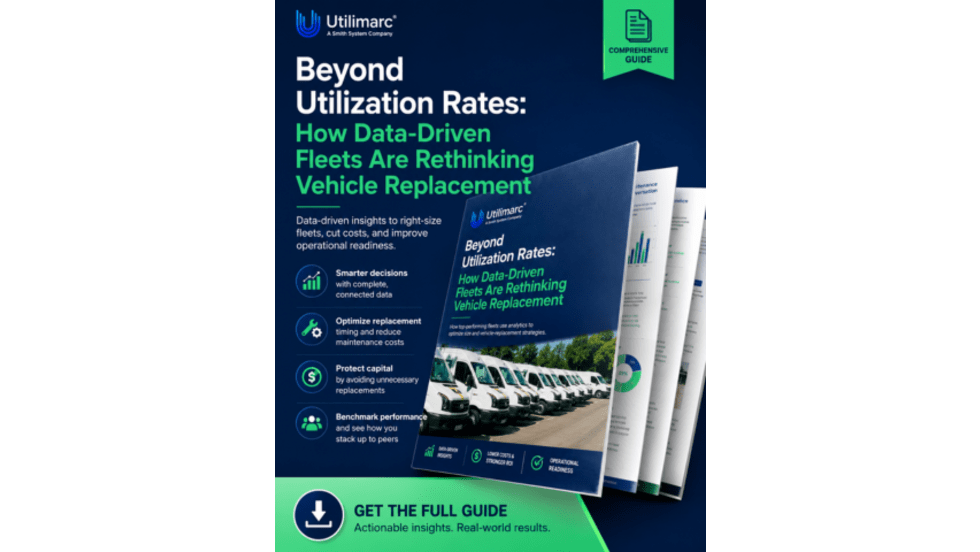
Beyond Utilization Rates: Smarter Fleet Replacement Decisions
Vehicle replacement decisions affect every aspect of fleet performance, from operating costs to asset availability. This guide explores how fleet leaders use integrated data, benchmarking, and lifecycle analytics to determine the right fleet size and optimize replacement timing with greater confidence.
Read More →