




Pros and Cons of ‘Right-Sizing’ Vehicles to Increase Fuel Economy
Reducing vehicle fuel consumption and increasing fuel economy is one of the top challenges for fleet. However, some veteran fleet managers caution to research before buying.


"Right-sizing" a fleet for better fuel economy requires considerable caution, since it can have its drawbacks as well as benefits. Many fleets, for example, have sought better economy from replacing larger trucks with smaller ones and/or switching to smaller-size power plants.
But, as the City of South San Francisco, Calif., discovered, smaller trucks may not always provide the room their operators require. In most instances, the City's switch from full-size pickups to compact four-cylinder Ford Rangers "worked out okay," said Keith Potter, public works supervisor for the City of South San Francisco.
However, where the Ranger's interior cab was too confining to accommodate, for example, the laptop computer and stand that service technicians required, officials were forced to switch back to full-size trucks.
SUV Hybrid: Popular, but Limited
The Hybrid Escape, Ford's small SUV, has gained considerable popularity as a means of improving economy, though its work capabilities are rather limited.
As one fleet manager, who has been replacing some of his vehicles with Hybrid Escapes, pointed out, "It's tough to find where the plug-in electrics will work."
Where used, hybrid trucks typically serve as transportation for work supervisors. Generally, the trucks are not very effective in improving fuel economy in work applications, where the truck must idle for lengthy periods or perform other work while idling. That's because the draw on the electrical system, such as running air conditioning, can eliminate the fuel economy benefits of the electrical backup.
Another fleet manager also pointed out that, "While there are a lot of grants out there for buying hybrids, I don't see the economical advantage at this moment. There are a lot of unknowns. And, when the lifecycle is up, what do you do with the battery? What about the cost of disposal? The environmental waste?"
New Eaton Technology
As one promising work truck alternative to conventional hybrids, Eaton has developed a new hydraulic launch assist system. Already tested by several fleets and most effective in stop-and-go applications, the system employs the truck's kinetic energy during braking to aid in launching and accelerating the truck.
It basically recovers most of the energy normally generated and then dissipated by the brakes, creating pressurized hydraulic fluid, which works to significantly improve fuel economy, as well as reducing emissions and prolonging brake life, according to company officials.
[PAGEBREAK]
Right-Sizing for 'Fleet Creep'
As part of its "right-sizing" effort to cut fuel and other costs, the City of San Diego trimmed its fleet by 300 vehicles to 3,850 this year -- the second such reduction in the past two years, according to John Alley, CAFM, former director of the fleet services division for the City of San Diego.
The latest fleet reduction provided savings of about $11.5 million, including an estimated 7-9 percent in fuel costs. Alley noted that, over time, "Most fleets are subject to 'fleet creep' where they start adding vehicles for whatever reason."
To counter that, the fleet services division studied vehicle utilization in its 37 different departments, based on either operating hours for those equipped with an OHM meter or mileage (odometer).
"In many cases, we found three vehicles could be consolidated into one crew vehicle or a multitude of vehicles could be pooled, rather than individually assigned," Alley said.
A similar, previous effort in 2009 yielded only a 50-vehicle reduction, because it was left up to discretion of individual departments. "When you leave it up to departments, they're reluctant to get rid of a vehicle," Alley noted.
The 2010 effort carried the authority of a directive from City officials, which made all the difference.
One Florida-based fleet similarly "right-sized" its fleet vehicles by scaling it back to 529 vehicles, according to its fleet manager. "The biggest thing we focused on is these vehicles only being used strictly for work."
Re-Thinking Diesels
Some fleets that purchased diesels to boost fuel economy, are now contemplating a switch back to gasoline engines for certain applications because of emissions system-related problems.
Essentially, on 2007 and 2010 models, the emissions system can become clogged with soot on a vehicle that idles or works at idle a great deal without running sufficient highway miles to compensate. That's because the systems require a certain operating temperature to burn off the soot and regenerate.
Vehicles, such as dump trucks that work extensively with a power take-off (PTO), are prime examples of where such problems have occurred.
New Designs Warrant Caution
When right-sizing for better economy, it pays not to jump into new designs and technology too quickly, one fleet manager cautioned.
"A few years ago, everyone -- UPS and a lot of other fleets -- were hot on the [one particular cargo van]. They got the fuel mileage, but also found out how expensive it could be to maintain. For fleets servicing their vehicles in-house, technicians used to working on Ford and GM vans got lost working on turbodiesel engines. Also, the parts were available only from selling dealers," he said, adding to their cost. "In addition, the van's hefty purchase prices, often running well into the $40,000 range, have now also given way to disappointing resale values."
All of these factors have the Florida-based fleet manager fully researching Ford's Transit Connect van, a vehicle he's been studying for quite some time.
"It could work," he said about the Transit Connect. "But I have to live with the choices I make for many years after. As an industry, we need three to four years' real use (proven road experience) before we can say whether it actually helped or not."
Compared to E-Series Ford vans, with a proven track record that has allowed his fleet to operate them for "well over 300,000 miles, 15 years-plus," the Transit Connect is still a "whole new vehicle," in his estimation.
Sources
Keith Potter, public works supervisor, City of South San Francisco. E-mail: keith.potter@ssf.net
John Alley, former director, fleet services division, City of San Diego.
More Green Fleet
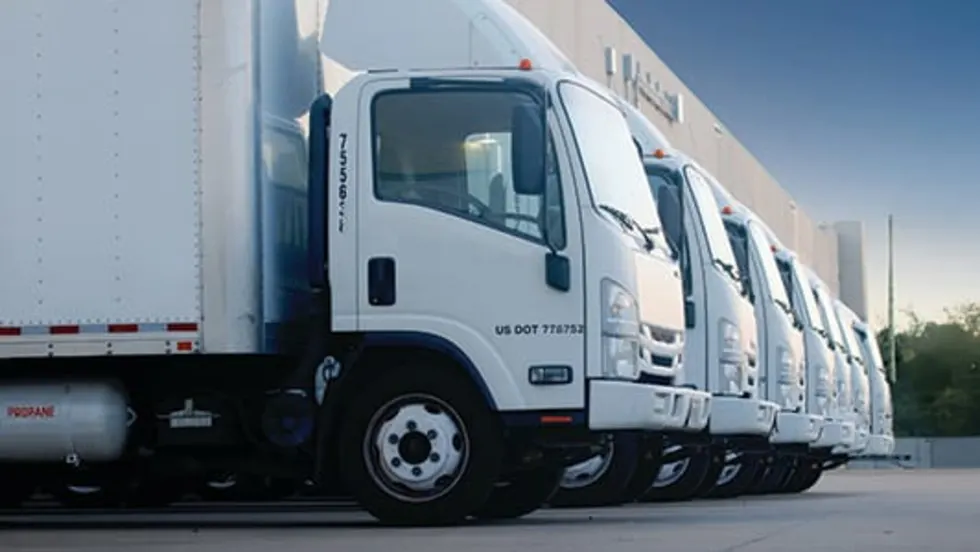
New Propane Autogas Program Offers Fleet Compensation
Qualified commercial fleets can receive $7,500 per eligible propane autogas vehicle and up to $10,000 for new refueling site prep. Learn how the program works and see whether your fleet qualifies.
Read More →
EV Charging Use Is Outpacing Infrastructure Growth
ChargePoint’s 2026 Charging Forward Report points to rising charger use, higher-powered charging, commercial vehicle electrification, and energy-management technology. Here’s what fleets should know.
Read More →
Merchants Fleet Reports 290M EV Miles as Fleets Navigate Changing Electrification Market
From millions in operating savings to hundreds of millions of EV miles, Merchants Fleet’s latest report reveals what’s working and what’s changing in fleet electrification.
Read More →
The EV Breakdown Nobody's Talking About: Why Most Electric Vehicle Roadside Calls Aren't Mechanical Failures
Here's why EV breakdowns are widely misunderstood.
Read More →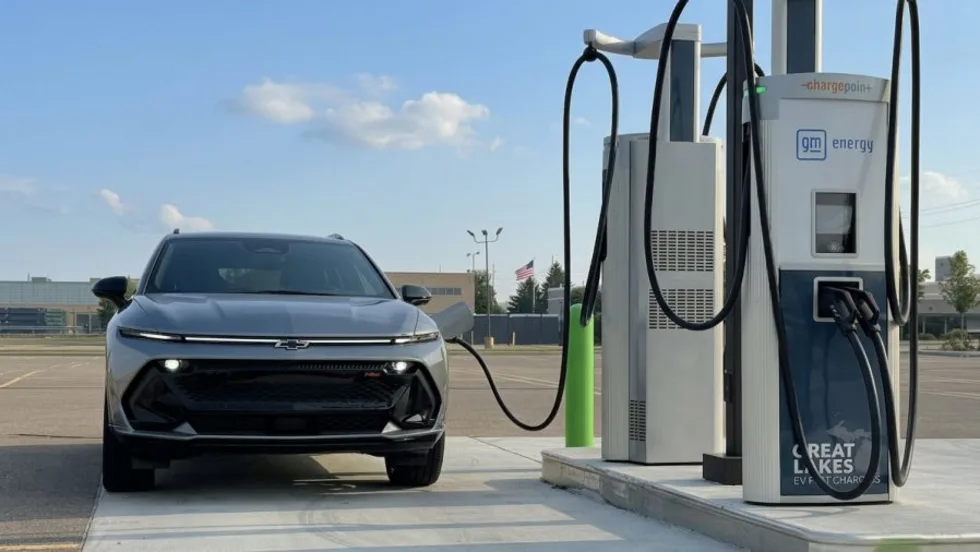
ChargePoint Now Available in Energy Pass
ChargePoint and additional planned charging network integrations were added to GM's Energy Pass.
Read More →
First Look: Slate Auto's Electric Fleet Pickup
Could an affordable, modular EV pickup make electrification more practical for fleets?
Read More →
Slate Debuts Colorful, Unique EV Models
A recent media and client event, studded with electric vehicles dressed up on platforms, planted a new position for the manufacturer in the wider EV market. Fleets will find cost-saving advantages.
Read More →
Slate Electric SUV, Pickup Switchable Model Aims For Light-Duty Fleets
Everything about this EV is counterintuitive and understated, making it stand out from the crowd.
Read More →
Inspiration Mobility Acquires Key Electrada Assets
Inspiration Mobility Group has acquired select assets of Electrada, adding the fleet electrification provider's team, technology, and charging infrastructure development capabilities to its energy management business.
Read More →