




Propane Autogas: Advantages Beyond Financial Incentives
Even beyond federal and state incentives, propane autogas proves a viable fuel source with lower greenhouse gas emissions and reduced fueling costs.
The advantages of alternatively fueled vehicles are appealing for many fleet operators today. Rising gasoline and diesel prices, along with directives to be more operationally and environmentally efficient, have prompted many fleet managers to take steps to incorporate these vehicles into existing fleets.
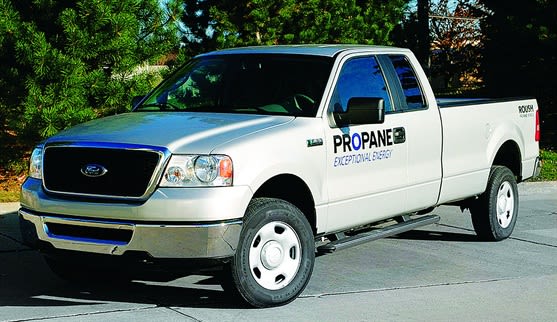
Vehicles fueled by propane autogas have equivalent horsepower, torque, and towing capacity as gasoline-fueled models, and emit 12-percent less carbon dioxide, about 20-percent less nitrogen oxide, and up to 60-percent less carbon monoxide than gasoline-fueled vehicles.
Federal and state incentives have allowed fleets to adopt alternatively fueled vehicles. President Barack Obama’s announcement of the National Clean Fleets Partnership in spring 2011, which encourages the use of clean, domestic energy, also encouraged this adoption. Because of these incentives, some fleet managers wonder if they will be able to afford these vehicles if, and when, the incentives expire.
The good news is that vehicles fueled by propane autogas offer advantages that allow these models to operate effectively with or without incentives.
Cost savings can come from multiple areas, including the fact that propane autogas burns cleaner than gasoline or diesel. Historical data also supports the typically lower cost of propane autogas compared to other conventional fuels.
The North American market for vehicles fueled by propane autogas is gaining momentum, as fleet managers realize it provides a cost-effective, and high-performing solution.
Considering All Factors
Some state and local government incentives support the adoption of vehicles fueled by propane autogas and create new opportunities in the market. In addition, the Propane Education & Research Council (PERC) and the propane industry have taken steps to develop a strong market that provides cost savings in many other ways.
A local propane provider can help fleet managers assess the savings potential of vehicles fueled by propane autogas for a given fleet, based on its unique needs.
PERC has taken proactive steps to establish the propane autogas market for sustainable growth and provide a solution to fleet managers seeking alternative options. Those efforts have just begun. PERC is increasing the amount of training available for propane providers and fleet managers, and, through continued outreach, has a goal to introduce more fleets to these cost-effeictive, high-performing vehicles. [PAGEBREAK]
Leading Alternative Fuel
Propane autogas is the nation’s third-most common vehicle fuel, after gasoline and diesel, fueling more than 270,000 on-road vehicles today in the United States, according to the U.S. Department of Energy (DOE). These include common fleet vehicles, such as work trucks, delivery vehicles, shuttles, vans, and buses. Worldwide, the number of vehicles fueled by propane autogas is more than 15 million.
The development of cost-effective technology has made vehicles fueled by propane autogas a viable option for fleets. With equivalent horsepower, torque, and towing capacity as gasoline-fueled models, these vehicles emit 12-percent less carbon dioxide, about 20-percent less nitrogen oxide, and up to 60-percent less carbon monoxide than gasoline-fueled vehicles. They also are easy to refuel with multiple types of onsite infrastructure available. Onsite refueling stations are compact and easy to install, with costs comparable to installing a gasoline or diesel refueling station.
Established Foundation
PERC is committed to research and development, safety, and training programs that help manufacturers bring new propane-autogas-fueled vehicles to market. PERC conducted market research with fleet managers, which has led to a comprehensive approach to propane autogas market development, including targeted product development, infrastructure expansion, outreach and training, and industry engagement.
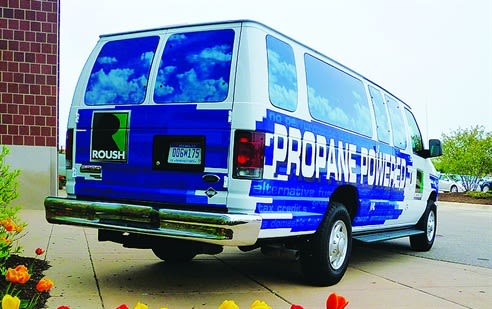
Propane autogas is the nation’s third-most common vehicle fuel, powering more than 270,000 vehicles today in the United States, according to the U.S. Department of Energy.
With funding support from PERC, companies such as ROUSH CleanTech and CleanFuel USA have developed clean, high-performance propane autogas systems for trucks, passenger vans, cargo vans, and cutaway vans with the same factory warranty coverage as comparable gasoline-fueled vehicles. Ford F-Series pickup trucks and chassis cabs, Ford E-Series vans and cutaways, and the Blue Bird Type A (Micro Bird) and Type C (Vision) school buses are offered by ROUSH CleanTech. The General Motors G4500 cutaway van and Collins Type A school bus (NEXBUS) are offered by CleanFuel USA.
The DOE has supported PERC’s initiatives through the development of programs that promote the use of alternative fuels. The Clean Air Act Amendments of 1990 has long recognized propane autogas as a uniquely domestic alternative-fuel source, as nearly 97 percent of propane autogas consumed in the United States is produced in North American. The department also has supported infrastructure expansion, workshop training, and grants for vehicle development, among other incentives. These initiatives have helped spread the reach of propane autogas, resulting in successful adoption by fleets across the country including ARS/Rescue Rooter, Wright & Filippis, SuperShuttle, and ThyssenKrupp Elevator Americas.
Vehicle manufacturers, propane providers, and PERC’s website (www.autogasusa.org) can provide further details.
About the Author
Steve Wayne is the chief technology officer for the Propane Education & Research Council (PERC). For more information, visit www.propanecouncil.org.
PERC was authorized by the U.S. Congress with the passage of Public Law 104-284, the Propane Education and Research Act (PERA), signed into law on October 11, 1996. PERC’s mission is to promote the safe, efficient use of odorized propane autogas as a preferred energy source through research and development, training, and safety initiatives.
More Green Fleet

Stop Remarketing Electric Vehicles Like Gas Cars
The advantages and attributes of electric vehicles are upending the traditional remarketing cycle, requiring fleet sellers to rely on new factors and approaches detailed below.
Read More →
Slate Debuts Colorful, Unique EV Models
A recent media and client event, studded with electric vehicles dressed up on platforms, planted a new position for the manufacturer in the wider EV market. Fleets will find cost-saving advantages.
Read More →
Slate Electric SUV, Pickup Switchable Model Aims For Light-Duty Fleets
Everything about this EV is counterintuitive and understated, making it stand out from the crowd.
Read More →
Inspiration Mobility Acquires Key Electrada Assets
Inspiration Mobility Group has acquired select assets of Electrada, adding the fleet electrification provider's team, technology, and charging infrastructure development capabilities to its energy management business.
Read More →
Turning Connected Vehicle Data Into Decisions That Matter
Fleet leaders have more data than ever, but turning that data into clear, actionable decisions remains a challenge. This white paper shows how leading organizations are using connected vehicle data to improve safety, reduce costs, and optimize fleet performance. Learn how to turn insight into action across your fleet.
Read More →
Are You Tracking Your Fleet's True Total Cost of Ownership?
Bobit Business Media surveyed 190 fleet professionals and found that while most fleets are tracking costs, fragmented systems and data gaps are keeping true TCO visibility out of reach. With rising pressure to control spend in an increasingly volatile environment, the gap between what fleets think they know and what the data actually shows is wider than you might expect. See how your peers are managing costs today and where the industry still has room to improve.
Read More →
Hybrids: Electrification Without the Challenges
For fleet managers, fuel is one of the biggest line items in the budget — and it's one hybrids can shrink without changing how your people work. Download the eBook to see the numbers, understand the technology, and get a step-by-step guide to making the switch.
Read More →
Startup ZMD Motors Developing Electric Conversion for Ram 5500 Work Trucks
Detroit-based company says it has begun early development of a system to convert internal combustion Ram 5500 chassis-cab trucks to electric power.
Read More →
U.S. EV Adoption Is Climbing, but Commercial and Passenger Markets Diverge
New industry group data revealed that light-duty electric vehicle sales are hitting record market share and volumes, while commercial EV volume dipped. What’s driving the fluctuations?
Read More →
How To Upfit Electric Work Trucks and Vans
The biggest challenge lies in balancing additional equipment and accessories with EV battery capacity and range.
Read More →