




Pandemic Survival: Adjusting Fleet on the Fly
To weather the coronavirus pandemic, this auto parts delivery service is sourcing new crisis-related contracts, conserving cash flow, and reexamining employee policies.

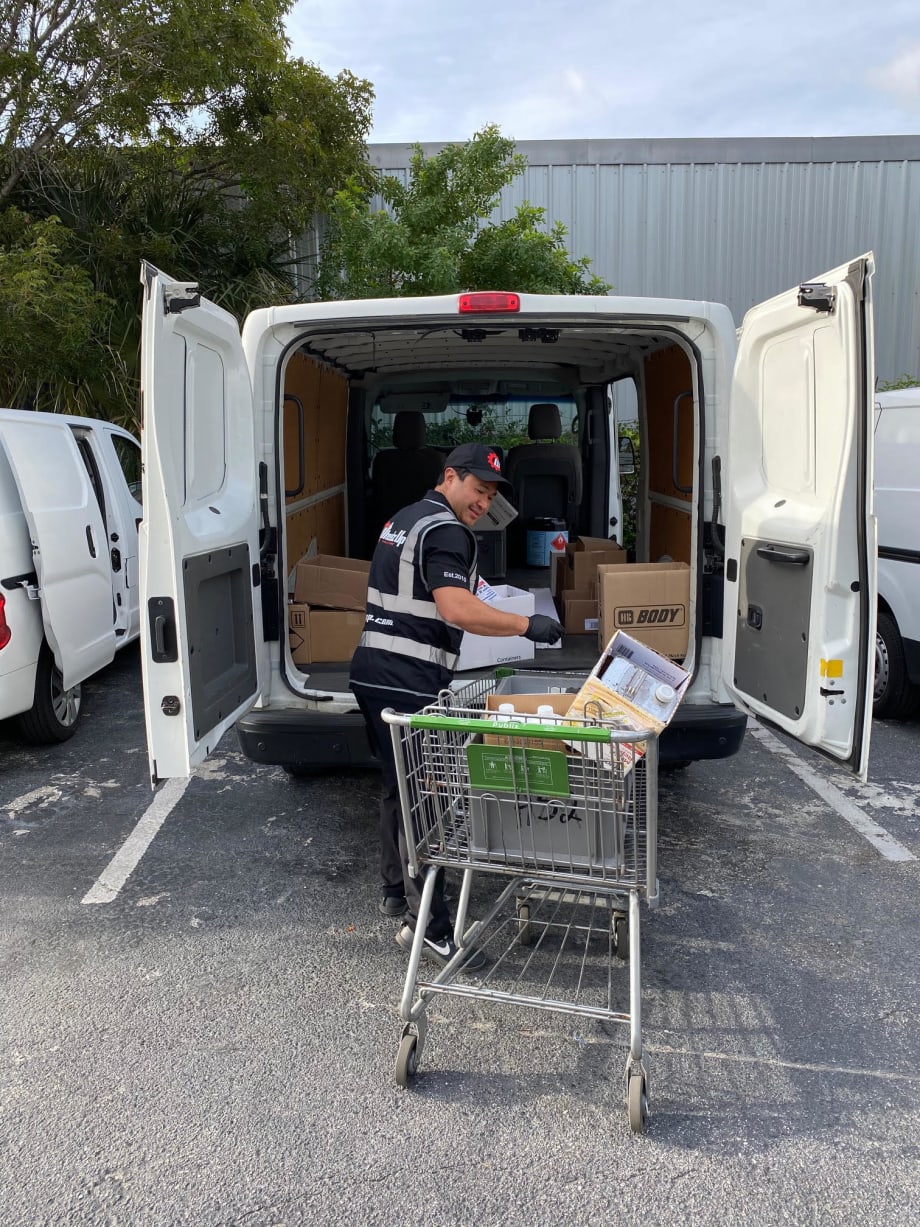
Jeb Lopez owner and founder of Wheelz Up, loads paint supplies for a customer delivery. Lopez started Wheelz Up in 2010. The company delivers auto parts using Ford Transit and Nissan NV cargo vans serving markets in Texas, New York, Florida, California, and Washington, D.C.
Photo courtesy Jeb Lopez.
Jeb Lopez, founder and CEO of Wheelz Up, has grown his auto parts delivery business from a handful of vans in 2012 to over 200 today in four states. As a small business owner, he realizes the need to stay prepared for an economic slowdown. But a worldwide pandemic? It’s new territory.
Right now, his clients — dealerships, parts supply stores, and auto repair shops — still want and need automotive parts to fix vehicles. “I've spoken to probably about 40% of my clients, and right now, even though they're experiencing a little slowness, they’re still a buying a ton of stuff,” Lopez says. “All our deliveries are still active.”
A few things are working in Wheelz Up’s favor, at least for now: His clients are preparing for the potentiality that public transit would cease, forcing more auto travel. Last-mile deliveries have spiked in the wake of restaurants and public shopping shutdowns. At this point, vehicles of all types still need parts to stay on the road.
“People still need to travel,” he says.
That could change: With “shelter in place” edicts already taking hold in Northern California counties, Lopez wonders if his fleet will be grounded along with every other vehicle on the road. Even without government intervention, last-mile services could wane with a supply chain disruption. There are reports that restaurant and grocery delivery services are overwhelmed by demand.
But for now, he’s adjusting on the fly. As a result of the coronavirus crisis, Wheelz Up picked up a large, no-bid local government contract in Virginia to deliver emergency supplies to government offices. He’s preparing to put out the word to other entities that might delivery services.
Preparation Meets Opportunity
The saying, “Luck is what happens when preparation meets opportunity” applies to his business, Lopez says. From having delivery vans ready to roll at a moment’s notice, a network of experienced drivers and backup drivers, as well as robust logistics and telematics systems in place, Lopez says Wheelz Up can take advantage of unexpected opportunities.
At the end of every year, Lopez reviews the company’s handbook and policies in preparation for times like these. “This is when they (employees) start to ask questions about their benefits and whether they can file for the Family Leave Act, and each state has different policies,” he says.
In terms of internal health and safety, Lopez is making his delivery drivers wear gloves, though he’s encountering some pushback.
Before the crisis he overordered an industrial supply of hygienic cleaning wipes. Each driver carries those along with a spray bottle mixed with water, vinegar, and alcohol to wipe down their vans’ interiors.
Lopez has directed his drivers to not report to work for a 14-day period if they’re experiencing any cold or flu symptoms. As a business that comes in physical contact with clients, the possibility to spread a sickness is untenable, and a client in contact with a sick driver can sink his reputation.
But it’s not an easy situation to manage. “They don’t want to call in sick, because they need the money,” he says. “Some of them live hand to mouth.”
Lopez is anticipating having to reduce his driver pool as his clients start to slow down. He hasn’t come to the point where he’ll need to furlough them, but he’ll have to consider this eventuality.
In the meantime, he’s trying to conserve cash flow. This means making sure fleet vehicles are roadworthy yet pausing non-essential repairs and grounding vehicles that need major work. Lopez contacted his lender and was able to get a one-month delay in payments on his fleet of cargo vans.
For now, Lopez believes he’s doing the right things to survive and put him in a position to outlast his competitors.
“The companies who really can't survive in a crisis like this will die and those companies who really have their (stuff) together, they’ll survive and even control more market share,” he says. “This is a good time to invest in the survivors and learn something new.”
Originally posted on Work Truck Online
More Operations
A buyer's guide to fleet management software in 2027
Buying fleet management software in 2027 means looking beyond features and price. As fleet operations, technology and expectations evolve, this guide explores what today’s fleet professionals should consider when choosing a system that can deliver value now and adapt to what comes next.
Read More →
What Will Shape the Next Era of Fleet Management?
EVs, AI, and autonomous vehicles are reshaping fleet management. Discover what’s ahead—and how fleet leaders can prepare for the next era.
Read More →
How Fleets Can Recruit and Train Veterans for Technician Roles
Here's how the technician shortage has affected uptime for fleets, and what to do about it.
Read More →

Avis Budget Group Deploys Neology Toll Management Technology Across Major Brands
Neology’s neoFleet platform will manage toll transactions and toll-authority operations for vehicles across Avis, Budget, Payless, Budget Truck and Zipcar.
Read More →
Fleet Personal-Use Charges Edge Higher in 2026
Nearly eight in 10 surveyed fleets allow personal use of company vehicles, while just over half of respondents report charging employees for the privilege.
Read More →
The Future of Fleet + What’s Changing Right Now | AF News Recap
Could developments overseas offer a preview of what’s coming for U.S. fleets? This week, we’re looking at the future of AI, autonomy, and electrification, plus Ford Pro’s new certified pre-owned program, smarter vehicle offboarding, and a new way for fleets to manage toll expenses.
Read More →
How to Handle Vehicle Offboarding
What do fleet managers need to do when a driver leaves?
Read More →
Fleet Manager’s Ultimate Playbook: Navigating the New Standard in OEM Connectivity
Rising operating costs, driver safety concerns, and unplanned downtime are putting unprecedented pressure on modern fleets. Discover how fleet managers use embedded OEM connectivity and real-time vehicle data to cut TCO, prevent downtime, and protect drivers without aftermarket telematics hardware.
Read More →
U.S. Bank Adds Verra Mobility Toll Management to Voyager Fleet Platform
The integration allows U.S. Bank Voyager fleet customers to manage toll payments and violations alongside fuel, EV charging and maintenance expenses.
Read More →
ADAS Prevents Crashes. But Repairs Cost More | AF News Recap
ADAS-equipped vehicles may crash less often, but they can cost more when they do. This week, we’re breaking down what that tradeoff means for fleets, plus Subaru’s first Forester Wilderness Hybrid, Nissan’s new e-POWER Rogue, and why Calstart has become Catalyst Mobility.
Read More →