




Order-to-Delivery Time Continues as a Top Fleet Concern
The National Association of Fleet Administrators (NAFA) Foundation’s first-ever Fleet Customer Satisfaction study shows that most fleets intend to re-purchase from their current manufacturer.
Asked in a survey what satisfies them the most about their dealings with automobile manufacturers, fleet managers answered, “condition of vehicles at the time of delivery.” What satisfies them the least? It’s “length of time from order to delivery.”
Those responses came from a first-ever survey conducted by the National Association of Fleet Administrators (NAFA) Foundation, in which fleet managers from large and small fleets across the U.S. and Canada scored and ranked the quality of services offered by General Motors, Ford, and DaimlerChrysler. The manufacturers in the past have conducted their own separate customer satisfaction surveys.
The Foundation study, implemented by BI, a performance improvement agency based in Minneapolis, will be the first in a series of annual fleet customer satisfaction studies it will conduct to allow vehicle manufacturers to benchmark their service offerings with other manufacturers.
“And hopefully, their improvement will ultimately benefit fleet managers,” said Jim Anselmi, director of fleet operations and travel for Lorillard Tobacco Co., who is president of the Foundation.
“Next year, we’ll do a year-to-year study to see where there are improvements or slippage,” he said. In comparing the three manufacturers in the survey, Anselmi said the three were close in many of the rankings. “All of them provide good service, but there is room to improve,” Anselmi said. The Foundation on Dec. 14 and 15, 2000 presented the survey’s findings to the top fleet staff at GM, DaimlerChrysler, and Ford. “They indicated they planned to take the information to their upper management and also to their managers and field people,” Anselmi said.
Primary Fleet Contact Most Important to Satisfaction One of the survey’s questions asked which factors most influence fleet customer satisfaction of the vehicle manufacturers. Thirty-three percent answered “Primary fleet contact” as their top choice, followed by 28 percent who answered, “vehicle qualities.”
“We knew that business was based on relationships, but this really drives that home,” Anselmi said. Along those same lines, the survey also asked, “What could your primary fleet contacts do to improve their level of service? “ More than half answered, “Communication.” That was followed by “More regular or frequent in-person contact.”
Fleets were satisfied, however, with the buyer’s guides put out by their manufacturers. Asked to rate their manufacturers’ buyer’s guides on a scale of one to five, the buyer’s guides ranked at 3.7 for ease of understanding content, and for avail-ability of information. Fleet managers responding to the survey were only mildly satisfied with manufacturer Web sites. On a scale of one to five, the sites overall received rankings of 3.5 for ease of access, usefulness and ease of navigation, and a 3.4 for product information available.
Satisfaction was slightly higher for the manufacturers’ information centers, receiving a 3.7 for knowledgeable representatives and hours of operation, and 3.6 for usefulness of product information available and representatives’ ability to resolve problems. Manufacturers received a positive ranking when the fleet managers were asked to rate their overall experience with their manufacturer, receiving a 3.7 overall mark out of five. Eighty-two percent said they were either likely or very likely to re-purchase from their current manufacturer. Seventy-four percent said they were likely or very likely to recommend their current manufacturer to others.
Survey Participants Come from All Sectors
Commercial Fleet: 55%
Public Service/Government: 17%
Leasing Company: 10%
Utility: 8%
Other: 10%
The average fleet size of the survey participants in all sectors was 1,789.
Primary Fleet Contact Most Influences Customer Satisfaction
Primary fleet contact:33%
Vehicle qualities: 28%
Buyer’s guide: 12%
Web site: 10%
Timing: 9%
Information: 8%
The quality of vehicles received is a big influence toward fleet customer satisfaction.
82% Intend to Repurchase from their Present Manufacturer
DaimlerChrysler 74%
Ford 88%
General Motors 81%
Total 82%
Responsiveness & Understanding Needs will Increase Satisfaction
1. Primary fleet contact’s responsiveness
2. Primary fleet contact understands my specific needs.
3. Primary fleet contact is accessible.
4. Primary fleet contact’s ability to solve problems.
5. Quality of vehicles.
6. Primary fleet contact is knowledgeable about own products.
7. Value for the money you paid.
8. Primary fleet contact conducts business in a professional manner.
9. Primary fleet contact knowledgeable about competitors’ products.
10. Vehicles meet your specific needs. The primary fleet contact’s responsiveness led the way when fleet managers were asked what should be the top priorities for improvement.
Fleets Most Satisfied with Vehicle Condition
1. Condition of vehicles at time of delivery.
2. Primary fleet contact conducts business in a professional manner.
3. Primary fleet contact is knowledgeable about his or her own products.
4. Vehicles meet your specific needs.
5. Optional features available. The value of relationships is especially important in the fleet industry. When asked to list what manufacturer attributes gave them the most satisfaction, fleet managers ranked professionalism of the primary fleet contact as the second highest.
More Operations

Top 50 Executive Fleets
It is that time of year again! Time for the 2026 list of the Top 50 Executive Fleets, presented by Automotive Fleet and Volvo as part of its annual Fleet 500. Download now to see this year's list of companies!
Read More →
Gary Van Orden Retires After Nearly Four Decades in Commercial Fleet
From answering customer calls at Ford Motor Company to leading fleet sales across multiple OEMs and a fleet management company, Gary Van Orden's career reflects nearly four decades of leadership in commercial fleet.
Read More →
How Stellantis Plans to Get Ahead of Fleet Downtime
Vehicle acquisition may grab the headlines, but fleet uptime increasingly determines operating success. Darren Bradshaw of Mopar North America gives the details.
Read More →
Hyundai Releases 2027 Commercial Program Incentives
The 2027 Model Year "Fleet Street Incentives" are available to commercial and government fleets.
Read More →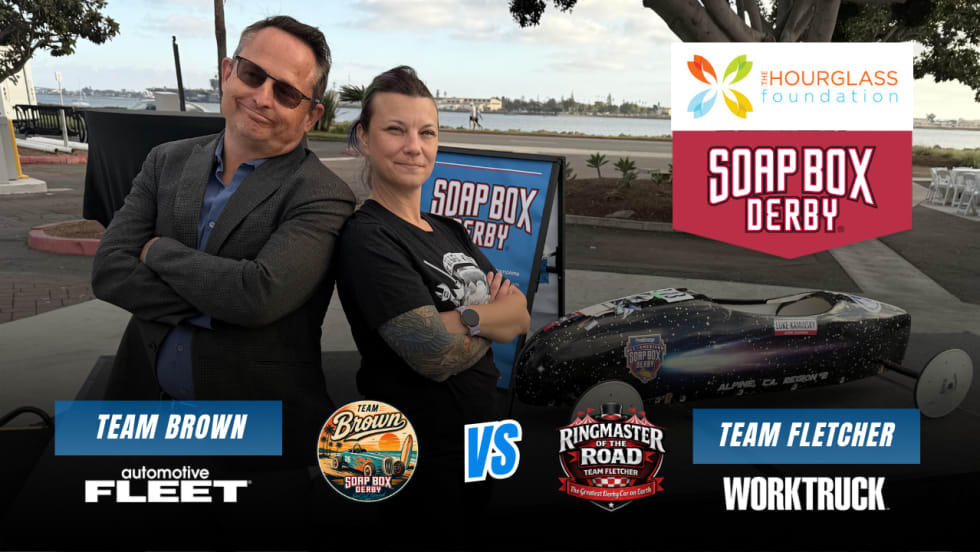
It's All Downhill from Here! Fleet Industry Raises $22,000 for Skilled Trades Scholarships
Work Truck’s Lauren Fletcher and Automotive Fleet’s Chris Brown turned a friendly racing rivalry into $22,000 for automotive technology and skilled trades scholarships.
Read More →
The Top 300 Commercial Fleets
The Top 300 Commercial Fleets: See the List
Read More →

Your Local Dealer Knows More Than You Think
Your local dealer can provide an information advantage that extends well beyond courtesy deliveries.
Read More →
Fleet Meets: Austin Schutte
Here are some industry insights, personal touches, and words of advice from the CEO and Founder of Anew Solutions.
Read More →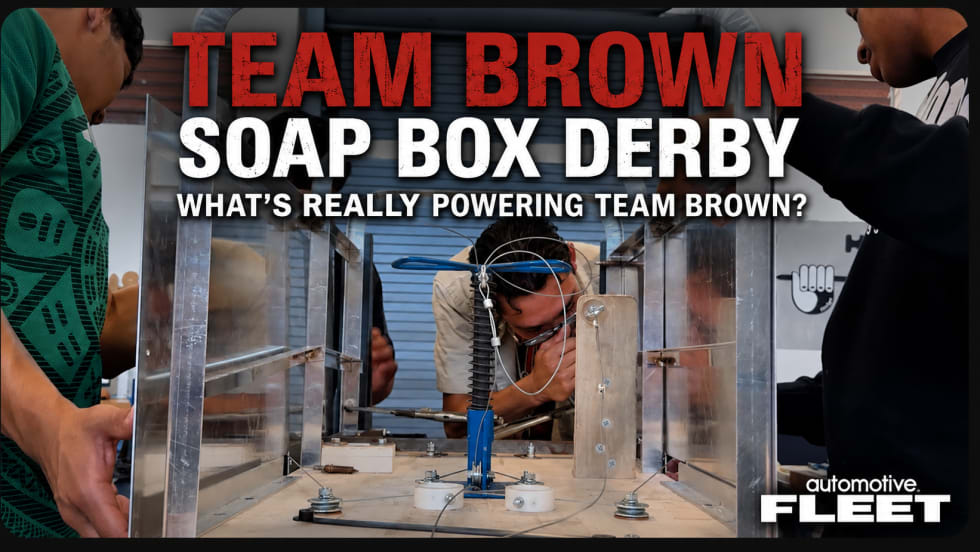
Soap Box Derby Challenge: What’s Powering Team Brown
The car is coming together, the students are solving real build problems, and the fleet industry is helping push Team Brown toward the starting line.
Read More →