





Related: Vehicle Makers Extend Production Downtime at North American Factories
Open for Fleet Business
Kevin Sullivan’s dealerships are still processing fleet orders and he’s got plenty of inventory, though that might not last. With factory shutdowns, “Everything's been canceled.”
April 13, 2020
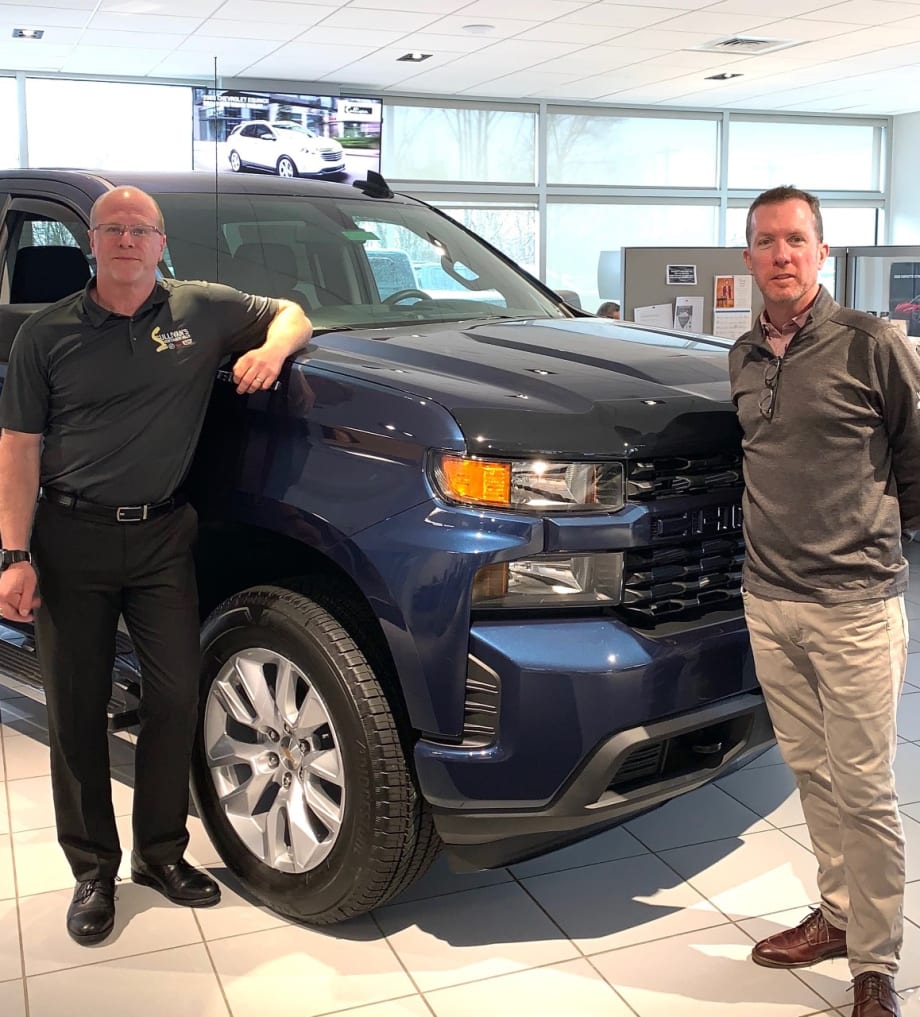
Kevin Sullivan (right) stands with Warren Ford Jr., fleet, government and municipal sales manager. Sullivan is co-owner of O’Neill’s Chevrolet Buick, Sullivan's Northwest Hills Chrysler Jeep Dodge Ram, Sullivan Honda, and Northwest Hills Chevrolet, Buick, GMC, Cadillac. The dealerships serve Central Connecticut.
Photo courtesy Kevin Sullivan.
3 min to read
Kevin Sullivan, co-owner of a family-owned, multi-franchise dealer group serving Central Connecticut, is still doing fleet business during the coronavirus pandemic — though it’s feast or famine depending on sector.
Corporate fleet business is at a standstill, though some small commercial business is moving along. While the state ordered non-essential work to shut down on March 17, construction was deemed essential. Sullivan’s dealerships are serving contractors that are able to work within the state’s shelter-in-place guidelines, he says.
As an authorized vendor for the State of Connecticut, most of Sullivan’s fleet business — before and during the pandemic — comes from the government, particularly police departments. “We're in the process of completing some large orders for police cruisers,” he says.
A Changed Process
Sullivan, who co-owns the dealerships with his brothers Sean and Tim, are still getting vehicles to fleet customers, though “The whole process has changed,” he says.
In keeping with what has in just a couple of months become industry standard protocol, the dealerships have instituted contactless vehicle exchanges with night drops or arranging to leave keys in the car. Physical vehicle inspections have been suspended. Paperwork is solely handled through the mail and email.
When vehicles need human handling, they’re cleaned each time a worker enters and exits. Touchpoints are sanitized with an antibacterial spray and disposable covers are used on the steering wheels, shifters, and seats.
The safety protocols aren’t just for theoretical occurrences: “We have run into some (police) departments that have been clearly hit by the coronavirus,” he says. “They've got many members of their staff out.”
The dealerships’ service and parts departments are open, where social distancing is less of an issue because of service staff furloughs. The dealerships haven’t yet had parts supply issues, “But we are anticipating that to be a problem,” Sullivan says.
In terms of aftermarket installations, Sullivan’s dealerships work mostly with upfitters of police cruiser packages and they “seem to be rolling as normal.”
Sullivan is okay with taking consumer trade-ins, though dealer-to-dealer trades are virtually nonexistent now. “Nobody wants an outsider on their property swapping cars,” Sullivan says.
Days’ Supply
To Sullivan’s knowledge, other dealerships in his area haven’t shut down completely but have furloughed much of their workforces.
For now, as retail sales have all but dried up, Sullivan has metal ready to move.
Some auto manufacturers were dealing with oversupply issues before the pandemic hit. Sullivan’s dealerships came into the crisis with five to six months of inventory on hand, more than the normal plan of three to four months, he says. He expects April and May retail sales to come in 50% to 60% short of a typical month.
“This could be an opportunity to reduce the inventory,” Sullivan says, noting that he could run into shortages if factories remain idle for too long. “I've got nothing in the pipeline after 60 to 90 days. Everything's been canceled.”
The large auto dealer groups have made headlines with mass employee furloughs, and Sullivan’s dealerships were forced into the same boat. Sullivan says his biggest struggle right now is balancing employee levels while managing federal stimulus money that will put the business in the best position to move forward.
“The hardest part is looking a longtime employee in the eye and saying, hey, unfortunately I don't have enough work to keep you busy,” he says. “I have to furlough you.”
“It takes time to gather good, valuable employees.”
Originally posted on Work Truck Online
Subscribe to Our Newsletter
More Operations

Sponsored•October 14, 2026
A buyer's guide to fleet management software in 2027
Buying fleet management software in 2027 means looking beyond features and price. As fleet operations, technology and expectations evolve, this guide explores what today’s fleet professionals should consider when choosing a system that can deliver value now and adapt to what comes next.
Read More →
What Will Shape the Next Era of Fleet Management?
EVs, AI, and autonomous vehicles are reshaping fleet management. Discover what’s ahead—and how fleet leaders can prepare for the next era.
Read More →
How Fleets Can Recruit and Train Veterans for Technician Roles
Here's how the technician shortage has affected uptime for fleets, and what to do about it.
Read More →

Avis Budget Group Deploys Neology Toll Management Technology Across Major Brands
Neology’s neoFleet platform will manage toll transactions and toll-authority operations for vehicles across Avis, Budget, Payless, Budget Truck and Zipcar.
Read More →
Fleet Personal-Use Charges Edge Higher in 2026
Nearly eight in 10 surveyed fleets allow personal use of company vehicles, while just over half of respondents report charging employees for the privilege.
Read More →
The Future of Fleet + What’s Changing Right Now | AF News Recap
Could developments overseas offer a preview of what’s coming for U.S. fleets? This week, we’re looking at the future of AI, autonomy, and electrification, plus Ford Pro’s new certified pre-owned program, smarter vehicle offboarding, and a new way for fleets to manage toll expenses.
Read More →
How to Handle Vehicle Offboarding
What do fleet managers need to do when a driver leaves?
Read More →
Sponsored•October 1, 2026
Fleet Manager’s Ultimate Playbook: Navigating the New Standard in OEM Connectivity
Rising operating costs, driver safety concerns, and unplanned downtime are putting unprecedented pressure on modern fleets. Discover how fleet managers use embedded OEM connectivity and real-time vehicle data to cut TCO, prevent downtime, and protect drivers without aftermarket telematics hardware.
Read More →
U.S. Bank Adds Verra Mobility Toll Management to Voyager Fleet Platform
The integration allows U.S. Bank Voyager fleet customers to manage toll payments and violations alongside fuel, EV charging and maintenance expenses.
Read More →
ADAS Prevents Crashes. But Repairs Cost More | AF News Recap
ADAS-equipped vehicles may crash less often, but they can cost more when they do. This week, we’re breaking down what that tradeoff means for fleets, plus Subaru’s first Forester Wilderness Hybrid, Nissan’s new e-POWER Rogue, and why Calstart has become Catalyst Mobility.
Read More →