




Nissan Enters Commercial Vehicle Market with Nissan NV
Nissan’s first entry into the commercial vehicle market in North America, the 2012 Nissan NV (Nissan Van), will be available in three models and two roof configurations.

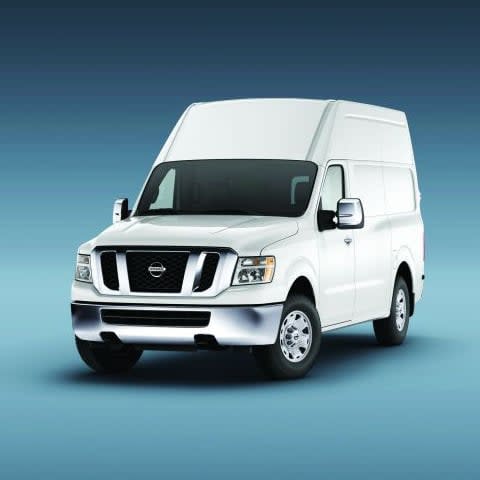
The Nissan NV high roof model provides easy cargo area ingress and egress, comfortable walk-through, and standing capability.
The 2012 Nissan NV (Nissan Van) marks Nissan's first entry into the commercial vehicle market in North America. Scheduled to launch in early 2011, the Nissan NV will be available in three models, NV1500, NV2500 HD, and NV3500 HD, and in two roof configurations - standard roof and high roof. The NV is the first high roof commercial van to offer body-on-frame construction, according to the company.
NV Designed for Practicality
The NV combines a full-length hood with access to the engine for service and maintenance, along with signature Nissan styling cues such as large headlights and vertical grille. Broad bodysides project a commercial vehicle appearance and provide ample room for company logos or advertising messages. Tall, wide doors offer easy access to the cab and cargo areas.
Standard roof models fit most garages, drive-through lanes, and car washes. High roof models provide easy cargo area ingress and egress, comfortable walk-through, and standing capability.
Roomy Interior Provides Ample Storage Space
Inside the cab is a roomy, comfortable interior with wide, supportive seating and an expansive instrument panel. The passenger seat includes a segment-exclusive fold-down feature, providing a convenient worktable. An available center console offers storage compartments and space to hold binders and a laptop computer. Other convenient storage spaces include a wide overhead console (available with high roof models) and large door pockets. The interior is fitted with heavy-duty fabrics and materials, with water repellant fabric on main seating surfaces. In addition, there are multiple power outlets, including an available three-prong 120V outlet.
The Nissan NV includes a long, wide cargo floor, square-top wheelwell housings, and nearly vertical sidewalls that maximize cargo space and accommodate aftermarket storage systems without excessive modification. The cargo area also features a full-length inner panel to prevent cargo from denting the vehicle's outer skin. Multiple weld-nut attachment points can be used for mounting shelving and racks.
Engines Combine Power and Fuel Efficiency
Powering the rear-wheel drive Nissan NV will be a choice of two powerful, yet fuel-efficient engines - a 4.0L 24-valve V-6 and 5.6L 32-valve V-8. Both will be mated to a standard 5-speed automatic transmission.
Other features include independent front suspension with stabilizer bar and solid rear axle with leaf springs and stabilizer bar. The hydraulic recirculating ball steering system is engine-speed sensitive. Heavy-duty four-wheel disc brakes feature 14.1-inch rotors and four-wheel anti-lock braking system (ABS). The vans are also equipped with 17-inch steel wheels and LT245/70R17 all-season tires.
The vans come standard with the Nissan advanced air bag system, which includes dual-stage front supplemental air bags with seat belt sensors. Three-point front seat belts have pretensioners and load limiters. Supplemental front seat-mounted side-impact air bags and roof-mounted supplemental curtain air bags are also available.
The new Nissan NV will be manufactured at the automaker's Canton, Miss., assembly plant.
More Operations

How Fleets Can Recruit and Train Veterans for Technician Roles
Here's how the technician shortage has affected uptime for fleets, and what to do about it.
Read More →
Avis Budget Group Deploys Neology Toll Management Technology Across Major Brands
Neology’s neoFleet platform will manage toll transactions and toll-authority operations for vehicles across Avis, Budget, Payless, Budget Truck and Zipcar.
Read More →
Fleet Personal-Use Charges Edge Higher in 2026
Nearly eight in 10 surveyed fleets allow personal use of company vehicles, while just over half of respondents report charging employees for the privilege.
Read More →
The Future of Fleet + What’s Changing Right Now | AF News Recap
Could developments overseas offer a preview of what’s coming for U.S. fleets? This week, we’re looking at the future of AI, autonomy, and electrification, plus Ford Pro’s new certified pre-owned program, smarter vehicle offboarding, and a new way for fleets to manage toll expenses.
Read More →
How to Handle Vehicle Offboarding
What do fleet managers need to do when a driver leaves?
Read More →
Fleet Manager’s Ultimate Playbook: Navigating the New Standard in OEM Connectivity
Rising operating costs, driver safety concerns, and unplanned downtime are putting unprecedented pressure on modern fleets. Discover how fleet managers use embedded OEM connectivity and real-time vehicle data to cut TCO, prevent downtime, and protect drivers without aftermarket telematics hardware.
Read More →
U.S. Bank Adds Verra Mobility Toll Management to Voyager Fleet Platform
The integration allows U.S. Bank Voyager fleet customers to manage toll payments and violations alongside fuel, EV charging and maintenance expenses.
Read More →
ADAS Prevents Crashes. But Repairs Cost More | AF News Recap
ADAS-equipped vehicles may crash less often, but they can cost more when they do. This week, we’re breaking down what that tradeoff means for fleets, plus Subaru’s first Forester Wilderness Hybrid, Nissan’s new e-POWER Rogue, and why Calstart has become Catalyst Mobility.
Read More →
Moventum Fleet Management Names Mark Iorillo Head of Sales
Iorillo brings nearly 20 years of fleet management and sales experience to the role, including previous positions at Element Fleet Management, CEI, Donlen and Ryder.
Read More →
Fleet Has a Talent Pipeline Problem. What Comes Next? | AF News Recap
Where will fleet’s next generation of leaders come from? This week, we’re looking at the industry’s talent pipeline, what certification can add to a fleet career, how to build an award-worthy track record, and the return of Automotive Fleet’s Personal Use Survey.
Read More →