




New Fleet Procurement Practices Nets McKesson $1.3 million in savings
A combination of building strong relationships with internal and external stakeholders, as well as implementing six key fleet operational strategies, has made the health care giant’s fleet become more efficient.


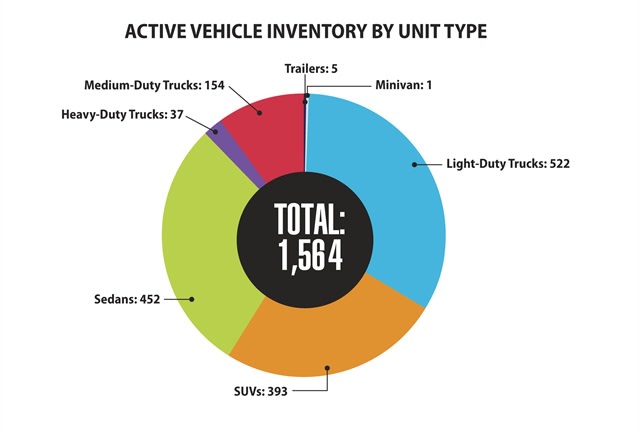
San Francisco-headquartered McKesson operates a nationally dispersed fleet, which includes sedans; light-, medium-, and heavy-duty trucks; SUVs; and minivans.
Efficiency is the keystone of any successful business operation. For McKesson, a health care company whose roots stretch back more than 180 years, its efficient fleet operations has netted not only better service for its customers, but an improved bottom line as well.
McKesson’s fleet consists of more than 1,500 vehicles. Makes and models driven
by the sales, route delivery, and distribution center delivery personnel include:
Ford E-150, E-250, Fusion, and Escape.
Jeep Compass.
Chevrolet Express 2500 and Malibu
Chevrolet Equinox and Impala.
Chrysler 200.
Freightliner M2.
Focusing on Safety, Reliability & Value
McKesson’s fleet program has two overriding priorities. The first priority is the safety of the employees. Second is ensuring a reliable fleet.
McKesson’s strong fleet program relies on close collaboration between several internal and external partners, including:
The company’s business partners in the field who depend on an effective and efficient fleet to run their operations.
McKesson’s procurement department, which ensures that the fleet program is managed for safety and high efficiency at the best value.
The company’s supplier partner Wheels Inc., provides ongoing service and new and innovative ideas for improving the fleet program based on the company’s deep experience and wide industry coverage.
The company has highly collaborative sourcing and category management processes that ensure input is reflected in the setup of the programs.
Generating Fleet Savings
A benefit of the safe and reliable fleet has been cost savings. Over the past year alone, McKesson’s fleet program has delivered more than $1.3 million in direct cost savings. The procurement processes for the fleet that generated these savings are a result of six core operational strategies:
Increasing miles-per-gallon requirements to more than 24 mpg in the passenger fleet. This was accomplished by rightsizing all passenger vehicles to four-cylinder engines over a period of about three years and moving from the Impala and Taurus models to the Fusion, Malibu, and Patriot/Compass models.
Maintaining a low accident rate. McKesson has a very low accident rate, with passenger vehicles hovering around 18-21 percent. Competitor fleets with a similar vehicle/driver composition had rates that topped 30 percent. While McKesson’s accident rates have increased slightly since then, the rate still remains lower than many competitor fleets.
Productivity savings from outsourcing services. This included costs/downtime savings associated with drivers calling Wheels’ Maintenance Assistance Program (saving 30 minutes per call), Wheels’ collision management (saving an hour per call), and DMV renewals (fewer hours dealing with renewals).
Moving to a fuel card reduced costs by providing administrative efficiencies, saving resource time and money. McKesson also gained controls to monitor its spend and compliance.
Out-of-stock avoidance. McKesson has always rigorously managed its order process, and, with the exception of trucks, the company orders almost exclusively via factory order.
Maintaining an optimal vehicle lifecycle. The company moved from replacing passenger vehicles at 65,000 miles to 75,000 miles. This change to lifecycle was helpful in minimizing depreciation, one of the biggest fleet expense centers.
Relying on Supplier Partner Expertise
The company’s close partnership with Wheels helps boost the fleet’s performance and management to a higher level of effectiveness.
Wheels also helped the fleet reduce underutilized vehicles by providing quarterly analysis. Then vehicles not deemed necessary as surplus or a “perk” of a specific job were located and sold.
McKesson also increased vehicle options for the purpose of increasing driver satisfaction and talent retention, while, at the same time, reducing vehicle spend.
The company also partnered with Wheels to implement maintenance reminders and monitor compliance as part of the Quarterly Business Review. Noncompliance was escalated to a driver’s direct manager, but most McKesson business entities maintained excellent compliance in this arena.
The partners also maintain diversity reporting twice annually. Vendors are asked to provide specific or allocated diverse spend, as well as their organizations’ commitment to utilizing diverse vendors by percent.
Fleet is a Critical Business Element
McKesson’s fleet is a critical element of the company’s overall operation. Both the vans and trucks that deliver pharmaceutical and medical surgical products to its customers, as well as the passenger vehicles that its sales force uses to collaborate with and service its customers, make a difference every day they are on the road.
McKesson Fleet at a Glance:
● Founded in 1833.
● Headquartered in San Francisco.
● 37,000+ employees.
● Two core business
segments: Distribution Solutions and Technology Solutions.
● Revenue: $122.7 billion in FY-2012.
More Operations

Moventum Fleet Management Names Mark Iorillo Head of Sales
Iorillo brings nearly 20 years of fleet management and sales experience to the role, including previous positions at Element Fleet Management, CEI, Donlen and Ryder.
Read More →
Fleet Has a Talent Pipeline Problem. What Comes Next? | AF News Recap
Where will fleet’s next generation of leaders come from? This week, we’re looking at the industry’s talent pipeline, what certification can add to a fleet career, how to build an award-worthy track record, and the return of Automotive Fleet’s Personal Use Survey.
Read More →
Smith System Launches Driver Risk Management Program
Fleets have more driver data than ever, but identifying risky behavior doesn't necessarily correct it. Smith System's new Driver Risk Management program combines monitoring, training, and follow-up coaching to help fleets connect risk signals with driver intervention.
Read More →
Automotive Fleet Opens 2026 Personal Use Survey for Commercial Fleet Managers
Less than two weeks left! Commercial and corporate fleet managers are invited to share how their organizations handle company vehicle personal-use policies, charges, and driver eligibility.
Read More →
From AI Prompts to AI-Generated Safety Songs | AF News Recap
Can better prompts make AI more useful for fleet managers? This week, we’re breaking down smarter fleet analysis, an AI-assisted experiment that turned safety training into music, and what happened to fuel prices in August.
Read More →
How to Write Better AI Prompts for Fleet Analysis
Include these six elements in your fleet prompts to generate more relevant analysis and accurate answers.
Read More →
Fleet Meets: Eric Kilgore
This edition of the Fleet Meets series features one of the industry's best leaders driving multi-market and national operations.
Read More →
Why Reactive Fleet Management Is Becoming Too Expensive to Sustain
Research highlights a growing need for proactive management strategies to address rising costs in fleet operations effectively.
Read More →
What Your Fleet KPIs Aren’t Telling You
Tracking fleet metrics is only useful when the data leads to better decisions. This guide helps fleet leaders assess cost, utilization, and downtime more accurately, identify performance gaps, and prioritize the actions that can improve operational results.
Read More →
Hidden in Plain Sight: Fleet Compliance Risks
Fleet compliance isn't just about having policies — it's about consistently enforcing them. This practical guide reveals six hidden compliance risks common in public sector and shared fleet operations and outlines proven strategies to improve visibility, accountability, and audit readiness
Read More →