




New Electronic Signature Law Will Save Fleets Money and Streamline Management
A new era dawned on June 30, 2000, when President Clinton signed into law a statute that grants electronic signatures and documents the same legal status as handwritten signatures and paper documents.


A new era dawned on June 30, 2000, when President Clinton signed into law a statute that grants electronic signatures and documents the same legal status as handwritten signatures and paper documents. The legislation, known as the Electronic Signatures and National Commerce Act, or e-Sign Act for short, takes effect on Oct. 1, 2000. In addition, the law allows companies to begin the electronic retention of legal records starting March 1, 2000. Companies will be able to replace paper records with electronic records; however, regulators will define document integrity standards to prevent fraud. "Eventually, vast warehouses of paper will be replaced by servers the size of VCRs," said Clinton.
So how will this help fleet?
"Electronic signatures offer a tremendous opportunity for everyone involved in fleet to dramatically improve cycle time, while reducing mailing and paper handling costs," said Larry Runge, vice president and chief information officer for Wheels Inc., a fleet management company in Des Plaines, IL. "Even though the U.S. Postal Service has improved mail delivery times for bar-coded items, they still measure their cycle time in days. Electronic signatures will allow these documents to be transmitted via the Internet with cycle times ranging from minutes to seconds, a huge decrease in cycle time."
The driving factor behind the federal law was to prevent conflicting state regulations from hindering the use of electronic signatures in interstate commerce. Even before Congress signed the new law, 46 of 50 states had laws in place authorizing electronic signatures and records; however, these laws were not uniform and signatures valid in some states were invalid in others.
What is an Electronic Signature?
The e-Sign Act essentially states that an electronic signature is whatever two entities agree it is. At its most basic level, digital signatures are nothing more than blocks of data -- strings of 1s and 0s -- that have been scrambled by an encoding algorithm. A digital signature can be used by someone to authenticate the identity of the sender of a message or of the signer of a document, and it can be automatically time-stamped. It can also be used to ensure that the original content of the message or document that has been conveyed is unchanged. The new law is technology-neutral, meaning the parties involved in digital contracts will be able to choose what system they want to use to validate an electronic agreement. The most widely used verification method is based on something you know such as a password or your mother's maiden name. A second method is to use a "smart card" that looks like a credit card and stores personal digital information, which is what Clinton used to sign the e-Sign Act. The third method, known as biometrics, uses a device that digitally scans fingerprints, facial structure, or the retina or iris of the eye. This legislation gives technologies such as fingerprint scans the same legal weight of ink-and-paper signatures.
How the Fleet Industry Views Electronic Signatures
The immediate possibilities for the use of electronic signatures are odometer statements, electronic MSOs, online employee sales, and vehicle titles.
"Electronic signatures will reduce the cost of paper and postage, reduce the risk of error, and create a faster sales transaction process," said Kim Glasscock, executive director of the National Association of Fleet Resale Dealers. Potentially, it could turn some fleet administration tasks into point-and-click operations. "The sending, receiving, processing, and filing of electronic documents can be managed with much less human handling," said Runge. "Point and click is much faster than lick and stamp, and many documents will eventually lend themselves to completely automated processing without the need for human intervention at all." Agreeing is Dan O'Callahan, technical adviser for customer information services for ARI, a fleet management company headquartered in Mt. Laurel, NJ. "The electronic signature legislation clears the way for customers to perform transactions electronically without having to send in backup paper. However, it does not specify how to implement the acceptance of electronic signatures. We still have to get through the technical hurdles for a unified accepted implementation process." An example of a potential problem that an implementation process needs to address deals with digital certificates, which are the "envelopes" within which e-signatures can be embedded. If you receive an order from someone electronically, with his or her signature wrapped in a digital certificate, how do you know that person is still with the company and has the authority to purchase?
"As the legal ramifications are resolved, and the inherent inertia against moving away from paper dissolves at many companies and government agencies, the entire world of fleet management will have a tremendous opportunity to further improve productivity," said Runge.
Electronic signatures will provide tremendous savings in money and time for businesses that now must use paper and the Postal Service to conclude transactions or transmit documents. Businesses negotiating contracts with each other will be able to enter into binding agreements without having to overnight paper documents. It promises to make us not only more productive, but also make our jobs a little bit easier.
Let me know what you think.
More Operations
What Fleet Managers Really Want From Vendors
From customer service frustrations and technology breakdowns to RFQs, change management, and the growing impact of turnover across the industry, this conversation pulls back the curtain on the real operational challenges fleet managers are navigating every day.
Read More →
Fleet Safety Masterclass: Industry Leaders on Storytelling, Strategy & Innovation
In this special masterclass episode, industry leaders break down what it really takes to build safer fleets in today’s increasingly distracted and data-driven world.
Read More →
Integrating Legacy Fleet Systems and Historical Data
In this episode, we bring together fleet and technology leaders to unpack the realities of data integration, system migrations, and the evolving role of AI in fleet management.
Read More →


From Resistance to Results: Change Management Strategies for Fleets
From new technologies and safety programs to evolving regulations, fleets are under constant pressure to adapt. But as Dr. Betz explains, success isn’t about the system you implement—it’s about whether your people actually use it.
Read More →
Where We're Headed: A Practical Look at AI in Fleet
Discover how AI is actually being deployed in fleets, not just marketed, including practical use cases and emerging risks.
Read More →
How Coca-Cola United Protects Its Fleet from Growing Legal Risk
Growing legal exposure can put fleets at risk. Here's one company's approach.
Read More →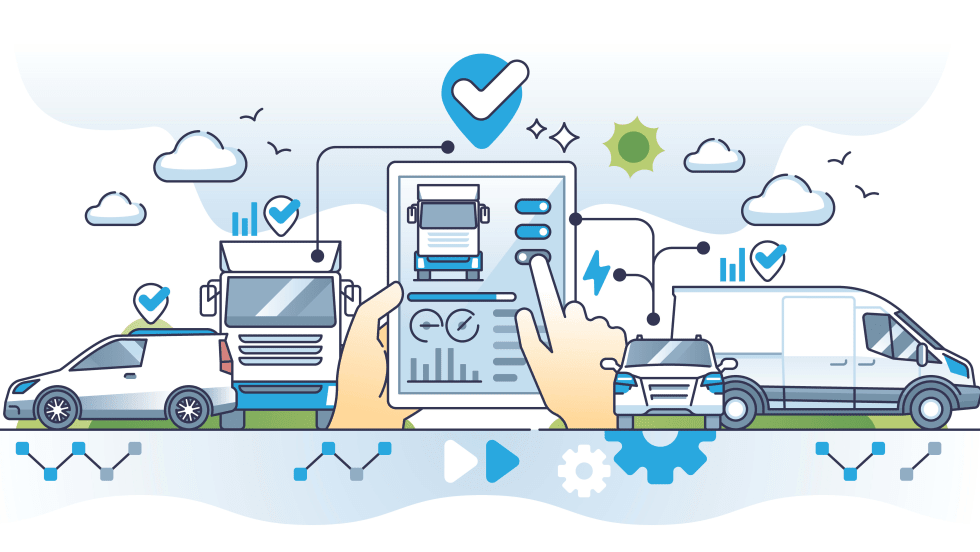
Fleet Managers Think They Understand Their Costs. The Data Says Otherwise.
Most fleet managers say they have a strong handle on their costs, but new research from Bobit Business Media tells a different story. A 2026 survey of 190 fleet professionals reveals a widespread "confidence gap" where fragmented systems, disconnected data, and delayed reporting are leaving major blind spots hidden beneath the surface. Find out what the data actually shows.
Read More →
Cameras, Safety and Insurance: From Reactive Claims to Real-Time Prevention (Part 2 of 2)
Part Two: Commercial auto remains one of the most challenging and costly lines of coverage for fleet operators and insurers alike. Continue learning more about how to effectively address these issues from Onur Aksan, Enterprise Business Development Executive, Geotab
Read More →
New Trucks, AI & Summer Downtime | AF News Recap
From new truck updates to AI-powered driver coaching and summer maintenance tips, this week's fleet headlines are all about keeping things moving.
Read More →
Beyond Utilization Rates: Smarter Fleet Replacement Decisions
Vehicle replacement decisions affect every aspect of fleet performance, from operating costs to asset availability. This guide explores how fleet leaders use integrated data, benchmarking, and lifecycle analytics to determine the right fleet size and optimize replacement timing with greater confidence.
Read More →