




NETS Stages Drive Safely Work Week Campaign
The Network of Employers for Traffic Safety (NETS) launches its annual interactive, Web-based Drive Safely Work Week tool kit to combat distracted driving in the workplace and promote eco-friendly driving practices.

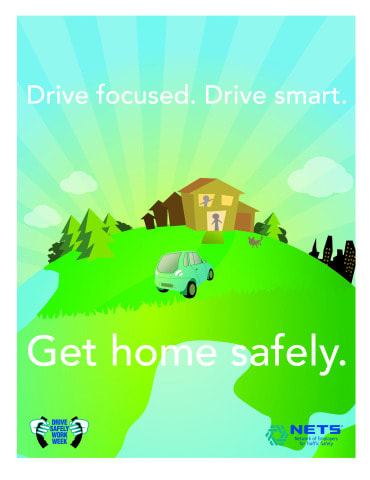
With traffic crashes the number one cause of death and injury in the workplace, as well as costing employers more than $60 billion annually in the U.S. alone, getting employees home safely at the end of the day is top of mind for companies nationwide.
Studies by the National Highway Traffic Safety Administration (NHTSA) have concluded that 80 percent of all crashes and 65 percent of near-crashes are due to some form of driver inattention. To combat the issue, the Network of Employers for Traffic Safety (NETS) sponsors Drive Safely Work Week (DSWW) October 5-9.
DSWW is a national workplace traffic safety initiative aimed at educating employees on targeted issues in safe driving, whether they drive for work or just to and from work.
Now in its 13th year, DSWW is an annual campaign available to companies and the public.
"The campaign tool kit is entirely Web-based, providing downloadable messages, graphics, activities, and interactive tools for each day of the campaign week," said Jack Hanley, executive director of NETS. "Materials are not dated, so they can be utilized throughout the year to make driving safely a part of every day and every trip, on and off the job."
A highlight in this year's tool kit is an interactive distracted driving self-assessment that can be distributed via e-mail to employees. By answering a series of questions on driving behavior, employees discreetly learn how their driving habits rate on a scale developed by a panel of driving-safety experts.
Other tool kit components include:
Fact/tip sheets on campaign issues.
Interactive quizzes and tools.
Daily activities and communication messages.
Downloadable graphics.
Resources for global employers.
"In today's tough economic climate, our businesses appreciate the DSWW materials include meaningful messages and activities easily shared and implemented without taking significant time away from the work day," said Dan Vartanian, corporate program coordinator of the Michigan Office of Highway Safety Planning.
'Driving Smart' Focus of 2009 DSWW Campaign
This year's campaign theme, Drive Focused - Drive Smart - Get Home Safely, focuses on issues of distracted driving and eco-friendly driving - driving smart to minimize the impact driving habits can have on the environment.
"The Drive Safely Work Week campaign is designed for businesses of all sizes," explained Maureen Mazurek, director of human rights for Monsanto Company and NETS chairperson. "Even companies with a robust fleet safety program find the campaign a great way to include everyone in safe driving awareness and practices."
Founded in 1989, NETS is a partnership between the federal government and more than 40 leading companies. Its board of directors is comprised of Abbott, AmeriFleet Transportation, Anheuser-Busch Companies, Chubb Group of Insurance, General Motors Company, Johnson & Johnson, Liberty Mutual Insurance Group, Monsanto Company, Nationwide Mutual Insurance, and UPS. In addition, NHTSA and the National Institute for Occupational Safety & Health (NIOSH) are federal liaisons to the board.
Benefits of NETS membership include access to a resource center of safe-driving materials and a comprehensive benchmarking program, thus helping reduce crash rates.
According to Hanley, NETS' and DSWW's reach goes beyond company fleets. "Our programs encourage companies to reach out beyond fleet drivers and to all employees and families by modeling good driving behavior," he said.
[PAGEBREAK]UPS Utilizes DSWW Materials for Driver Education
According to Gerry Eaker, SPHR, global fleet safety manager for United Parcel Service (UPS) in Atlanta, all company operating districts will be encouraged to develop an awareness campaign using DSWW materials for driver education.
The UPS fleet includes 88,854 straight trucks, 12,866 truck tractors, and 61,819 trailers. Eaker develops strategic approaches to crash reduction.
"DSWW is a week in which we heighten awareness to the possibility we can go crash-free," Eaker said. "If we can achieve this in one week, it shows the goal of zero is achievable."
In previous years participating in DSWW, UPS has reduced crash frequencies and heightened safety awareness and communication. The company also measures at-risk behaviors, including reviewing seat belt use, "nose-in" parking versus backing in, etc.
"We remind our drivers their most important stop, whether in our vehicle or their own, is the one they make safely at home when returning to their families," Eaker said.
Driver feedback to the annual DSWW campaign has always been positive and allows UPS to remind all employees at least once a year their training and education is what makes UPS drivers among the safest on the road.
UPS joined NETS in 1998 after determining 30 percent of its vehicle crashes were deemed unavoidable, which meant their driver did everything reasonably possible to avoid the crash.
"Our training is very structured and routine, and NETS brings fresh, current, and relative learning to the table," Eaker said.
Being a NETS member also allows UPS to help educate employees of other companies on becoming better drivers through the member benchmarking program.
Nationwide Changes Employee Driving Habits for the Better
With a U.S. fleet of approximately 2,000 vehicles (mostly private passenger cars), Columbus, Ohio-based Nationwide Insurance has participated in DSWW for many years.
"We participate in the week-long campaign to remind all associates of distractions on the roadway and how to minimize such distractions so they return home safe to their families," said Bill Windsor, AVP Office of Safety at Nationwide Insurance. "Nationwide also wants our associates to take this information home and discuss it with their families, so they also drive safer and avoid dangerous distractions, like cell phones."
Windsor's role at Nationwide includes working with outside safety organizations on initiatives to save lives and prevent losses. He also coordinates with the fleet department and serves on the Fleet Steering Committee.
"We hope by participating in the DSWW campaign, we can change associates' driving behavior and, as a result, they will be involved in fewer automobile crashes," Windsor said. "We also want associates to know we care about them and their well-being, and this provides an opportunity to provide them some value-added material."
DSWW materials fit perfectly with Nationwide's organization, as the company employes associates all over the country.
"We particularly like the ready-made material NETS provides, which allows us to use electronic messages to reach out to all our associates," he added.
Nationwide's internal news site is available on all associates' work stations. The NETS materials allow the company to connect associates with these important safety messages.
"We run a little contest every day that associates can enter by reading the material and answering a couple of questions about it," Windsor said. "We now also have the ability for associates to add their own comments and stories about the material."
After joining NETS more than 10 years ago, Nationwide is proud to have worked on initiatives that help other employers keep associates safe and prevent losses while on the highways.
NETS membership also provides Nationwide an opportunity to interact with other companies on key auto safety issues, not only for company car drivers, but for all associates.
"NETS provides resources to help train and create awareness of safe-driving practices for all associates. It also has resources that can be shared with other family members and teens to keep them safe on our highways," Windsor added.
To preview the campaign materials, go to http://trafficsafety.org/drivesafelyworkweek/about-dsww.php. For more information on NETS, visit www.trafficsafety.org.
More Safety

Fleet Manager’s Ultimate Playbook: Navigating the New Standard in OEM Connectivity
Rising operating costs, driver safety concerns, and unplanned downtime are putting unprecedented pressure on modern fleets. Discover how fleet managers use embedded OEM connectivity and real-time vehicle data to cut TCO, prevent downtime, and protect drivers without aftermarket telematics hardware.
Read More →
From Driver Well-Being to EV Charging | AF News Recap
Mental health belongs in the fleet safety conversation. This week, we’re looking at five ways fleets can support employee well-being before a crisis, plus Holman’s expansion in Mexico, new one-day Fleet Forward passes, and why EV charging demand is outpacing infrastructure growth.
Read More →
Nexar-Nauto Merger Aims to Give Fleets Better Safety Intelligence Through Larger Driving Dataset
Stefan Heck tells Automotive Fleet that combining more than 10 billion miles of driving history with Nexar's AI models will give fleets deeper insights into driver risk and roadway conditions than either company could provide independently.
Read More →
Don't Wait for a Crisis: 5 Ways to Build Mental Health Into Your Fleet Safety Program
For Suicide Prevention Month, fleet and safety leaders have an opportunity to put mental health where it belongs: at the center of workplace safety.
Read More →
How Camera Data Can Strengthen a Fleet’s Insurance Renewal
Insights from a commercial insurance carrier and a broker show how fleets can turn video telematic data, driver coaching, and improved claims results into a stronger case at insurance renewal.
Read More →
The Safest Fleets Aren’t the Ones with the Most Technology
You’ve made the telematics investment. Here’s how to capture the other half of its value and build the safest fleet on the road.
Read More →
Hidden in Plain Sight: Fleet Compliance Risks
Fleet compliance isn't just about having policies — it's about consistently enforcing them. This practical guide reveals six hidden compliance risks common in public sector and shared fleet operations and outlines proven strategies to improve visibility, accountability, and audit readiness
Read More →
NETS Sets 2026 Fleet Safety Benchmark Conference for Indianapolis
The Sept. 15–17 program will feature fleet benchmarking data, case studies, emerging technologies, and implementation strategies while running alongside the NSC Safety Congress & Expo.
Read More →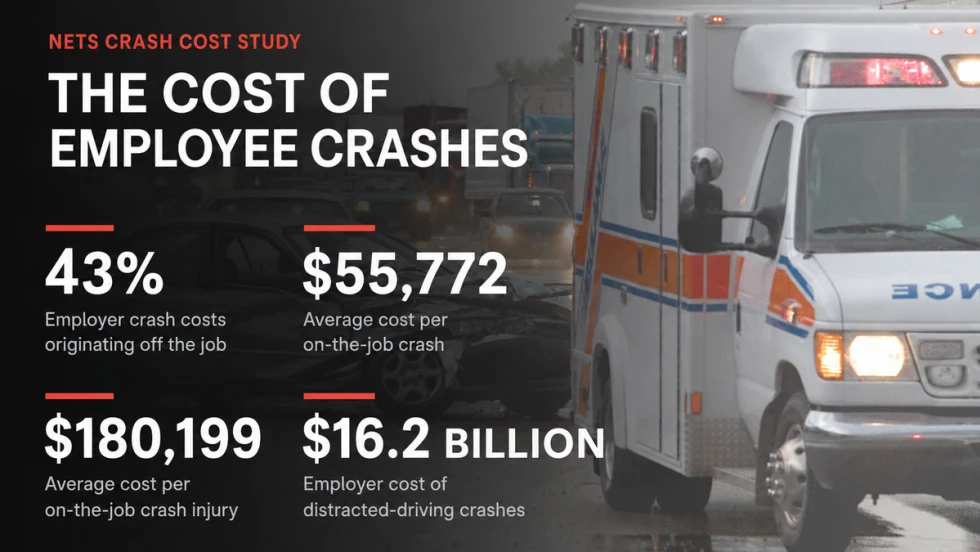
Off-the-Job Crashes Account for 43% of Employers’ $61.7 Billion Crash Burden
NETS quantifies costs dispersed across fleet, risk, HR, and other departments while providing new per-crash benchmarks for employers.
Read More →
Ram Recalls More Than 1.27 Million 1500 Pickups for Seat Belt Anchor Issue
The recall affects certain 2019-2026 Ram 1500 pickups that may have improperly attached second-row seat belt buckle anchors.
Read More →