




Related Photos: NAFA I&E 2016 in Pictures
NAFA I&E 2016 Awards Best Fleet Practices
The conference expo had more than 200 companies showcase their products and services.
by Staff
June 6, 2016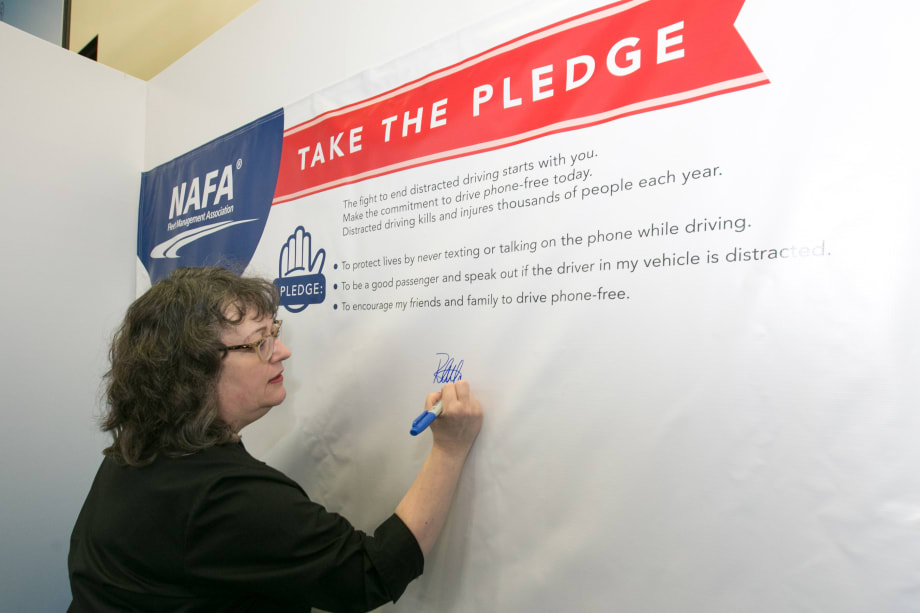
Photo of NAFA president, Ruth Alfson, signing the NAFA pledge to end distracted driving at the conference courtesy of NAFA Fleet Management association.
1 min to read
Photo of NAFA president, Ruth Alfson, signing the NAFA pledge to end distracted driving at the conference courtesy of NAFA Fleet Management association.
The 2016 NAFA Fleet Management Association Institute & Expo was held April 19-22 at the Austin Convention Center in Austin, Texas.
The event offered fleet training, education, and workshops, and an expo floor that featured more than 200 companies showcasing their products and services.
The conference featured three keynote speakers: Dan Ricci, the Global Big Data Automotive Industry Leader for IBM Analytics, Kent Rathwell, CEO of Sun Country Highway, and Donna Setaro, the founder of the Move-Over Awareness Campaign in New Jersey.
The expo was kicked off by the Fleet Excellence Awards (FLEXYs) presentation during the annual opening night awards gala. FLEXYs recognize fleet professionals who have made a significant contribution in their field in the corporate and public fleet segments.
Education sessions for the conference included: focusing on the basics about communicating with FMCs about data integration needs, how to improve meetings and presentations, and exploring how various generations view distractions behind the wheel and how these impact their ability to arrive safely.
The graduating classes of 2015/2016 Certified Automotive Fleet Specialist (CAFS)and Certified Automotive Fleet Manager (CAFM)were also recognized. CAFM graduates are certified as “expert” fleet managers, while CAFS certification acknowedges expertise in four specific areas in fleet knowledge.
Subscribe to Our Newsletter
More Operations

Avis Budget Group Deploys Neology Toll Management Technology Across Major Brands
Neology’s neoFleet platform will manage toll transactions and toll-authority operations for vehicles across Avis, Budget, Payless, Budget Truck and Zipcar.
Read More →
Fleet Personal-Use Charges Edge Higher in 2026
Nearly eight in 10 surveyed fleets allow personal use of company vehicles, while just over half of respondents report charging employees for the privilege.
Read More →
The Future of Fleet + What’s Changing Right Now | AF News Recap
Could developments overseas offer a preview of what’s coming for U.S. fleets? This week, we’re looking at the future of AI, autonomy, and electrification, plus Ford Pro’s new certified pre-owned program, smarter vehicle offboarding, and a new way for fleets to manage toll expenses.
Read More →
How to Handle Vehicle Offboarding
What do fleet managers need to do when a driver leaves?
Read More →
Sponsored•October 1, 2026
Fleet Manager’s Ultimate Playbook: Navigating the New Standard in OEM Connectivity
Rising operating costs, driver safety concerns, and unplanned downtime are putting unprecedented pressure on modern fleets. Discover how fleet managers use embedded OEM connectivity and real-time vehicle data to cut TCO, prevent downtime, and protect drivers without aftermarket telematics hardware.
Read More →
U.S. Bank Adds Verra Mobility Toll Management to Voyager Fleet Platform
The integration allows U.S. Bank Voyager fleet customers to manage toll payments and violations alongside fuel, EV charging and maintenance expenses.
Read More →
ADAS Prevents Crashes. But Repairs Cost More | AF News Recap
ADAS-equipped vehicles may crash less often, but they can cost more when they do. This week, we’re breaking down what that tradeoff means for fleets, plus Subaru’s first Forester Wilderness Hybrid, Nissan’s new e-POWER Rogue, and why Calstart has become Catalyst Mobility.
Read More →
Moventum Fleet Management Names Mark Iorillo Head of Sales
Iorillo brings nearly 20 years of fleet management and sales experience to the role, including previous positions at Element Fleet Management, CEI, Donlen and Ryder.
Read More →
Fleet Has a Talent Pipeline Problem. What Comes Next? | AF News Recap
Where will fleet’s next generation of leaders come from? This week, we’re looking at the industry’s talent pipeline, what certification can add to a fleet career, how to build an award-worthy track record, and the return of Automotive Fleet’s Personal Use Survey.
Read More →
Smith System Launches Driver Risk Management Program
Fleets have more driver data than ever, but identifying risky behavior doesn't necessarily correct it. Smith System's new Driver Risk Management program combines monitoring, training, and follow-up coaching to help fleets connect risk signals with driver intervention.
Read More →