




Move by New York DMV to Track Insurance Electronically Creates Headaches for Fleets - More States to Follow Suit
In the past decade there has been an alarming increase in losses attributed to uninsured commercial drivers in the state of New York. Ultimately, New York decided to get tough by no longer solely accepting insurance cards as validation of liability insurance coverage.


In the past decade there has been an alarming increase in losses attributed to uninsured commercial drivers in the state of New York. Ultimately, New York decided to get tough by no longer solely accepting insurance cards as validation of liability insurance coverage.
"Now, both paper proof and electronic filing of coverage are required," said Tim Duckworth, manager of title and license for GE Capital Fleet Services.
This has resulted in the creation of the New York state DMV's Insurance Information and Enforcement System (IIES), an information database to monitor insurance status of New York-registered vehicles, said John Maher, vice president of licensing services for CitiCapital Fleet. The IIES program went into effect on Sept. 12, 2000.
Why should this interest you, especially if you don't have vehicles registered in New York? The reason is that electronic tracking of insurance is being carefully watched by other DMVs for possible implementation in their states and, so far, the initial reaction by other states has been favorable.
"Under the New York program, insurance companies electronically provide the DMV with policy information, vehicle identification numbers, and registratiion names for vehicles they insure," said Maher. "Before a vehicle in New York can be registered or re-registered, the state DMV determines whether the vehicle is listed in the information database." When the New York DMV started the program last year, it required insurance companies to electronically update the state database every 30 days. This year, New York decided to be even more aggressive in identifying non-insured commercial vehicles by requiring insurance companies to update the state database on a weekly basis so its records are never older than seven days.
It is the requirement for the electronic transmission of insurance data that is creating an administrative headache for insurance companies, said Duckworth. In order to comply, insurers need to have the electronic capability to transmit the data, and not all have this capability. Also, many larger fleets are self-insured, which means it is the fleet's responsibility to transmit electronic updates to the state of New York. "As a leasing company, we receive requests from our fleet clients to provide this data, but New York requires that this data needs to come exclusively from the insurance company," said Duckworth.
Another issue is how New York vehicles are titled. Leasing companies normally instruct their New York dealers to register leased vehicles under the lessor's legal name. This creates a problem in New York, because the insurance coverage must be in the name of the entity to whom the vehicle is registered.
All of this may seem like an annoying bureaucratic problem; however, this new requirement does have teeth. For instance, if your vehicle isn't listed in the database as having liability insurance, the New York DMV will suspend its registration. Or, if one of your vehicles is involved in an accident, and, likewise, if the the New York DMV does not have an electronic verification of insurance, then the employee's driver license and vehicle registration will be revoked for at least one year. Also, your company will have to pay a $500 civil penalty to the New York DMV in order for the employee to get his or her license back.
Shift from Paper to Bar-Coded Insurance Cards
Effective July 1, 2001, the New York DMV is requiring bar coding of all New York FS-20 insurance cards. Previously, bar coding was optional.
"New York is not the only state to begin electronic tracking of insurance," said Maher. "Arizona, Massachusetts, Connecticut, and Nevada have also begun programs to track insurance electronically."
Now, when a vehicle is registered or re-registered in the state of New York, the driver will be given a bar code sticker to affix to their vehicle. "Law enforcement at the time of a traffic stop or when writing a parking ticket can scan the latest DMV files via the bar code affixed to the vehicle to determine whether the unit has liability insurance coverage," said Duckworth. "If the database shows it does not, then a plate suspension notice will be issued, or the vehicle can be impounded."
It's Time to be Proactive
As a fleet manager, especially one who operates a self-insured fleet, it is necessary for you to get ahead of the curve and proactively meet with your insurance department to discuss the internal systems that might be necessary to prevent this change in insurance tracking by other state DMVs from becoming an administrative nightmare at your company.
Let me know what you think.
More Operations

Fleet Meets: Eric Kilgore
This edition of the Fleet Meets series features one of the industry's best leaders driving multi-market and national operations.
Read More →
Why Reactive Fleet Management Is Becoming Too Expensive to Sustain
Research highlights a growing need for proactive management strategies to address rising costs in fleet operations effectively.
Read More →
What Your Fleet KPIs Aren’t Telling You
Tracking fleet metrics is only useful when the data leads to better decisions. This guide helps fleet leaders assess cost, utilization, and downtime more accurately, identify performance gaps, and prioritize the actions that can improve operational results.
Read More →


Hidden in Plain Sight: Fleet Compliance Risks
Fleet compliance isn't just about having policies — it's about consistently enforcing them. This practical guide reveals six hidden compliance risks common in public sector and shared fleet operations and outlines proven strategies to improve visibility, accountability, and audit readiness
Read More →
Turning Fleet Payment Data into Executive Insights
Does data alone drive results in operations?
Read More →
Automotive Fleet Opens 2026 Personal Use Survey for Commercial Fleet Managers
Commercial and corporate fleet managers are invited to share how their organizations handle company vehicle personal-use policies, charges, and driver eligibility.
Read More →
Gary Van Orden Retires After Nearly Four Decades in Commercial Fleet
From answering customer calls at Ford Motor Company to leading fleet sales across multiple OEMs and a fleet management company, Gary Van Orden's career reflects nearly four decades of leadership in commercial fleet.
Read More →
How Stellantis Plans to Get Ahead of Fleet Downtime
Vehicle acquisition may grab the headlines, but fleet uptime increasingly determines operating success. Darren Bradshaw of Mopar North America gives the details.
Read More →
Hyundai Releases 2027 Commercial Program Incentives
The 2027 Model Year "Fleet Street Incentives" are available to commercial and government fleets.
Read More →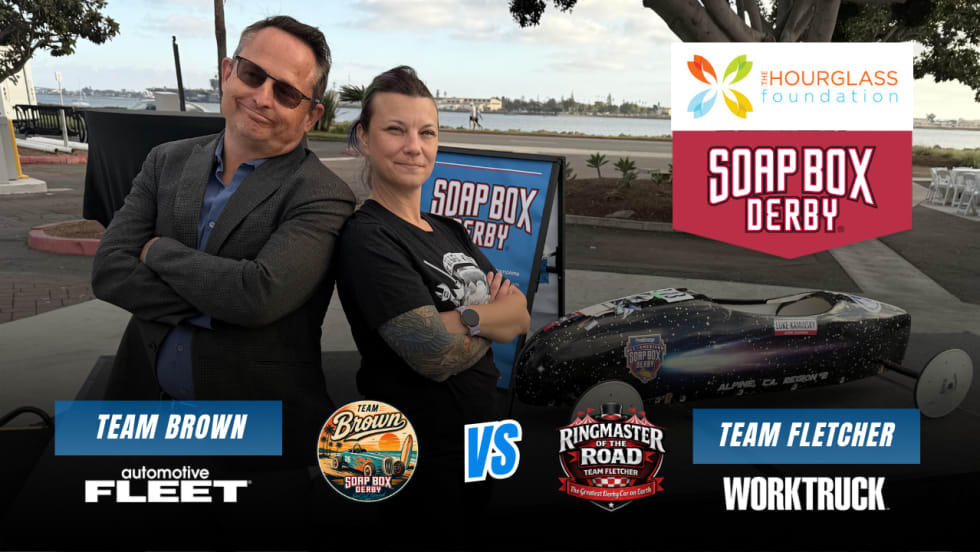
It's All Downhill from Here! Fleet Industry Raises $22,000 for Skilled Trades Scholarships
Work Truck’s Lauren Fletcher and Automotive Fleet’s Chris Brown turned a friendly racing rivalry into $22,000 for automotive technology and skilled trades scholarships.
Read More →