





Looking for the latest in disaster preparation and response for commercial and work truck fleets? Be sure to bookmark DisasterResponseGuide.com for all of the latest tips, insights, and more!
Mother Nature's Devastating Impact on Fleet Operations
In 2005, Hurricane Katrina destroyed or damaged approximately 2,000 fleet vehicles in the Gulf Coast. Last October, Hurricane Sandy disrupted the refueling infrastructure and fleet communication with drivers in N.J and N.Y.
October 15, 2013
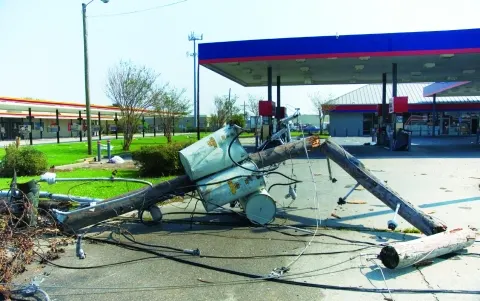
The widespread destruction caused by Hurricane Katrina made it difficult for fleets to get back to business.
5 min to read
Hurricane Katrina and Hurricane Sandy, which were respectively the No. 1 and No. 2 most costly storms to ever hit the U.S., demonstrated the destructive impact that Mother Nature can have on fleet operations, especially those without natural disaster contingency plans.
Hurricane Sandy left more than 8 million homes and businesses in the Northeast without electricity and killed 286 people. Counting damaged consumer and fleet vehicles, the total unit loss has been estimated to be approximately 266,000 vehicles.
While the number of fleet vehicles destroyed or damaged by Hurricane Sandy varied by company, no individual fleet suffered a substantial loss of vehicles. However, while fleet vehicle losses were minimal, on a per-company basis, the fleet impact was widespread and cumulative. For instance, Novo Nordisk lost four vehicles, Mondelēz lost one vehicle, Teva Pharmaceuticals had three flooded vehicles declared total losses, Honeywell had one flood-damaged vehicle, along with many more company losses.
While these examples are a sampling of corporate losses, they are representative of the storm’s widespread impact on individual fleet operations. Also, fleet deliveries in the storm-affected areas were severely impeded. Many dealerships closed due to flooding and power outages, railcar deliveries were delayed, and over-the-road transport companies stopped delivery of new vehicles until road conditions improved.
However, Hurricane Sandy’s biggest impact on fleet operations was the disruption of the refueling infrastructure in the storm-affected areas. Flooding and the loss of electricity closed many fuel stations for days, some as far west as Pennsylvania. Those fueling stations that were able to remain open experienced long lines of desperate motorists waiting hours to refuel their vehicles. Most fleet managers were proactive and instructed fleet drivers to fuel up prior to Sandy making landfall and advised employees to limit driving after the storm to prolong the time before their next refueling.
Some larger fleets, such as UPS, which did not lose any vehicles in the storm, have onsite fueling and fuel storage tanks, which became operational once electrical power was resumed. Other fleets, such as Safelite AutoGlass, received a waiver from the state of New Jersey to allow it to provide remote fueling.
One unnerving aspect of Hurricane Sandy was that many fleet managers had drivers “missing in action,” who couldn’t be reached on their cell phones nor had called supervisors to report their status following the storm.
Altogether, the automotive OEMs reported approximately 16,000 brand-new vehicles had to be scrapped due to flood damage. The losses could have been higher, but many dealers moved vehicles away from coastal areas ahead of Hurricane Sandy’s arrival. Most of the damaged vehicles were being stored at the port of Newark, N.J., awaiting shipment to dealers, when Sandy hit. For instance, Nissan scrapped 6,000 new cars and trucks, the most of any automaker. Toyota was next with approximately 4,825 vehicles damaged, most of which were scrapped.
The Fury of Hurricane Katrina
The impact of Hurricane Sandy pales in comparison to Hurricane Katrina, which made landfall Aug. 29, 2005.
There were approximately 20,000 commercial fleet vehicles in the Gulf Coast at the time, with as many as 2,000 of them destroyed or damaged by Hurricane Katrina and the subsequent flooding from the breached levees in New Orleans. A substantial number of government, U.S. Postal Service, and transit vehicles were damaged. For instance, the New Orleans Police Department alone lost several hundred vehicles.
For those commercial fleet vehicles that were damaged by Hurricane Katrina, many employees had to choose between saving their personal car or the company car. In these situations, the company vehicle was left behind. In addition, there were an unknown number of fleet vehicles at repair shops damaged by either the storm or flood damage after the levees broke in New Orleans. However, thousands of other company vehicles were saved because, for many employees, this was their sole transportation to evacuate the area.
Also, some fleets reported vehicles vandalized by looters in the chaos that followed. Dealers reported new vehicles stolen from their dealerships following the evacuation.
Approximately 325,000 vehicles were destroyed or damaged, a staggering number for a single event, which had never before been seen in the history of automotive transportation.
Although local, state, and federal governments have been criticized for being unprepared for Hurricane Katrina, this was not the case with most corporate fleets. Most were well prepared. In fact, many national fleets operating in the affected area reported no damaged vehicles. The overwhelming majority of fleet drivers left the area before the storm made landfall. Hurricane Katrina demonstrated that the disaster recovery plans many fleets had in place did indeed work. Almost universally, fleet departments immediately initiated proactive efforts to determine the safety of drivers in the affected areas after the storm subsided.
Fleet management companies immediately set up 24/7 hotlines to assist in the disaster recovery, functioning as communications nerve centers for hundreds of companies. They expedited the new-vehicle delivery process and some even allowed their online ordering systems to be used by client employees to order replacement personal vehicles.
Within 24 hours of the storm, many companies had determined exactly which vehicles and drivers were in the specific disaster areas, although many of these employees and vehicles remained unaccounted for long periods of time due to the collapsed communications system.
Many fleets quickly redeployed vehicles in bailment pools and replacement units at dealerships in nearby cities to respond to the emergency situation in the Gulf Coast area. Other fleets pulled vehicles out of the resale pipeline and put them back into fleet service. For example, the GSA Fleet placed all auctions on hold so vehicles could be available to meet the needs of the federal government.
In addition, surplus federal vehicles were donated by federal agencies to state agencies involved in emergency relief. Vehicles from the U.S. Marshals Service’s seized-assets inventory were even put into service in the Gulf area. This allowed vehicles such as Hummers and Escalades to be utilized by the government’s emergency operations in areas requiring four-wheel drive.
Subscribe to Our Newsletter
More Operations

How Fleets Can Recruit and Train Veterans for Technician Roles
Here's how the technician shortage has affected uptime for fleets, and what to do about it.
Read More →
Avis Budget Group Deploys Neology Toll Management Technology Across Major Brands
Neology’s neoFleet platform will manage toll transactions and toll-authority operations for vehicles across Avis, Budget, Payless, Budget Truck and Zipcar.
Read More →
Fleet Personal-Use Charges Edge Higher in 2026
Nearly eight in 10 surveyed fleets allow personal use of company vehicles, while just over half of respondents report charging employees for the privilege.
Read More →
The Future of Fleet + What’s Changing Right Now | AF News Recap
Could developments overseas offer a preview of what’s coming for U.S. fleets? This week, we’re looking at the future of AI, autonomy, and electrification, plus Ford Pro’s new certified pre-owned program, smarter vehicle offboarding, and a new way for fleets to manage toll expenses.
Read More →
How to Handle Vehicle Offboarding
What do fleet managers need to do when a driver leaves?
Read More →
Sponsored•October 1, 2026
Fleet Manager’s Ultimate Playbook: Navigating the New Standard in OEM Connectivity
Rising operating costs, driver safety concerns, and unplanned downtime are putting unprecedented pressure on modern fleets. Discover how fleet managers use embedded OEM connectivity and real-time vehicle data to cut TCO, prevent downtime, and protect drivers without aftermarket telematics hardware.
Read More →
U.S. Bank Adds Verra Mobility Toll Management to Voyager Fleet Platform
The integration allows U.S. Bank Voyager fleet customers to manage toll payments and violations alongside fuel, EV charging and maintenance expenses.
Read More →
ADAS Prevents Crashes. But Repairs Cost More | AF News Recap
ADAS-equipped vehicles may crash less often, but they can cost more when they do. This week, we’re breaking down what that tradeoff means for fleets, plus Subaru’s first Forester Wilderness Hybrid, Nissan’s new e-POWER Rogue, and why Calstart has become Catalyst Mobility.
Read More →
Moventum Fleet Management Names Mark Iorillo Head of Sales
Iorillo brings nearly 20 years of fleet management and sales experience to the role, including previous positions at Element Fleet Management, CEI, Donlen and Ryder.
Read More →
Fleet Has a Talent Pipeline Problem. What Comes Next? | AF News Recap
Where will fleet’s next generation of leaders come from? This week, we’re looking at the industry’s talent pipeline, what certification can add to a fleet career, how to build an award-worthy track record, and the return of Automotive Fleet’s Personal Use Survey.
Read More →