




More Diverse Vehicle Selectors: Will the U.S. Mirror Europe's Fleet Market?
Diverse vehicle selectors offering multiple makes and models are relatively common among European corporate fleets. Could the future hold the same for the U.S. fleet market over the next decade?

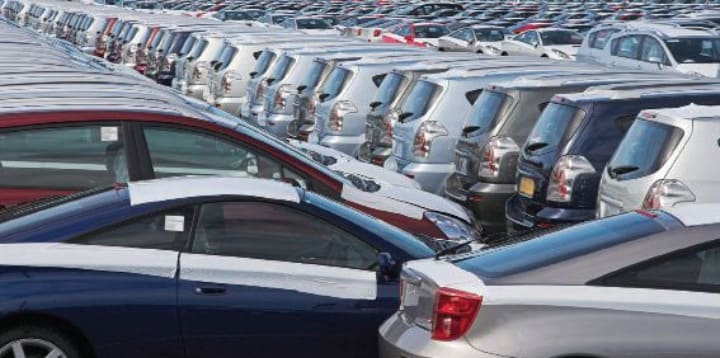
Diverse vehicle selectors offering multiple makes and models are relatively common among European corporate fleets. One of the many reasons is each OEM's fragmented fleet market shares. In Europe, a large number of nameplates compete for the same commercial fleet business.
Could the same future unfold for the U.S. fleet market over the next decade? Some think we are seeing embryonic glimpses of it today, especially with the increased interest in the commercial fleet market by nontraditional fleet OEMs, which, in turn, are being spurred by increased inquiries by commercial fleets.
The events of the past year, still unfolding as of this writing, have contributed to this increased volume of inquiries. The experience of two of the Detroit Three quickly entering and exiting Chapter 11 bankruptcy protection, along with some fleet management companies refusing new-vehicle orders, prompted some corporations (especially those sole sourcing) to begin to reassess their sourcing strategies. As a result of these unexpected sourcing disruptions, corporate fleets began developing contingency plans to use alternative vehicle sourcing channels.
A Good Litmus Test
Fleet management companies (FMCs), which manage new-vehicle fleet orders from a broad cross section of companies, report an increase in fleet orders from their client base for import-badged vehicles.
"Our Toyota volume, in particular, is up considerably," said Rick Shick, vice president of purchasing for Donlen Corp. "While some of the increase is related to the recent Chapter 11 activity, I would attribute the majority to customers considering lifecycle costs to a greater extent than ever before due to the economic environment."
Wheels Inc. similarly noted an increased interest in import-badged vehicles among its fleet clients. "We've seen an uptick in import acquisitions, but even more so, an 'interest' in these vehicles. In today's environment, more and more clients are expanding their level of interest beyond the Detroit Three due to concerns about their stability and TCO (total cost of ownership)," said Joe McDonald, director account management for Wheels Inc.
Automotive Resources International (ARI) likewise reports greater interest in import-badged vehicles. "We have seen an increase in the interest level of import brands. The Chapter 11 bankruptcies are the primary reason clients are looking at alternative manufacturers," said Mark Bryan, manager, vehicle acquisition services for ARI. "Also, the import manufacturers have become more active in the commercial fleet segment, generating further interest from clients. Low retail sales volume is causing import manufacturers to look at the commercial fleet industry as a way to increase sales volumes and market share. It will be interesting to see if their interest level remains when retail sales pick up."
A survey of import-badged OEM fleet departments indicates they are experiencing an increase in commercial fleet orders.
"Market uncertainty is forcing commercial fleet customers to make 'safe choices' on vehicle suppliers and move away from single-sourced strategies," said Mark Oldenburg, national fleet marketing & administration manager for Toyota Motor Sales USA. "Existing uncertainty associated with select OEM viability reinforces the uncertainty of residual values."
This market uncertainty is openly cited as a key reason for the increase in commercial fleets discussing sourcing options with import-badged companies. "The uncertain future of the domestic manufacturers has led many fleet managers to consider alternatives. These reasons include product availability, dealership viability, and decreased residual values," said Ross Friedmann, senior commercial accounts manager for Audi of America.
Other OEMs concur with this assessment. "This past year has shown us how dramatically a marketplace can change within a very short period of time," said Rob Fecher, manager, vehicle programs & remarketing for Mazda North American Operations in Irvine, Calif. "The turmoil within the domestic marketplace has changed the dynamics substantially as uncertainty for vehicle deliveries has been a major factor towards the defection to brands, such as Mazda, that haven't been affected by plant closures and/or bankruptcy."
A variety of other factors are contributing to the increased interest in import-badged models.
[PAGEBREAK]
1 Corporate Green Fleet Initiatives: Many corporations have decided to add hybrid models to their fleets to fulfill corporate sustainability initiatives. "The 'Go Green' vehicle trend is forcing commercial fleets to add Toyota, Honda, and Nissan, which all now offer new hybrid vehicle models," said Oldenburg. In addition, some fleets are acquiring PZEV (partial zero-emission vehicles) to fulfill emission reduction targets of corporate green fleet initiatives. "For Subaru, the PZEV option is available in all 50 states," said Ron Lasman, national commercial fleet account manager for Subaru of America, Inc.
2 Improvement in Order-to-Delivery (OTD) Times: For the past decade, some import-badged companies have successfully decreased their order-to-delivery (OTD) times. Some import-badged companies, such as Subaru, have averaged consistently short OTD times, among the best in the industry, as reported by Automotive Fleet in its annual OTD survey.
3 Transplant Assembly Plants Increasingly Viewed as Domestic Manufacturers: Import-badged companies have been assembling vehicles in the U.S. for the past several decades. "The perception of Toyota as a U.S. domestic manufacturer has changed. Toyota's investment in the U.S. now totals $17.4 billion. This Americanization of Toyota is evidenced by recent news featuring the automotive manufacturing American-Made Indexes," said Oldenburg. "Today's business climate is forcing commercial accounts to rethink their selector lists in order to save money in fuel, maintenance, and overall lifecycle expenses. Many commercial fleet buyer selector lists were created with policies made in the 1980s and early 1990s, in an environment when greater focus was placed on initial acquisition cost versus lifecycle cost analysis, along with an orientation to buy American. Today's business-competitive environment has blurred the perception of what is an 'American company,' forcing companies to change their historic 'buy American' selector lists."
4 Strong Residuals: Many import-badged companies have strong residual values for their models, due to strong retail demand, which helps lower depreciation, a fleet's largest lifecycle cost. Also, the higher percentage of fleet sales, versus retail sales, for some high-volume domestic models potentially puts downward pressure on residuals, especially when supply exceeds demand in the wholesale market.
5 Greater Receptivity to Import Nameplates by Multinational Corporations Operating in the U.S.: The number of corporate fleet vehicles operated in the U.S. by companies with corporate headquarters outside the U.S. is substantial. "Many fleet managers are employed by offshore-based, multinational companies that presently have acquisition agreements in place with non-U.S. vehicle manufacturers. Some of these fleet managers are working more closely with their parent companies to consolidate their global vehicle programs to include the U.S. in the annual vehicle selection," said Friedmann of Audi.
6 Generational Shift in Drivers Ordering from Selectors: "Many fleet managers are looking for something different for their drivers, and as drivers entering the workforce are from a newer generation, the aversion to import-nameplate vehicles is virtually nonexistent," said Friedmann. "Some truly innovative fleet managers have successfully made the case to their management that they can do so much more in the way of compensation for the sales force by giving them a much nicer vehicle in lieu of the comparable cash incentive."
7 Scarcity of Minivan Product Offerings: The decreased number of minivan models in the market has prompted some fleets to look to crossover-type vehicles as alternative purchases. In addition to domestic crossovers, fleets are also looking at import-badged crossovers. "Many fleets see the Forester and Outback as alternatives to minivans," said Lasman.
8 Increased Participation in Industry Associations and Events: "We have increased our exposure to the commercial fleets by attending functions, such as NAFA and AFLA, as well as in our advertising and marketing," said Fecher of Mazda.
Arguments Against Emergence of European-Like Diverse Selectors
Valid arguments can be made against the emergence of diverse selectors, especially over the long-term. Here are some counter-arguments why this may not be a long-term trend.
1 Sole Sourcing Will Continue to Remain Viable: Once stability re-emerges in the marketplace, corporate sourcing groups will cause sole sourcing to gain increased momentum. OEMs will continue to offer attractive tiered-volume purchase programs, as they are currently. These incentives can only be triggered if most new-vehicle orders are placed with a single manufacturer. For non-sales fleets, this sourcing strategy means going with a full-line OEM. Fleets, especially larger ones, will be enticed to negotiate lucrative multiyear sole-sourcing agreements with individual manufacturers offering tiered-volume purchasing incentives.
2 Inconsistent Commitment to the Fleet Market: Detractors cite the inconsistent commitment of import-badged companies to the commercial fleet market. In the past, when retail sales were hot, fleet availability of popular models was scarce. When retail sales became depressed, fleet volume increased. Corporate fleet managers complain about this lack of consistency in fleet allocation, as was especially apparent with hybrid models when gasoline prices hit record levels last year.
3 Limited Truck Offerings: Import-badged companies, as a whole, have limited full-size truck offerings, compared to the Detroit Three, and do not offer the breadth of upfitter products/equipment and ship-thru services.
4 Fewer Fleet-Minded Dealers: Corporate fleet managers complain about the reluctance of some import-badged dealers to perform courtesy deliveries. Although some import-badged OEMs have made great strides in identifying fleet-minded dealers, the perception among corporate fleet managers is otherwise. One fleet manager complained of a situation in which several cars had to be re-routed because the dealer refused to accept the cars from the transporter. Many corporate fleet managers believe import-badged dealers tend to give lower priority to fleet orders. In addition, despite the reduction in dealer points, the dealer body footprints for the Detroit Three remains larger than those of import-badged OEMs, which is especially important for nationally dispersed fleets.
5 Dramatic Quality Gains by Domestics: As public perception catches up to actual quality parity made by domestic brands, there will be a corresponding increase in residual values, minimizing lifecycle cost discrepancies.
6 Fleet Buyer Loyalty: Despite the negative news regarding the business viability of some OEMs, corporate fleet buyers have remained loyal customers. Many of these supplier relationships have been in effect for decades, some even longer. This buyer loyalty is epitomized by one fleet manager who said, "As long as the OEM can supply the vehicles we need, we'll honor our contract."
Fleet Vehicle Diversity Limited
Vehicle selection is the process that, more than any other in fleet management, ultimately determines overall fleet costs. Choosing the right vehicle for the mission impacts every area of fleet expense, from fuel to maintenance and repair to resale value. Often, fleets need specialized, mission-specific vehicles only offered by certain OEMs and upfitters. As long as non-traditional fleet OEMs are not major players in the full-size truck fleet market, the type of fragmentation witnessed in Europe will not occur to the same extent in the U.S. Currently, trucks (Classes 1-5) represent nearly 60 percent of all fleet vehicles in service. Without an increase in fleet truck market share by import-badged companies, there is a limit to the vehicle diversity that will occur in the U.S. commercial fleet market. However, evolving market share fragmentation appears a greater likelihood in the retail market, in which the truck population is primarily light-duty models.
More Operations

Avis Budget Group Deploys Neology Toll Management Technology Across Major Brands
Neology’s neoFleet platform will manage toll transactions and toll-authority operations for vehicles across Avis, Budget, Payless, Budget Truck and Zipcar.
Read More →
Fleet Personal-Use Charges Edge Higher in 2026
Nearly eight in 10 surveyed fleets allow personal use of company vehicles, while just over half of respondents report charging employees for the privilege.
Read More →
The Future of Fleet + What’s Changing Right Now | AF News Recap
Could developments overseas offer a preview of what’s coming for U.S. fleets? This week, we’re looking at the future of AI, autonomy, and electrification, plus Ford Pro’s new certified pre-owned program, smarter vehicle offboarding, and a new way for fleets to manage toll expenses.
Read More →
How to Handle Vehicle Offboarding
What do fleet managers need to do when a driver leaves?
Read More →
Fleet Manager’s Ultimate Playbook: Navigating the New Standard in OEM Connectivity
Rising operating costs, driver safety concerns, and unplanned downtime are putting unprecedented pressure on modern fleets. Discover how fleet managers use embedded OEM connectivity and real-time vehicle data to cut TCO, prevent downtime, and protect drivers without aftermarket telematics hardware.
Read More →
U.S. Bank Adds Verra Mobility Toll Management to Voyager Fleet Platform
The integration allows U.S. Bank Voyager fleet customers to manage toll payments and violations alongside fuel, EV charging and maintenance expenses.
Read More →
ADAS Prevents Crashes. But Repairs Cost More | AF News Recap
ADAS-equipped vehicles may crash less often, but they can cost more when they do. This week, we’re breaking down what that tradeoff means for fleets, plus Subaru’s first Forester Wilderness Hybrid, Nissan’s new e-POWER Rogue, and why Calstart has become Catalyst Mobility.
Read More →
Moventum Fleet Management Names Mark Iorillo Head of Sales
Iorillo brings nearly 20 years of fleet management and sales experience to the role, including previous positions at Element Fleet Management, CEI, Donlen and Ryder.
Read More →
Fleet Has a Talent Pipeline Problem. What Comes Next? | AF News Recap
Where will fleet’s next generation of leaders come from? This week, we’re looking at the industry’s talent pipeline, what certification can add to a fleet career, how to build an award-worthy track record, and the return of Automotive Fleet’s Personal Use Survey.
Read More →
Smith System Launches Driver Risk Management Program
Fleets have more driver data than ever, but identifying risky behavior doesn't necessarily correct it. Smith System's new Driver Risk Management program combines monitoring, training, and follow-up coaching to help fleets connect risk signals with driver intervention.
Read More →