




Modifying Driver Behavior: The ‘Last Mile’ in Greening a Fleet
If you are constrained by equipment limitations, the "last mile" to achieving corporate sustainability objectives is modifying driver behavior. This is possibly the greatest opportunity available to fleet managers to green their fleets.

Companies have adopted a variety of strategies to achieve green fleet initiatives, such as adopting anti-idling policies, switching to smaller displacement engines, buying alt-fuel and hybrid vehicles, and downsizing to smaller vehicle segments. However, there’s a limit to how much a fleet manager can modify a fleet selector to decrease emissions and maximize fuel efficiency, especially if the majority of the vehicles are gasoline- or diesel-powered. A fleet manager can only downsize so far before beginning to impact the fleet mission. The bottom line is that you can’t change the fundamental requirements of your business. You need to move employees and cargo in a cost-efficient manner. This necessitates a minimum equipment requirement to do so.
If you are constrained by equipment limitations, the “last mile” to achieving corporate sustainability objectives is modifying driver behavior. This is possibly the greatest opportunity available to fleet managers to green their fleets. Most company drivers average 20,000 miles per year and driver behavior is a major influence in fuel consumption. To be a truly green fleet, you need to change your drivers’ mind-set to make them “greener” drivers. This must be a top priority. The way employees drive their vehicles can either increase or decrease fuel economy and greenhouse gas (GHG) emissions. If you change the driving behavior of your employees, you have a direct impact on the amount of fuel consumed and the amount of emissions emitted. Even small increases in mpg can result in substantial savings when extrapolated across the entire fleet. Fleet managers, who have implemented eco-driving training programs, report a 5- to 30-percent reduction in annual fuel consumption by changing driver behavior.
Major fleets, such as Wal-Mart, Xerox, Schindler, Veolia Transportation, and UPS have implemented eco-driving programs designed to modify driver behavior. For instance, FedEx is investigating the integration of five eco-driving practices into its online fleet management system reporting. The five eco-driving practices, which FedEx successfully tested in Japan, include:
Minimized idling.
Gentle acceleration.
Maintenance of a steady speed.
Easing off the accelerator early before braking.
Judicious use of A/C.
In fact, tests conducted by Isuzu show that a single truck, averaging 35,000 miles per year, can reduce fuel consumption by more than 1,200 gallons by simply using eco-driving techniques. At $3.92 per gallon for diesel (as of press time), that would translate into annual savings of $4,700. For a 50-truck fleet, it would be $235,000 per year.
The challenge is to make eco-driving the permanent mindset of all your drivers. Unless you have an enforcement program with incentives, the danger is that drivers will drift back to old behaviors. It has been proven that by using more “carrot than stick,” you can maintain these efficiencies over the longer-term. To maintain driver motivation, you need to have an ongoing eco-driving training program for new hires and periodic refresher courses for current drivers, offering tangible incentives for employees who perform well.
Eco-Driving 101
In essence, the concept of eco-driving is changing driver behavior. Eco-driving refers to specific driving behaviors that can improve fuel economy, reduce operating expenses, decrease GHG emissions, and promote safe driving. In fact, eco-driving practices, by default, make employees safer drivers by discouraging aggressive driving and speeding. Many fleets correctly view eco-driving and safe driving as being intertwined. Besides decreasing fuel consumption, eco-driving also helps to lower other operating costs by extending the life of wear items, such as tires and brakes.
Basic eco-driving practices include knowing the proper way to accelerate and brake, using synchronized traffic lights to a driver’s advantage, driving at the optimum highway speed, and understanding when to use air conditioning. For example, aggressive driving (such as speeding, rapid acceleration, and braking) can lower fuel economy by 33 percent at highway speeds and by 5 percent on city streets. Minimizing unnecessary idling and maintaining proper tire pressure are other eco-driving practices. A typical fleet sedan consumes half a gallon of fuel for every hour spent idling.
Every gallon of gasoline burned produces 19.5 lbs. of CO2 and every gallons of diesel creates 22.1 lbs. of CO2. When idling, you are achieving 0 mpg. Likewise, by monitoring and maintaining manufacturer-recommended tire inflation, you can improve fuel economy by up to 3.3 percent.
Eco-driving isn’t rocket science, but it works and represents an effective way to reduce fuel consumption, lower emissions, decrease operating costs, and reduce accidents. To learn more about eco-driving, visit www.ecodrivingusa.com.
If you’re serious about achieving sustainability objectives, you need to make the modification of driver behavior a primary focus. It’s not a one-time effort; it is an ongoing, never-ending process.
Let me know what you think.
mike.antich@bobit.com
More Green Fleet

Merchants Fleet Reports 290M EV Miles as Fleets Navigate Changing Electrification Market
From millions in operating savings to hundreds of millions of EV miles, Merchants Fleet’s latest report reveals what’s working and what’s changing in fleet electrification.
Read More →
The EV Breakdown Nobody's Talking About: Why Most Electric Vehicle Roadside Calls Aren't Mechanical Failures
Here's why EV breakdowns are widely misunderstood.
Read More →
ChargePoint Now Available in Energy Pass
ChargePoint and additional planned charging network integrations were added to GM's Energy Pass.
Read More →

First Look: Slate Auto's Electric Fleet Pickup
Could an affordable, modular EV pickup make electrification more practical for fleets?
Read More →
Slate Debuts Colorful, Unique EV Models
A recent media and client event, studded with electric vehicles dressed up on platforms, planted a new position for the manufacturer in the wider EV market. Fleets will find cost-saving advantages.
Read More →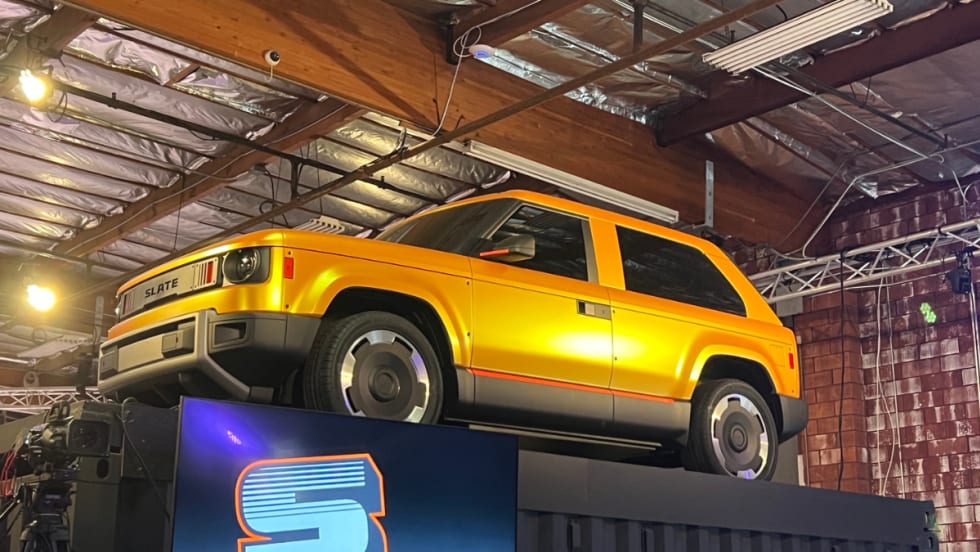
Slate Electric SUV, Pickup Switchable Model Aims For Light-Duty Fleets
Everything about this EV is counterintuitive and understated, making it stand out from the crowd.
Read More →
Inspiration Mobility Acquires Key Electrada Assets
Inspiration Mobility Group has acquired select assets of Electrada, adding the fleet electrification provider's team, technology, and charging infrastructure development capabilities to its energy management business.
Read More →
Turning Connected Vehicle Data Into Decisions That Matter
Fleet leaders have more data than ever, but turning that data into clear, actionable decisions remains a challenge. This white paper shows how leading organizations are using connected vehicle data to improve safety, reduce costs, and optimize fleet performance. Learn how to turn insight into action across your fleet.
Read More →
Are You Tracking Your Fleet's True Total Cost of Ownership?
Bobit Business Media surveyed 190 fleet professionals and found that while most fleets are tracking costs, fragmented systems and data gaps are keeping true TCO visibility out of reach. With rising pressure to control spend in an increasingly volatile environment, the gap between what fleets think they know and what the data actually shows is wider than you might expect. See how your peers are managing costs today and where the industry still has room to improve.
Read More →