




Mercedes-Benz Debuts All New 2015 C-Class Models
The C-Class is the top-selling model series for Mercedes-Benz. Two all new C-Class models will debut in MY-2015 - the C300 4MATIC with a 2.0L turbocharged four-cylinder and C400 4MATIC with a 3.0L bi-turbo V-6.

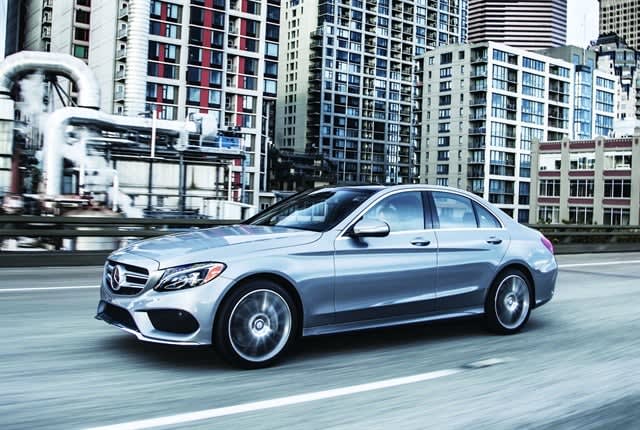
Assembled in the U.S., the 2015-MY C300 4MATIC model boasts improved fuel efficiency, with lightweighting being a key contributor. Photo courtesy of Mercedes-Benz.
The executive fleet market continues to become increasingly competitive as Mercedes-Benz introduces two new, all-wheel-drive C-Class sedan models. The 2015 models include the C300 4MATIC with a 2.0L turbocharged direct-injection in-line four-cylinder, delivering 241 hp and 273 lb.-ft. of torque, and a C400 4MATIC with a 3.0L bi-turbo direct-injection V-6, producing 329 hp and 354 lb.-ft. of torque.
A rear-wheel drive version of the C300 will be launched in the first quarter of calendar-year 2015.
For corporate executives, the most noticeable exterior change is that the C-Class has increased its dimensions. With a 3-inch wheelbase increase (112 inches) compared with the previous model, the vehicle is 3.7 inches longer (184 inches) and 1.6 inches wider (71 inches). The trunk capacity also increases to 17 cubic feet. These changes will increase the appeal of the C-Class in the executive fleet market since these vehicles are often used as mobile offices.
Assembled in the U.S, the 2015 models also boost improved fuel efficiency, with lightweighting being a key contributor. The new models feature a lightweight aluminum hybrid body154 pounds lighter than a conventional steel body, reducing the vehicle’s overall weight by around 200 pounds. The lightweight construction reduces fuel consumption without loss of performance. The share of aluminum has risen compared with the predecessor model from under 10 percent to almost 50 percent. In addition, the body structure uses ultra-high strength steel for maximum passive safety.
Interior Enhancements
The interior features an all-new center console with centrally positioned free-standing central display with a screen diagonal of 7 inches or 8.4 inches if the Multimedia Package with the COMAND Infotainment System is selected.
Another noteworthy interior feature is a touch sensitive touchpad in the hand rest over the controller on the center tunnel, which is standard for all C-Class models sold in the U.S. As on a smartphone, this provides simple and intuitive operation of all the head-unit functions using finger gestures. The touchpad also permits letters, numbers and special characters to be entered in handwriting – in any language.
In addition, a heads-up display is also new to the C-Class. Information on vehicle speed, speed limits, and navigation instructions is displayed directly in the driver’s field of vision on the front windscreen.
Optimized Drivetrain
The 7G-TRONIC PLUS automatic transmission provides smooth automatic gear shifting. The 4MATIC permanent all-wheel-drive system serves to improve traction and driving stability.
The suspension on the new C-Class is also new, providing nimble and agile handling, and features a newly designed 4-link front axle. Alternatively, the new C-Class is the first vehicle in its segment that can be fitted with an air suspension (AIRMATIC) on the front and rear axles.
All models of the C-Class family will feature the electromechanical Direct Steer system as standard. This combines road-speed-dependent power assistance from the speed-sensitive power steering system with a steering ratio which varies according to the given steering angle.
Numerous Safety Features
The 2015 C-Class is equipped with many vehicle and driver safety systems. For example, it is fitted as standard with ATTENTION ASSIST to warn the driver of inattentiveness and drowsiness. The ATTENTION ASSIST function offers an adjustable level of sensitivity to inform the driver about his or her level of drowsiness.
In addition to Adaptive Brake Assist, which offers protection from collisions from speeds as low as 4 mph, COLLISION PREVENTION ASSIST PLUS features an additional function: when a danger of collision persists and the driver fails to respond, the system is able to carry out autonomous braking, reducing the severity of collisions. The system also brakes in response to stationary vehicles at a speed of up to 31 mph, and is able to prevent rear-end collisions at speeds of up to 25 mph.
More Operations

Fleet Has a Talent Pipeline Problem. What Comes Next? | AF News Recap
Where will fleet’s next generation of leaders come from? This week, we’re looking at the industry’s talent pipeline, what certification can add to a fleet career, how to build an award-worthy track record, and the return of Automotive Fleet’s Personal Use Survey.
Read More →
Smith System Launches Driver Risk Management Program
Fleets have more driver data than ever, but identifying risky behavior doesn't necessarily correct it. Smith System's new Driver Risk Management program combines monitoring, training, and follow-up coaching to help fleets connect risk signals with driver intervention.
Read More →
Automotive Fleet Opens 2026 Personal Use Survey for Commercial Fleet Managers
Less than two weeks left! Commercial and corporate fleet managers are invited to share how their organizations handle company vehicle personal-use policies, charges, and driver eligibility.
Read More →
From AI Prompts to AI-Generated Safety Songs | AF News Recap
Can better prompts make AI more useful for fleet managers? This week, we’re breaking down smarter fleet analysis, an AI-assisted experiment that turned safety training into music, and what happened to fuel prices in August.
Read More →
How to Write Better AI Prompts for Fleet Analysis
Include these six elements in your fleet prompts to generate more relevant analysis and accurate answers.
Read More →
Fleet Meets: Eric Kilgore
This edition of the Fleet Meets series features one of the industry's best leaders driving multi-market and national operations.
Read More →
Why Reactive Fleet Management Is Becoming Too Expensive to Sustain
Research highlights a growing need for proactive management strategies to address rising costs in fleet operations effectively.
Read More →
What Your Fleet KPIs Aren’t Telling You
Tracking fleet metrics is only useful when the data leads to better decisions. This guide helps fleet leaders assess cost, utilization, and downtime more accurately, identify performance gaps, and prioritize the actions that can improve operational results.
Read More →
Hidden in Plain Sight: Fleet Compliance Risks
Fleet compliance isn't just about having policies — it's about consistently enforcing them. This practical guide reveals six hidden compliance risks common in public sector and shared fleet operations and outlines proven strategies to improve visibility, accountability, and audit readiness
Read More →
Turning Fleet Payment Data into Executive Insights
Does data alone drive results in operations?
Read More →