




Measuring Emissions a Growing Priority for Fleets
The results of the 2010 Green Survey by PHH Arval reveal the number of fleets measuring emissions has increased over the past two years.
Ongoing economic uncertainty has not seemed to impact the focus on fleet environmental issues. With organizations becoming increasingly environmentally conscious, fleets are measuring emissions to "green" operations as much as possible.
This assessment is based on an annual survey of fleet managers on the subject of environmental issues, which was conducted by PHH Arval. The survey, distributed via the web, included responses from a wide variety of fleet managers.
Nearly Half of Fleets Now Measure Emissions
In the last year, 75 percent of respondents reported they had been asked about the environmental impact of their fleets. This compares to 74 percent in 2009 and has largely remained flat since 2007, the first year of the survey.
Compared to last year, the economy has had more of an impact on fleet environmental goals. But interestingly, it has accelerated progress for some and slowed it for others (Chart 3). Twenty-eight percent of fleets said the economy accelerated their programs (compared to 21 percent last year), and 20 percent said it slowed their plans (compared to 9 percent last year).
Almost half of all fleets are measuring emissions - up significantly from 2008 (Chart 1). In 2008, the first year the question was included in the survey, slightly more than a quarter of all fleets (28 percent) were measuring their emissions. Significant gains in this area have been made in the past two years. Now, almost half of all fleets (49 percent) are measuring emissions.
Of those measuring emissions, nearly 65 percent are using actual fuel use data - an increase of more than 10-percentage points over 2009 (Chart 2). Using actual fuel data provides fleets the most accurate data and accounts for variations in driver behavior (and hence fuel economy) and mileage.
In response to a separate question, 68 percent of respondents said they have an environmental goal for their fleets, up slightly from last year. Fuel-efficiency goals were most common at 34 percent, with greenhouse gas (GHG) goals right behind at 31 percent. While an mpg goal does not account for changes in fleet size or mileage, it does allow a company to track the overall efficiency of its fleet. GHG reduction goals are the most useful in driving appropriate behavior, as this type of goal allows a company to accurately track its fleet's impact on the environment, according to PHH Arval.
[PAGEBREAK]
Costs Present Challenges
Although organizations show continued interest in "going green," cost does play a role in reducing fleet emissions. While the number of respondents identifying cost as a barrier has fallen slightly each year, it continues to be significant at 42 percent (down from 46 percent in 2008). Cost was cited as the largest challenge fleet managers face in trying to reduce a fleet's environmental impact - as it has been since the survey began (Chart 4). Cost also seems to be a growing challenge for fleet managers.
In 2008, 40 percent of respondents indicated cost was a significant issue. In 2010, that jumped to 60 percent. There may be multiple reasons for this. Many have been right-sizing vehicles and putting the drivers in the most efficient vehicle in each class, but some of the next steps - which might include hybrids, alternative fuels, driver training, or telematics - require larger financial investments and fleets must very carefully evaluate the payback. In the ongoing economic uncertainty, many companies are cautious about spending money without a quick, proven payback.
Other challenges included lack of appropriate vehicles. The difficulty in getting appropriate vehicles has eased somewhat since last year, but the number of respondents saying the right vehicles simply don't exist has gotten larger. Lack of financial or environmental data continues to be an issue for a minority of respondents.
Despite cost being a concern, 29 percent of respondents have been finding cost savings as they reduce emissions. This is slightly up from last year (25 percent).
Driver Behavior Key to Reducing Emissions
Fleets are focusing on driver behavior as a key way to reduce emissions. Most fleets (74 percent) are reaching out to drivers to enlist their help with fleet environmental goals (Chart 5). The most common type of communication has been to educate drivers on how their behavior can impact fuel economy (56 percent compared to 48 percent in 2009).
Focus on this area can have immediate impact on both fleet emissions and fleet budgets - no need to wait for vehicle replacement cycles. Compared to last year, it appears fleet managers are using more methods to communicate with drivers, as response rates went up for nearly every type of communication. E-mail is the most common method at 54 percent, while vehicle selection process follows at 46 percent. Other methods include newsletters and in-person and online training.
Fleets Take Cautious Approach to Alternative Fuels
Fifty-six percent of respondents did not agree that "fuel-efficient vehicles are less attractive" to drivers and executives, but many have yet to implement all alt-fuel types.
A new question posed to respondents this year was about their current and potential near-term use for a variety of fuel types including electric, diesel, and compressed natural gas (CNG). Conventional gasoline hybrids had the most acceptance, with every other technology trailing significantly.
Each organization has different goals, different cultures, and different vehicle requirements, so the solutions to each green challenge vary. From overall selector changes to analyzing each individual vehicle, to implementing online "green driver" training, to experimenting with compressed/liquefied natural gas and hybrid vehicles - operating a greener fleet continues to be a strategic benefit in the marketplace. Fleet managers should share their experiences with colleagues as part of enhanced education and understanding of best practices in green fleets.
More Green Fleet

Merchants Fleet Reports 290M EV Miles as Fleets Navigate Changing Electrification Market
From millions in operating savings to hundreds of millions of EV miles, Merchants Fleet’s latest report reveals what’s working and what’s changing in fleet electrification.
Read More →
The EV Breakdown Nobody's Talking About: Why Most Electric Vehicle Roadside Calls Aren't Mechanical Failures
Here's why EV breakdowns are widely misunderstood.
Read More →
ChargePoint Now Available in Energy Pass
ChargePoint and additional planned charging network integrations were added to GM's Energy Pass.
Read More →

First Look: Slate Auto's Electric Fleet Pickup
Could an affordable, modular EV pickup make electrification more practical for fleets?
Read More →
Slate Debuts Colorful, Unique EV Models
A recent media and client event, studded with electric vehicles dressed up on platforms, planted a new position for the manufacturer in the wider EV market. Fleets will find cost-saving advantages.
Read More →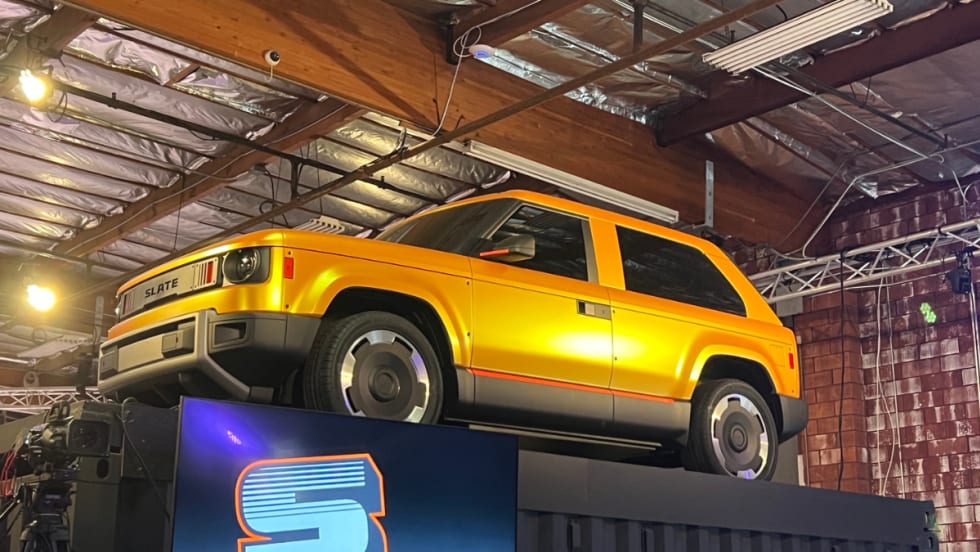
Slate Electric SUV, Pickup Switchable Model Aims For Light-Duty Fleets
Everything about this EV is counterintuitive and understated, making it stand out from the crowd.
Read More →
Inspiration Mobility Acquires Key Electrada Assets
Inspiration Mobility Group has acquired select assets of Electrada, adding the fleet electrification provider's team, technology, and charging infrastructure development capabilities to its energy management business.
Read More →
Turning Connected Vehicle Data Into Decisions That Matter
Fleet leaders have more data than ever, but turning that data into clear, actionable decisions remains a challenge. This white paper shows how leading organizations are using connected vehicle data to improve safety, reduce costs, and optimize fleet performance. Learn how to turn insight into action across your fleet.
Read More →
Are You Tracking Your Fleet's True Total Cost of Ownership?
Bobit Business Media surveyed 190 fleet professionals and found that while most fleets are tracking costs, fragmented systems and data gaps are keeping true TCO visibility out of reach. With rising pressure to control spend in an increasingly volatile environment, the gap between what fleets think they know and what the data actually shows is wider than you might expect. See how your peers are managing costs today and where the industry still has room to improve.
Read More →