




Mazda6: Looking The Part
The redesigned 2014 edition sports enormous front fenders, swooping lines and stylish new front and rear ends, all part of Mazda's new "Stylish, Insightful, and Spirited" design concept.


The 2014 Mazda6.

The 2014 Mazda6.
Much has been made of the new sheet metal that decorates the redesigned Mazda6. The 2014 edition sports enormous front fenders, swooping lines and stylish new front and rear ends, all part of Mazda’s new “Stylish, Insightful, and Spirited” design concept.
The new look is way overdue. Since it succeeded the 626 in 2002, the Mazda6’s claim to fame in the mid-size sedan category has been its performance and handling. Until now, it didn’t look any more like a racecar than the class-leading Toyota Camry and Honda Accord.
Both of those cars have received sleek new redesigns in the past couple years, as have the Ford Fusion and Nissan Altima. But none underwent a more radical transformation than the “6,” and Mazda is counting on the new look to steal attention from its competitors.
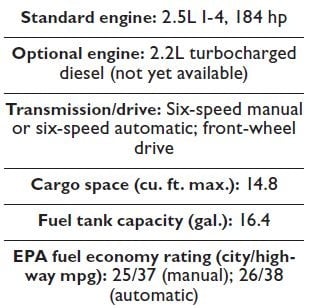
The specs of the 2014 Mazda6.
Under the hood, every Mazda6 is powered by a 2.5-liter inline four that delivers 184 horsepower at 185 pound-feet of torque. The outgoing base engine delivered less power but could be swapped for a 3.7-liter V-6. The bad news is that the V-6 is no longer available. The good news is that the new engine is good for up to 38 miles per gallon on the highway.
But that’s not all. After months of speculation, Mazda has confirmed that it will offer the same 2.2-liter, four-cylinder turbodiesel that powers the European version to North American buyers. Specs are not yet available, but the most powerful overseas model delivers 173 horsepower and 310 pound-feet of torque.
The interior has a new layout and upgraded materials and controls. The leather-wrapped steering wheel is slightly smaller and loaded with buttons. The seats are plushier, but the prior generation’s ample rear legroom and large trunk remain intact.
The Mazda6 is available in i Sport, i Touring and i Grand Touring editions. The base model includes power locks and windows, 17-inch alloy wheels, cruise control and six-speaker audio. The Touring edition adds a power driver’s seat, leatherette upholstery, a rearview camera, optional navigation and more. The Luxury model includes navigation as well as high-class items such as satellite radio with 11 speakers, leather seats and a sunroof.
The gasoline-powered Mazda6 is available now and starts at $20,880. The diesel edition is scheduled to reach our shores in the second half of 2013.
Originally posted on Work Truck Online
More Operations

How Fleets Can Recruit and Train Veterans for Technician Roles
Here's how the technician shortage has affected uptime for fleets, and what to do about it.
Read More →
Avis Budget Group Deploys Neology Toll Management Technology Across Major Brands
Neology’s neoFleet platform will manage toll transactions and toll-authority operations for vehicles across Avis, Budget, Payless, Budget Truck and Zipcar.
Read More →
Fleet Personal-Use Charges Edge Higher in 2026
Nearly eight in 10 surveyed fleets allow personal use of company vehicles, while just over half of respondents report charging employees for the privilege.
Read More →
The Future of Fleet + What’s Changing Right Now | AF News Recap
Could developments overseas offer a preview of what’s coming for U.S. fleets? This week, we’re looking at the future of AI, autonomy, and electrification, plus Ford Pro’s new certified pre-owned program, smarter vehicle offboarding, and a new way for fleets to manage toll expenses.
Read More →
How to Handle Vehicle Offboarding
What do fleet managers need to do when a driver leaves?
Read More →
Fleet Manager’s Ultimate Playbook: Navigating the New Standard in OEM Connectivity
Rising operating costs, driver safety concerns, and unplanned downtime are putting unprecedented pressure on modern fleets. Discover how fleet managers use embedded OEM connectivity and real-time vehicle data to cut TCO, prevent downtime, and protect drivers without aftermarket telematics hardware.
Read More →
U.S. Bank Adds Verra Mobility Toll Management to Voyager Fleet Platform
The integration allows U.S. Bank Voyager fleet customers to manage toll payments and violations alongside fuel, EV charging and maintenance expenses.
Read More →
ADAS Prevents Crashes. But Repairs Cost More | AF News Recap
ADAS-equipped vehicles may crash less often, but they can cost more when they do. This week, we’re breaking down what that tradeoff means for fleets, plus Subaru’s first Forester Wilderness Hybrid, Nissan’s new e-POWER Rogue, and why Calstart has become Catalyst Mobility.
Read More →
Moventum Fleet Management Names Mark Iorillo Head of Sales
Iorillo brings nearly 20 years of fleet management and sales experience to the role, including previous positions at Element Fleet Management, CEI, Donlen and Ryder.
Read More →
Fleet Has a Talent Pipeline Problem. What Comes Next? | AF News Recap
Where will fleet’s next generation of leaders come from? This week, we’re looking at the industry’s talent pipeline, what certification can add to a fleet career, how to build an award-worthy track record, and the return of Automotive Fleet’s Personal Use Survey.
Read More →