




Mazda CX-9 Zoom-Zooms with More Room
In the second of three all-new vehicles engineered specifically for North America, Mazda’s new crossover SUV offers styling, roomy flexibility, and industry-noted performance.

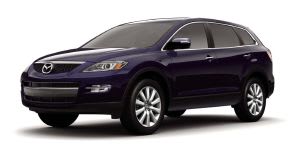
The 2007 seven-passenger Mazda CX-9 is not simply a lengthened version of the CX-7, according to the automaker. With one of the longest wheelbases in the segment (113.2 inches), Mazda’s newest crossover SUV model combines sports car styling with flexible interior passenger seating and cargo capacity.
The crossover is the second of three all-new Mazda vehicles designed and engineered specifically for the North American market. The CX-7 debuted last year.
The CX-9 offers Mazda’s new 3.5L V-6 engine with 263 horsepower. A 6-speed automatic transmission is standard on the CX-9, a feature that’s been exclusive to premium-priced SUVs, according to Mazda.
The new crossover is available in FWD or AWD. The all-wheel-drive version features Mazda’s advanced active torque AWD system that senses and applies torque to those wheels most able to provide solid traction, depending on road conditions. EPArated fuel economy is 18 city/24 highway with the FWD and 16/22 for the AWD. Roominess Enhances Utility
In the CX-9, both passengers and cargo find plenty of room. The 60-40 split second row carries three passengers while offering five inches of fore-and-aft slide travel and a reclining backrest. In the 50-50 split third row, seating position and leg room are both class-leading in measurement. With both second- and third-row seats folded flat, cargo capacity reaches all the way to the back of the front seats, 100.7 cubic inches. An optional power-operated liftgate provides one-touch opening and closing access to cargo. Technology Aids Safety
CX-9 models offer as standard a wide range of safety features, including roll stability control, anti-lock brakes, dynamic stability control, traction control, and side-curtain airbags with threerow protection. The front headrests incorporate new design features to reduce neck injuries during rear impacts.
Offered in three trim levels — Sport,Touring, and Grand Touring — all CX-9 models include three-zone climate control,power windows, mirrors, and door locks with remote keyless entry, cruise control, and a choice of black or beige interior hues.
In both exterior and interior styling, Mazda rejected what it calls the “utilitarian look” of many mid-sized crossover SUVs, opting for a “sophisticated appearance” with a flowing silhouette, prominent wheels and tires,“muscular” fenders, and a steeply angled windshield and backlight. Industry Notes Performance
On Southern California freeways, the CX-9 provided comfort and a nimble responsiveness,connecting solidly with the road. Mazda deservedly touts the CX-9’s top performance against more expensive crossover SUVs in a Motor Trend magazine three-vehicle comparison. The publication noted the CX-9 driving dynamics, space and utility. The CX-9 is available starting at $29,035 retail price.
More Operations

Avis Budget Group Deploys Neology Toll Management Technology Across Major Brands
Neology’s neoFleet platform will manage toll transactions and toll-authority operations for vehicles across Avis, Budget, Payless, Budget Truck and Zipcar.
Read More →
Fleet Personal-Use Charges Edge Higher in 2026
Nearly eight in 10 surveyed fleets allow personal use of company vehicles, while just over half of respondents report charging employees for the privilege.
Read More →
The Future of Fleet + What’s Changing Right Now | AF News Recap
Could developments overseas offer a preview of what’s coming for U.S. fleets? This week, we’re looking at the future of AI, autonomy, and electrification, plus Ford Pro’s new certified pre-owned program, smarter vehicle offboarding, and a new way for fleets to manage toll expenses.
Read More →
How to Handle Vehicle Offboarding
What do fleet managers need to do when a driver leaves?
Read More →
Fleet Manager’s Ultimate Playbook: Navigating the New Standard in OEM Connectivity
Rising operating costs, driver safety concerns, and unplanned downtime are putting unprecedented pressure on modern fleets. Discover how fleet managers use embedded OEM connectivity and real-time vehicle data to cut TCO, prevent downtime, and protect drivers without aftermarket telematics hardware.
Read More →
U.S. Bank Adds Verra Mobility Toll Management to Voyager Fleet Platform
The integration allows U.S. Bank Voyager fleet customers to manage toll payments and violations alongside fuel, EV charging and maintenance expenses.
Read More →
ADAS Prevents Crashes. But Repairs Cost More | AF News Recap
ADAS-equipped vehicles may crash less often, but they can cost more when they do. This week, we’re breaking down what that tradeoff means for fleets, plus Subaru’s first Forester Wilderness Hybrid, Nissan’s new e-POWER Rogue, and why Calstart has become Catalyst Mobility.
Read More →
Moventum Fleet Management Names Mark Iorillo Head of Sales
Iorillo brings nearly 20 years of fleet management and sales experience to the role, including previous positions at Element Fleet Management, CEI, Donlen and Ryder.
Read More →
Fleet Has a Talent Pipeline Problem. What Comes Next? | AF News Recap
Where will fleet’s next generation of leaders come from? This week, we’re looking at the industry’s talent pipeline, what certification can add to a fleet career, how to build an award-worthy track record, and the return of Automotive Fleet’s Personal Use Survey.
Read More →
Smith System Launches Driver Risk Management Program
Fleets have more driver data than ever, but identifying risky behavior doesn't necessarily correct it. Smith System's new Driver Risk Management program combines monitoring, training, and follow-up coaching to help fleets connect risk signals with driver intervention.
Read More →