




Mapping a Sustainable Fleet Strategy
Building an environmentally responsible fleet requires research, planning, and matching vehicles and technologies to applications and business needs. Two companies share best practices in developing sustainable fleet programs.

Fleet management's role in corporate sustainability initiatives is often critical to achieving program goals in cutting energy consumption, reducing greenhouse gas emissions, and supporting good "corporate citizenship." Some industry data estimates the average fleet vehicle each year will log 20,000 miles and emit 19,000 to 27,000 lbs. of carbon dioxide (CO2).
Even during corporate bottom-line-wary times, many companies continue to pursue green fleet measures. In its 2010 Green Survey, PHH Arval reports corporate interest in fleet's environmental impact remains steady, according to Karen Healey, PHH director of project management, including environmental initiatives. In addition, while the economic downturn has slowed fleet environmental initiatives for 21 percent of PHH survey respondents, 28 percent said their sustainability measures have accelerated.
Building an eco-responsible fleet requires research, good planning, and effective implementation. Two companies, AT&T and ServiceMaster, share their best practices in developing a sustainable fleet strategy.
Building Right Mix of Green Vehicles & Technologies
In March 2009, AT&T announced it would invest up to $565 million as part of a strategy to deploy more than 15,000 alternative-fuel vehicles by 2019. According to company statistics, AT&T currently operates more than 77,000 vehicles.
The company's 15,000 alt-fuel vehicle goal will displace 2.5 million barrels of oil, reduce carbon output by 211,000 metric tons, and create or save 5,500 jobs, according to the Alternative Fuel Vehicle Institute.
The communications giant expects to spend an estimated $350 million over five years to purchase approximately 8,000 compressed natural gas (CNG) vehicles. The company is also working with natural gas service providers to build up to 40 new CNG fueling stations across its operating region to provide the infrastructure needed for the new vehicles.
AT&T's green fleet plan includes an approximately $215 million investment to replace 7,100 fleet passenger cars with alternative-fuel models. The measure will save 49 million gallons of gasoline over 10 years, according to the Center for Automotive Research.
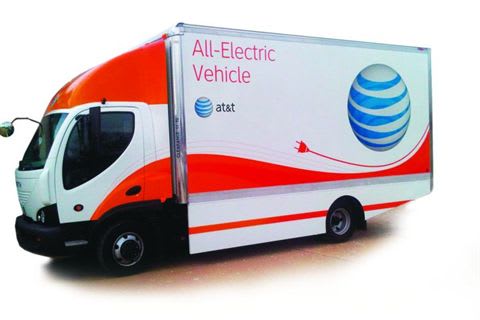
In addition to CNG-powered vehicles, AT&T is deploying electric-hybrid OEM sedans and compact SUVs, electric-hybrid conversion work trucks, and all-electric vans. The company recently added an all-electric Smith Newton cargo truck to its commercial fleet in St. Louis.
Other sustainability measures AT&T implemented include an idling reduction policy and promoting eco-smart driving habits among its company drivers.
[PAGEBREAK]
Katie Dugan, lead AFV program manager for AT&T's Supply Chain and Fleet Operations, considers the following steps critical in developing a successful sustainable fleet.
1. Learn before you leap.
AT&T's 2009 commitment to investing in an alternative-fuel fleet followed deployment of 105 alternative-fuel vehicles in 2008 and an earlier trial of four hybrids in California in 2007. "Through these successful pilot programs, we learned that a mix of solutions is right for our fleet," said Dugan.
2. Match the fuel to the fleet.
"We require a fleet with multiple vehicle types, and we believe there are multiple technologies that can reduce our operating costs over time while effectively reducing our fuel consumption and impact on the environment," Dugan explained.
From a 2008 pilot program, the company learned CNG and hybrid-electric vehicles work for its business applications, particularly since the technology is more readily accessible. "As alternative-fuel technologies evolve, we'll continue to explore them to determine if they're right for our company," said Dugan.
3. Make sure it makes sense.
For example, CNG is suitable for the AT&T fleet, said Dugan, because it is "cost-effective, cleaner-burning, and readily available in our country.
Additionally, CNG vehicles provide a reduction in carbon emissions - approximately 25 percent compared with traditional gasoline vehicles - and that supports our corporate commitment to reduce our impact on the environment."
[PAGEBREAK]
ServiceMaster Plan Timeline Phased In
Memphis, Tenn.-based ServiceMaster serves 10.5 million U.S. residential and commercial customers through a network of more than 5,500 company-owned locations and franchised licenses.
According to Jim Steffen, director of fleet engineering and technical support, 95 percent of the company's 16,000 fleet vehicles operate in three of ServiceMaster's eight brands: TruGreen Lawn Care, Terminix, and TruGreen Land Care.
The three brands' fleet comprise primarily ½-ton pickup trucks, 1-ton pickup trucks), low-cab-forward cab chassis, and cutaway cab chassis.
After research and consultation with internal customers, including vehicle operators and management, Steffen developed ServiceMaster's "Green Fleet Initiative Plan" in early 2006. The document, which included 10 pages of information, outlined "where we wanted to be with the green fleet initiative in 10 years and beyond."
Steffen also worked with the company's VP of environmental stewardship, Jamey Jones, to ensure it aligned with other sustainable initiatives, such as facility design, and then received buy-in from the CEO.
Phase 1 of the green initiative plan, covering the near-term, 1-3 years, detailed immediately achievable action steps, including idle reduction measures and vehicle and fleet right-sizing.
"We matched overall fleet size to business needs and individual vehicle models to applications," Steffen explained. The right-sizing effort trimmed the fleet size by 9 percent, he said.
To reduce engine idling, particularly among sprayer trucks that applied fertilizers, pesticides, etc., ServiceMaster built its own hybrid gas-electric sprayers. The system uses a 24V high-output alternator, battery pack, and electric motor to power sprayers without running the vehicle engine.
"We're saving at least 10 percent in fuel consumption" with the hybrid-electric sprayer equipment, said Steffen.
[PAGEBREAK]
With Phase 1 completed, the plan's Phase 2 (years 3-6) begins this fall. Steffen will work with suppliers of hybrid-electric powered trucks in the 12,000-14,000-lb. GVW range for use with lawn service units. He will also investigate other alt-powered vehicles, including a plug-in hybrid-electric cargo van and all-electric trucks.
All-electric vehicles present other issues to work through, such as overnight charging stations that must be set up at branch locations, Steffen pointed out.
"I'm weighing the return on investment now," he said, balancing the price and operating expense of a conventional truck with the increased acquisition cost and power costs of a pure-electric vehicle. He must also consider whether the pure-electric truck can meet the application's daily workload, which includes traveling 50-60 miles.
In time, he thinks a business case can be made for the alt-powered truck, but requires more operating data from the supplier.
During the green fleet plan Phase 3 (year seven and beyond), ServiceMaster will explore technology not yet available, said Steffen.
Technologies explored will include hydrogen-fueled internal combustion engines, fuel cells, and solar energy to extend the range of pure-electric vehicles, which may be advanced enough for use in 5-10 years, he explained.
Based on his experience developing and refining ServiceMaster's Green Fleet Initiative Plan, Steffen offered the following best-practice suggestions.
● Develop a well-researched plan. "Do your homework," said Steffen.
● Frame the plan in a timeline of short-, mid-, and long-term phases, "because technology changes," Steffen noted.
● Consult customers. Solicit input from vehicle operators, management, and other relevant parties, Steffen recommended.
● Get buy-in from key high-level management. "Build and present a 'defensible' business case."
More Green Fleet
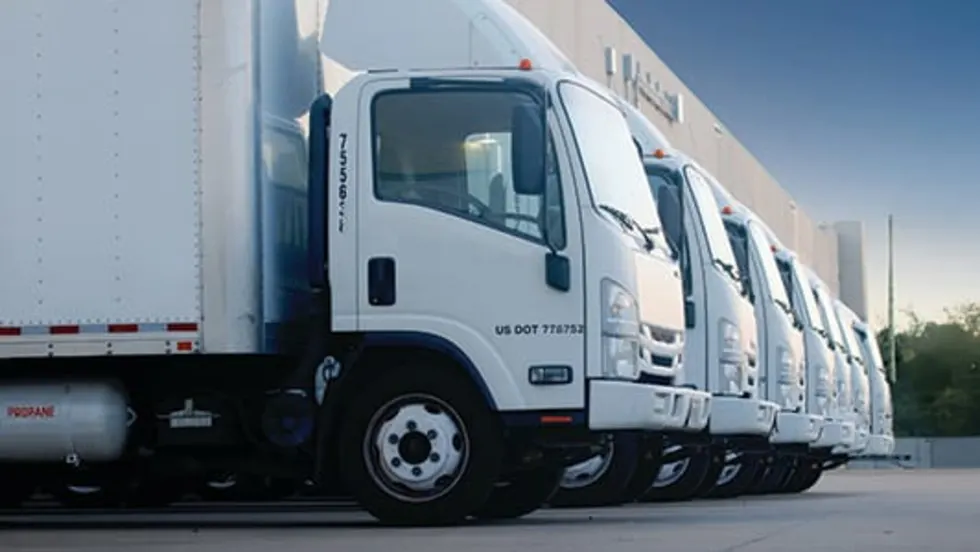
New Propane Autogas Program Offers Fleet Compensation
Qualified commercial fleets can receive $7,500 per eligible propane autogas vehicle and up to $10,000 for new refueling site prep. Learn how the program works and see whether your fleet qualifies.
Read More →
EV Charging Use Is Outpacing Infrastructure Growth
ChargePoint’s 2026 Charging Forward Report points to rising charger use, higher-powered charging, commercial vehicle electrification, and energy-management technology. Here’s what fleets should know.
Read More →
Merchants Fleet Reports 290M EV Miles as Fleets Navigate Changing Electrification Market
From millions in operating savings to hundreds of millions of EV miles, Merchants Fleet’s latest report reveals what’s working and what’s changing in fleet electrification.
Read More →

The EV Breakdown Nobody's Talking About: Why Most Electric Vehicle Roadside Calls Aren't Mechanical Failures
Here's why EV breakdowns are widely misunderstood.
Read More →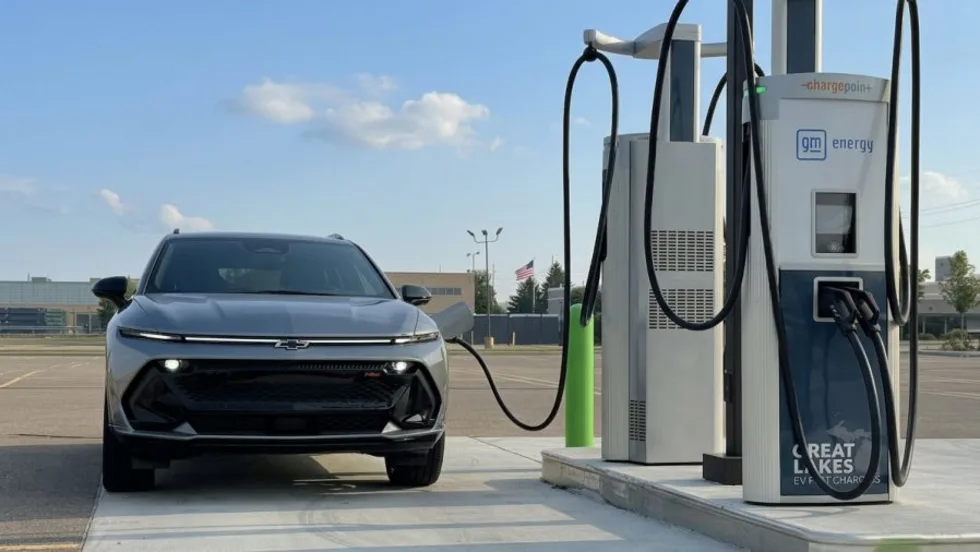
ChargePoint Now Available in Energy Pass
ChargePoint and additional planned charging network integrations were added to GM's Energy Pass.
Read More →

First Look: Slate Auto's Electric Fleet Pickup
Could an affordable, modular EV pickup make electrification more practical for fleets?
Read More →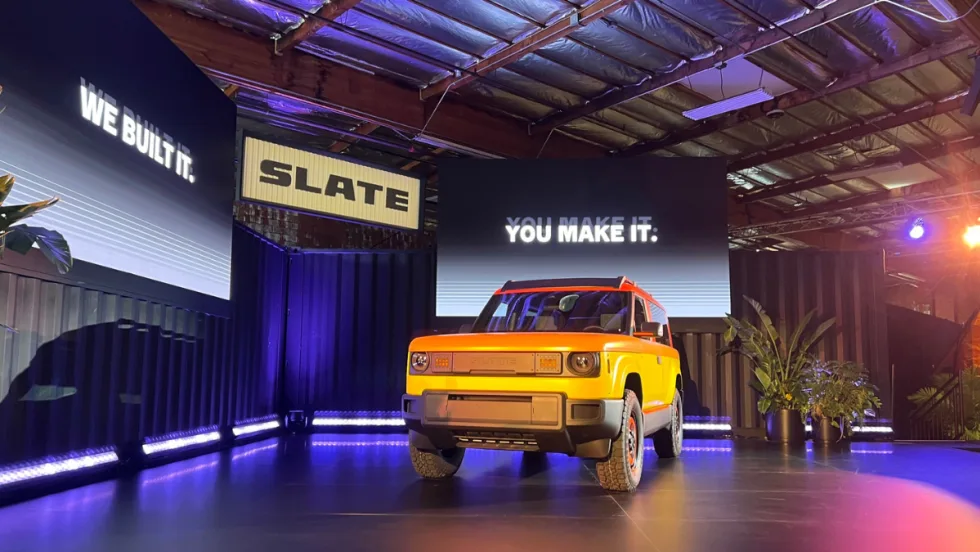
Slate Debuts Colorful, Unique EV Models
A recent media and client event, studded with electric vehicles dressed up on platforms, planted a new position for the manufacturer in the wider EV market. Fleets will find cost-saving advantages.
Read More →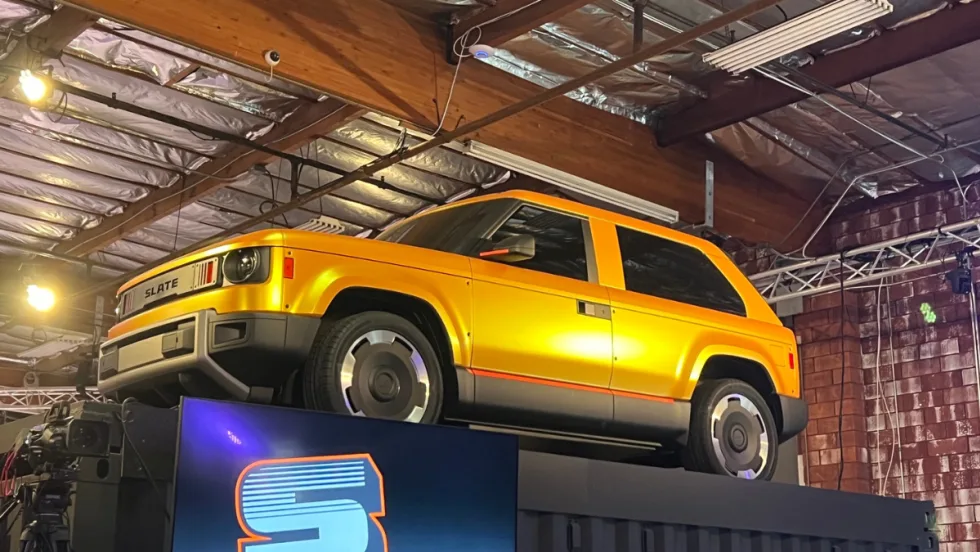
Slate Electric SUV, Pickup Switchable Model Aims For Light-Duty Fleets
Everything about this EV is counterintuitive and understated, making it stand out from the crowd.
Read More →
Inspiration Mobility Acquires Key Electrada Assets
Inspiration Mobility Group has acquired select assets of Electrada, adding the fleet electrification provider's team, technology, and charging infrastructure development capabilities to its energy management business.
Read More →