




Many Public Sector Fleets Want a Partnership With Fleet Service Providers
I have received a tremendous amount of feedback from public sector fleet managers to the Market Trends column appearing in the August 2002 issue on the need to create a partnership with fleet service providers. You will be able to read many of these comments in the letters to the editor page over the next several issues.


I have received a tremendous amount of feedback from public sector fleet managers to the Market Trends column appearing in the August 2002 issue on the need to create a partnership with fleet service providers. You will be able to read many of these comments in the letters to the editor page over the next several issues. Traditionally, public fleet operations have tended to be undercapitalized and understaffed. As a consequence, public fleet managers stress that they are already outsourcing or subletting, some as much as a third of their fleet work. In addition, declining tax revenues are prompting additional pressures to consider outsourcing as many government fleet managers report that their budgets are being reduced. They are looking for alternate ways to maintain the same level or improved levels of service within the confines of a flat or reduced budget. A number of public fleet and equipment managers report that they have been challenged by their upper administration to consider outsourcing as a way to reduce costs.
In addition to declining tax revenues, other factors are increasing the level of subletting. For instance, more vehicle maintenance work is being outsourced as a result of the increased complexity of today’s vehicles, the shortage of qualified technicians, and the stringent environmental requirements to operate a full-service maintenance facility. Some fleet managers who have elected to sublet this work say that it allows them to concentrate on their core goals, such as providing superior customer service, improved vehicle utilization, vehicle procurement, and maintain compliance with various federal environmental regulations. These are the same fleet managers who are confident about the performance of their fleet operation and see themselves more than capable of competing with private sector companies on a competitive bid basis. As one public fleet manager said, his philosophy is to do in-house what he does most economically to keep his internal customers satisfied and outsource those services that can be better accomplished by specialists. Also, affirmative action requirements influence the procurement process for public sector fleets. Many government agencies are required to offer Small & Minority Vendor programs, which favors outsourcing.
Stumbling Blocks to Doing Business
In the past, several fleet management companies made strategic decisions to pursue government fleets, creating entire departments to achieve this objective, only to see these efforts fail and now view any further use of resources, strategic focus, or dollars to be a questionable investment. However, as one consultant indicated, there may never be a better time than now for fleet service providers to market their services to the public sector. He argues that some government agencies are complacent when their coffers are full and not very receptive to outsourcing proposals. However, with government budgets contracting due to declining tax revenues, public fleets are looking anew at propositions to sublet certain work.
Despite this, there still exist a number of stumbling blocks for fleet service providers. From the public fleet manager perspective, there is a perceived loss of control and accountability for services that are no longer managed in-house. Many public sector fleets are also maintained by a union force, which lobbies vigorously, and usually successfully, against privatization attempts. Some public fleet managers rightly observe that many fleet service providers often regard them as clients of last resort. They point out that the proportion of solicitations received from fleet service providers tend to increase when economic times are bad and decrease when the economy improves. Another stumbling block is the needless antagonism that is created when private sector companies attempt to bypass the fleet manager in soliciting work to be sublet to them. Universally, public sector fleet managers say that a service provider would be more successful by establishing a relationship with the fleet manager and showing how they can help them.
Looking to the Future
Despite these stumbling blocks (and the others discussed in the August issue), many public sector fleet managers say that they represent a receptive market for the fleet services offered by private sector companies. In the long run, a partnership between public fleets and fleet service providers can be a win-win situation for everyone.
Let me know what you think. mike.antich@bobit.com
More Operations
How to Manage Conflict for Your Fleet Operations
Conflict management is becoming a core leadership skill. Here are five strategies fleet leaders should know.
Read More →
Turning Connected Vehicle Data Into Decisions That Matter
Fleet leaders have more data than ever, but turning that data into clear, actionable decisions remains a challenge. This white paper shows how leading organizations are using connected vehicle data to improve safety, reduce costs, and optimize fleet performance. Learn how to turn insight into action across your fleet.
Read More →
Cameras, Safety and Insurance: From Reactive Claims to Real-time Prevention
Commercial auto remains one of the most challenging and costly lines of coverage for fleet operators and insurers alike. Learn more about how to effectively address these issues from Onur Aksan, Enterprise Business Development Executive, Geotab.
Read More →

Are You Tracking Your Fleet's True Total Cost of Ownership?
Bobit Business Media surveyed 190 fleet professionals and found that while most fleets are tracking costs, fragmented systems and data gaps are keeping true TCO visibility out of reach. With rising pressure to control spend in an increasingly volatile environment, the gap between what fleets think they know and what the data actually shows is wider than you might expect. See how your peers are managing costs today and where the industry still has room to improve.
Read More →
Turn Fleet Data Into Smarter Decisions
Fleet leaders have access to more operational data than ever, but disconnected systems and unclear metrics often slow decision-making instead of improving it. This article outlines five practical steps fleets can take to transform fragmented data into actionable insights that improve planning, safety, utilization, and long-term performance.
Read More →
Hybrids: Electrification Without the Challenges
For fleet managers, fuel is one of the biggest line items in the budget — and it's one hybrids can shrink without changing how your people work. Download the eBook to see the numbers, understand the technology, and get a step-by-step guide to making the switch.
Read More →
How NOV Uses Telematics to Improve Fleet Safety Across 160 Locations
James Victory of NOV discusses how the company manages fleet safety, maintenance, and telematics across more than 150 locations supporting oilfield operations throughout the U.S.
Read More →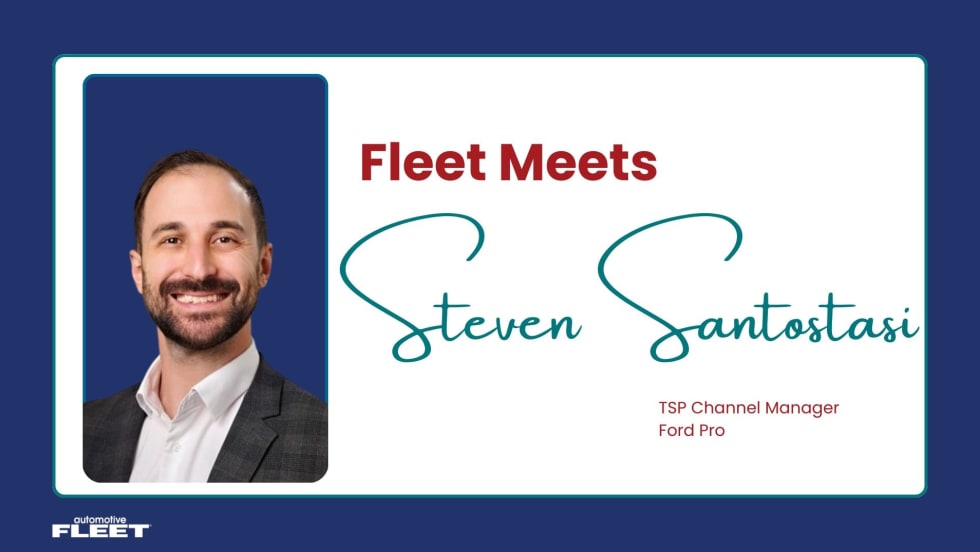
Fleet Meets: Steven Santostasi
This edition of the Fleet Meets series features Steven Santostasi, the current TSP channel manager for Ford Pro.
Read More →
Why Fleet Managers Are Replacing Departmental Vehicles with Shared Motor Pools
Departmentally assigned vehicles often create hidden costs through underutilization, poor visibility, and increased administrative burden. This white paper explores how shared motor pool strategies help fleets reduce costs, improve accountability, and optimize vehicle utilization.
Read More →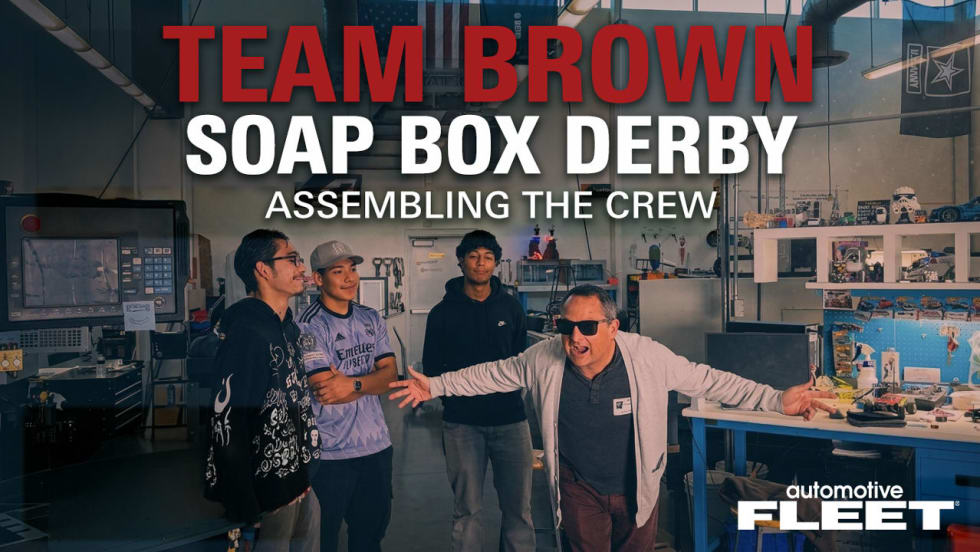
Soap Box Derby Challenge: Assembling the Crew
Meet Gabriel, Matthew, and Angel — the team helping bring this soap box derby build to life.
Read More →