




Related: Unscheduled Maintenance Costs Increase 3% in CY-2021
Managing Vehicle Lifecycles in High-Mileage Scenarios
Jim Liverseed of Tennant Company does the little things right regarding keeping high-mileage fleet units running smoothly. But in the big picture, it’s all about managing data, lifecycle costing, and communication.
by Staff
February 14, 2022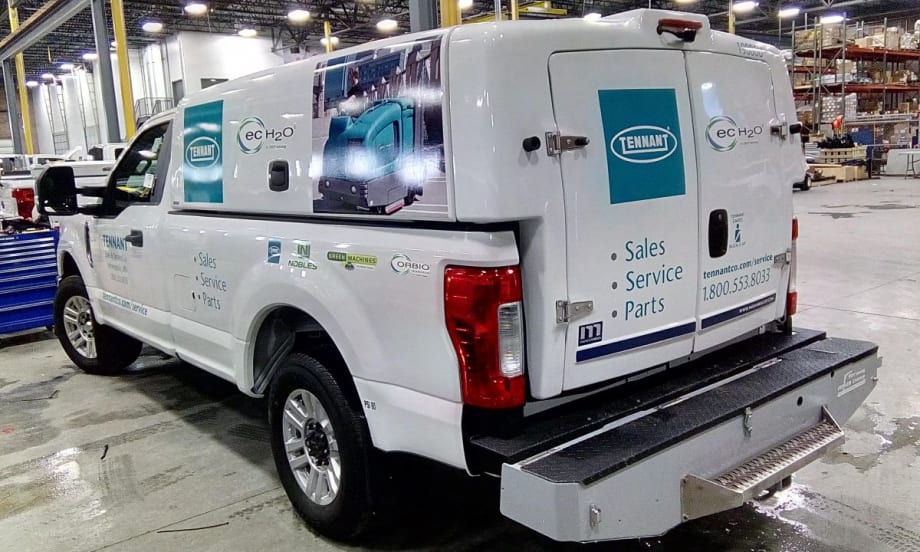
The Tennant Company fleet spans about 1,000 units across North America, consisting of Class 1 and 2 vans, pickup trucks, and full-size SUVs. Upfitting them must be managed more closely in this era of supply chain disruptions.
Photo courtesy of The Tennant Company
5 min to read
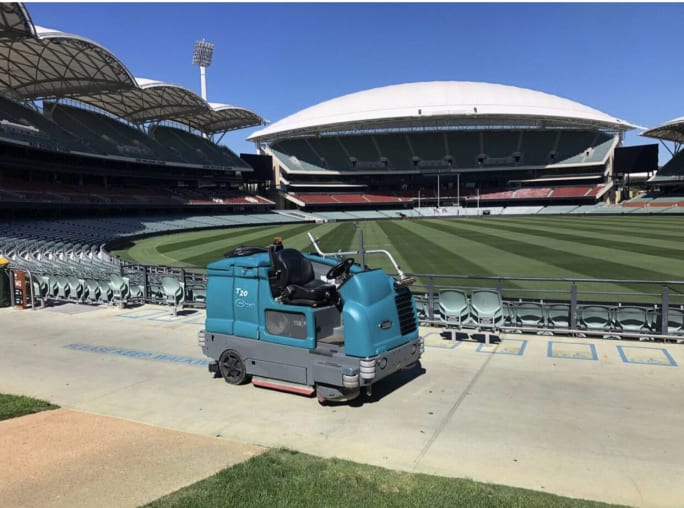
The Tennant Company’s technicians service cleaning machines like this one, so they’re naturally inclined to take better care of their fleet trucks and vans, says Jim Liverseed, fleet manager.
Photo courtesy of The Tennant Company
When it comes to football, vehicle shortages, and supply chain interruptions, “The best defense is a strong offense,” says Jim Liverseed, fleet manager for Tennant Company, a manufacturer of cleaning machines and equipment and specialty floor coatings.
Liverseed manages about 1,000 units across North America, consisting of Class 1 and 2 vans, pickup trucks, and full-size SUVs. Like just about every fleet today, he’s had to adjust to order cancellations, stretched order-to-delivery times, and rising maintenance expense that accompanies the added vehicle miles.
The “strong offense” he references speaks to the bigger picture of fleet management, and we’ll get to that in a bit. Meanwhile, his on-the-ground practices could be called his defense. They may not be unique, but they are effective.
His drivers are required to fill out a one-page daily checklist on vehicle functions, such as checking on signal lights, tire treads, brake or engine noises, and leaks under the vehicle, etc. “It’s so simple it’s boring,” he says. “It just puts preventive maintenance in the forefront, so they’re always aware.”
The checklist is done on paper, but the company is in the process of moving to an app as part of their daily scheduling, routing, and dispatch paperwork.
His drivers are generally on top of routine preventive maintenance, owed in part to his company’s line of business. “These guys are service technicians,” he says. “Many of them have worked in automotive settings before. That's a pretty good group of drivers to have when considering maintenance and repair.”
The drivers are diligent in heeding dashboard warning lights: “They know that their livelihood and their paycheck depend on that van being in good operable condition,” he says. “They'd rather not be in a rental.”
His fleet has telematics. It’s used mostly for safety, as the system’s exception reporting and in-cab alerts help to mitigate harsh driving, but the ancillary benefit is lower maintenance costs. “The real-time notifications and frequent updates allow me to manage any issues well before we get to a cost of ownership issue,” he says.
Liverseed uses the vehicles’ oil life monitoring system as well as the telematics system, which alerts him to the units that need an oil change. He prompts his drivers accordingly, though occasionally the pressure to service clients will get in the way of taking time for PMs. “Sometimes I've got to step in and tell them it's past due, and we don't want to be down indefinitely by ignoring an issue,” he says.
Like other fleets, scheduling recall repairs is a challenge with today’s labor shortages and backed-up service driveways. He triages recalls based on safety severity but is mindful of how long the interruption will take a driver out of the field.
Before the vehicle shortages, Liverseed was able to run a lean fleet, keeping a couple of pool units at his upfitter ready to equip and deploy quickly. But today, his upfitters are running extremely lean themselves and need to fleet those units as opposed to letting them sit.
As a consequence, “I am in each region across the country proactively keeping a floater spare that I'm not sending to auction just yet, until we get some of the order backlogs fulfilled,” he says.
Now to the strong offense — a keen attention to lifecycle management.
A Strong Offense
Liverseed has been traditionally diligent about understanding his vehicles’ lifecycles, down to the model level, and those costs at different age ranges.
“We've done an exceptionally good job in the past several years of optimizing our fleet age,” he says. “So that if a supply chain crunch were to hit us, our fleet age overall would drift upward, but not beyond our acceptable range.”
The scenario he prepared for, of course, is now playing out. “We are seeing slight maintenance cost increases but we're able to budget for that,” he says.
Liverseed usually runs his full-size vans for four-and-a-half years and about 100,000 miles. If that stretches to five-and-a-half years and 130,000 miles, it’s still within the acceptable standard deviation based on his lifecycle costing.
But after 130,000 miles, the likelihood of a major component failure creeps in, whether it involves the transmission, front-end suspension, steering, or other issues. Running in this higher mileage band also leads to an additional set of tires. Cascaded across hundreds of vehicles, that’s a major expense for an extra year and a half of service life, he says.
If Liverseed comes to the point where he’ll need to hold those vehicles even longer, he’s prepared to budget for that too: His fleet management company has the Big Data (or Massive Data) on lifecycle costs on thousands of comparable lifecycles by vehicle class and individual models, mileage bands, years in service, and regions.
Liverseed works with his FMC to update that lifecycle analysis to see if model refreshes and new technologies might allow him to adjust his cycle pattern.
The FMC data is not only available for his cycle times, but also into years six to eight — much longer than his average. With this lifecycle cost data, he can more confidently put off de-fleeting certain vehicles. He can control the flow of new units moving through the factory and his upfitter to avoid supply chain delays.
He can also better manage the outliers, such as vehicles that are run in extreme climates, city routes that require brake and tire changes every 15,000 miles, or high-mileage rural routes that may only require one brake job for the entire service life of the vehicle.
Lastly, Liverseed’s best offense involves communication — from top leadership down to his drivers. “We’re creating an expectation that those vehicles will be run a little longer,” he says. “So be patient, you're in the same boat as everyone else. And we'll get through it.”
Subscribe to Our Newsletter
More Operations

How Fleets Can Recruit and Train Veterans for Technician Roles
Here's how the technician shortage has affected uptime for fleets, and what to do about it.
Read More →
Avis Budget Group Deploys Neology Toll Management Technology Across Major Brands
Neology’s neoFleet platform will manage toll transactions and toll-authority operations for vehicles across Avis, Budget, Payless, Budget Truck and Zipcar.
Read More →
Fleet Personal-Use Charges Edge Higher in 2026
Nearly eight in 10 surveyed fleets allow personal use of company vehicles, while just over half of respondents report charging employees for the privilege.
Read More →
The Future of Fleet + What’s Changing Right Now | AF News Recap
Could developments overseas offer a preview of what’s coming for U.S. fleets? This week, we’re looking at the future of AI, autonomy, and electrification, plus Ford Pro’s new certified pre-owned program, smarter vehicle offboarding, and a new way for fleets to manage toll expenses.
Read More →
How to Handle Vehicle Offboarding
What do fleet managers need to do when a driver leaves?
Read More →
Sponsored•October 1, 2026
Fleet Manager’s Ultimate Playbook: Navigating the New Standard in OEM Connectivity
Rising operating costs, driver safety concerns, and unplanned downtime are putting unprecedented pressure on modern fleets. Discover how fleet managers use embedded OEM connectivity and real-time vehicle data to cut TCO, prevent downtime, and protect drivers without aftermarket telematics hardware.
Read More →
U.S. Bank Adds Verra Mobility Toll Management to Voyager Fleet Platform
The integration allows U.S. Bank Voyager fleet customers to manage toll payments and violations alongside fuel, EV charging and maintenance expenses.
Read More →
ADAS Prevents Crashes. But Repairs Cost More | AF News Recap
ADAS-equipped vehicles may crash less often, but they can cost more when they do. This week, we’re breaking down what that tradeoff means for fleets, plus Subaru’s first Forester Wilderness Hybrid, Nissan’s new e-POWER Rogue, and why Calstart has become Catalyst Mobility.
Read More →
Moventum Fleet Management Names Mark Iorillo Head of Sales
Iorillo brings nearly 20 years of fleet management and sales experience to the role, including previous positions at Element Fleet Management, CEI, Donlen and Ryder.
Read More →
Fleet Has a Talent Pipeline Problem. What Comes Next? | AF News Recap
Where will fleet’s next generation of leaders come from? This week, we’re looking at the industry’s talent pipeline, what certification can add to a fleet career, how to build an award-worthy track record, and the return of Automotive Fleet’s Personal Use Survey.
Read More →