




Managing the Transition from a Commuting to a Remote Workforce
It has been said that the COVID pandemic has forced changes in America’s workforce from a ‘commuting to the office’ to a remote, home-based model. But has this simply accelerated a trend that has been in the making for many years.

Image by Vinzent Weinbeer from Pixabay
Like it or not, believe it is a dangerous as some have said or not, it is a fact that the global COVID-19 pandemic has forced workers into a change that at first glance revolutionized the workforce. Working from home is a fact of career life more so today than ever before.
But the concept of the ‘virtual’ staff isn’t a new one. With the dizzying advance of technology, it has been in the making for many years. It might seem that fleet managers, and their staff, would be good candidates for home-based work. Perhaps, but there are always challenges.
Working Has Come A Long Way
Previous generations, up to and including Boomers, were introduced to the job market (if in an office environment) by getting up early and commuting (by car, train, or even ferry) from home to the office. Whether working in the “bullpen” or having a private cubicle or office, they worked from 9 to 5 (give or take the late meeting or two), and fleet managers were no exception.
Indeed, even today, most fleet managers will tell you they spend most of their days dealing with daily issues, problems, even emergencies, with precious little time to be truly strategic. Vehicle breakdowns, driver inquiries, dealing with suppliers both incumbent as well as potential filled the day.
Before the desktop computer and the Internet, the telephone was a fleet manager’s best friend, and often worst enemy. Much of the day was spent on the phone handling those day-to-day issues. Formal business dress was the order of the day, and when 5 o’clock came, it was back to the drudgery of commuting back home. It was a grind, and weekends could neither come quickly enough nor last long enough.
Technology Began the Change
The advancement of technology began to slowly change how business was done. Some of the early key developments were:
The fax machine: You likely will be surprised to know that the concept of transmitting documents over telephone lines was first conceived in 1843(!). But the fax as we came to know it was made popular by Xerox back in 1964. Now, documents could be transmitted quickly and clearly, in many cases eliminating the need for what we now term ‘snail mail.’
Computerization: Computers have been around a relatively long time. They were massive (often taking up large rooms), slow, and required detailed programming using obscure languages (such as COBOL and FORTRAN) and if the report didn’t come out right the first time, get in the queue again with IT. But they could store large quantities of data.
The personal computer (PC): Probably the first technological breakthrough that set the table for the home-based employee was the PC. IBM popularized the desktop PC in the business environment using the Microsoft MS/DOS operating system and suite of end-user software comprising Microsoft Office, which ultimately disintermediated the secretarial pool of yesteryear.
The Internet: Originally known as ARPANET, a military application, the internet made PCs monumental sources of information and communication. E-mail replaced those memos in brown envelopes that would be circulated about the office, and fleet managers, used to spec’ing vehicles using Kelley Blue Book could now do so online.
Cell phones: As recently as the late 1970s and early 1980s, one could find a bank of phone booths in every hotel lobby and airport, filled with business travelers checking their messages. No longer. Though early iterations of portable phones were bulky, and coverage spotty, now businesspeople could call from anywhere (well, anywhere there was a signal).
Today, much of these technological advancements seem quaint and almost laughably obsolete, but these were the seeds of a movement that we see today – the transition for most employees to work from home.
The Pandemic as a Change Agent
Beyond these early technological advancements, it was the COVID-19 pandemic and the maturation of videoconferencing technology, such as Zoom and Microsoft Teams, that has prompted the exponential growth in home-based remote employees. And it has been the incredible advances of virtual technology that has made working out of the home possible and very productive.
State and local requirements vary, but it’s safe to say the majority of business offices have instituted two primary rules:
All employees and visitors must wear masks, covering the mouth and nose.
‘Social distancing’ is required for all persons in the office, and they must remain at least 6 feet from others.
These rules make normal interaction in the office awkward, and difficult. Technology to the rescue.
The next generation of cellular technology have made the cell phone a tool that is every bit as good as a desktop or PC, and fleet managers have made good use of them. In the past, a policy/procedure manual was a hard copy document kept in the drivers’ glove box, and on the fleet manager’s desk. Later it was put online, on the company intranet site, where anyone with a computer had access to it. Now, smart phones have “apps” that enable drivers and fleet staff to access the policy manual from anywhere – 24/7.
Another feature of the smart phone is the ability to download a supplier app, which can contain their own procedures, and even documents that can be completed on the phone and ‘eSigned’ if necessary.
Further, there is ‘the cloud’, or cloud computing. Rather than the company, for example, having to maintain servers to store data and applications, these can be sent to remote ‘cloud’ servers, where they can be accessed from any device, anywhere in the world. Managing a fleet of vehicles throws off a massive amount of date, information, cost data, documents (titles, copies of cost receipts, registrations, and transactions), anything and everything to which a fleet department needs access. And many organizations, government, other businesses including suppliers, will accept scanned documents in various forms (Word docs, Excel spreadsheets, PDF (Adobe) documents, even vehicle titles).
Thus, a home-based fleet manager, or his/her staff, can have everything they need accessible via computer or smart phone; this is important, as smart phones are often upgraded, or damaged and replaced, and whatever is needed doesn’t go away with the old device.
Deluge of Virtual Meetings
What about meetings? Fleet managers often have regular monthly or quarterly meetings with management, where budgeting is discussed, cost averages presented and, at the beginning of a model year, the new selector list, or new models are presented, and the coming year’s budget presented for approval.
Technology has addressed that challenge, too. WebEx, Zoom, Teams and other virtual online meetings can be scheduled, where participants log in, activate their web cameras and device microphones to discuss the subject of the meeting.
Not all meetings are formal, of course. When employees work from home the fleet manager can’t just gather staff together for an informal chat about one thing or another. It may not, however, be necessary to schedule a formal online meeting in such instances. Most companies have conference call capabilities, where staff can all call in and the discussion held via phone.
Then, of course, there is e-mail. It’s been around longer than just about any communicative technology and is pretty much the same today as it was a decade ago. Documents can be downloaded from the cloud, attached to an e-mail, and distributed as needed. Some suppliers send key cost and other reports via e-mail as well.
Thus, from a communication and documentation standpoint, having a fleet manager, and/or staff, working from home actually changes very little from working from an office. And workers will avoid the expense and drudgery of commuting, too.
The Human Element
But making the transition from a commuting, office-based department to a remote one should incorporate the human element as well.
While it may seem wonderful, being able to work in a pair of sweats and a tee shirt, how does the fleet manager know who’s working and who isn’t? People are social animals; how do you replace the friendly interaction with peers? It isn’t as easy as it may seem at first glance.
Chatting over a cup of coffee in the office is a great way to build camaraderie within a business team, and that element helps keep productivity high (provided it isn’t abused; workers who spend more time in the break or coffee room than at their desk don’t get much done).
All it takes is a careful outline of what the duties of each position requires, and an understanding of what work needs to be completed each day and week. Fleet managers today are often without staff; however, some are not, and keeping track of staff that is miles away from the office can be a challenge.
Much of the solution involves watching the timing between, say, email responses, or how long it takes for a return phone call. As most of what fleet managers and departments must deal with each day involves items that arise that day, unexpected crises such as vehicle breakdowns and accidents, expired plates, reviewing replacement orders, and collecting funds for driver-paid options. And these things happen at the moment triggered by a call, an e-mail, some communication from the field or management that requires action. As long as home-based staff receive and respond to these events on a timely basis, there is little concern.
That said, it might be easier, if there is staff to do it, for the fleet manager to assign flex hours. For example, a national fleet may well have many vehicles in time zones hours different from the company and its staff. In such cases, hours can be rotated. For example, a West Coast-based home worker can be assigned hours from 5 AM to 2 PM, so as to handle events on the East Coast. Many employees, who have begun to work from home, actually report working more hours there than at the office. Checking e-mails and phone messages after dinner and on weekends, the lack of a commute tends often to lead to a much longer workday and week.
There are fleet managers who, late on a Friday afternoon, will schedule an online ‘happy hour’, where all workers, including those home-based, can gather together to relax, chat, and perhaps sip the beverage of their choice. This is a great way to unwind after a work week, and a nice substitution for the in-office interaction that having a home-based work force, and COVID-19, have made impossible. When morale is high, productivity increases. Whatever a fleet manager can do to keep ‘the troops’ together socially is important.
Impact on Suppliers
Finally, there is the question of interaction with suppliers. Although most communication and interaction, even from the office, is conducted via email and the phone, most FMCs and other suppliers have client service and other customer relations type personnel in the field. They are usually assigned a geographic territory or specific accounts and are required to visit them on some regular basis (quarterly, or more often for larger, key customers).
The pandemic hasn’t eliminated such visits altogether; however, it has indeed changed in-person visits. If the fleet manager is still working from the office, the rule, such as masks and social distancing, remain and supplier reps will be required to comply. This can indeed create the awkwardness of two people, 6-plus feet apart, speaking to each other through masks cover their mouths and noses.
The Internet as helped to mitigate some of these issues. As with internal meetings, meetings with suppliers can be conducted via Zoom or WebEx, sans masks, and can include any documents or forms needed. Though these field reps may miss the frequent flyer miles and hotel points, conducting meetings via computer can even help suppliers keep travel costs low.
There is another option of meeting off-site. There are some restaurants and hotels that don’t require masks, particularly if the meeting is over a meal.
Usually, at least once or twice each year, a supplier meeting is a ‘client review’ meeting. Such meetings generally require a great deal of supplier rep preparation, as the activity for the year, or half year, is reviewed in detail: cost averages, benchmarking, SLA compliance, and where the supplier makes their recommendations to help manage cost. It would be more difficult to hold these meetings, which tend to last an hour or more, online, as a client review usually involves a number of charts, graphs, and other documents. A client review meeting is best held in-person, somewhere off-site or near the home of the fleet manager (if home based).
It Isn’t New
All said, having home-based workers isn’t entirely new. A number of companies have had certain employees working from home for years. There are some functions that lend themselves well to working from the home such as accounting, accounts receivable/payable, collections, and other functions that have clearly defined tasks.
Fleet management isn’t quite in that category. There is a great deal of interaction with drivers, management, staff, and suppliers that sometimes would be better conducted in-person. But that isn’t the environment we live in – COVID-19 has seen to that. However, the remarkable technology available to today’s fleet manager has helped make the transition far smoother than it would have been otherwise. Smart phones, cloud computing, and virtual meetings have all contributed to a much smoother move from a commuter-based work force to one that is based at home.
More Operations
Here's When You Should Make an Exception to Fleet Policy
Fleet policies are designed to create consistency, but not every driver or situation fits neatly within standard rules.
Read More →
AI-Native or AI-Acquired: What Should Fleet Managers Look for in an AI Platform?
Six questions can help fleet managers look beyond AI marketing claims to evaluate integration, data access, and real-world operational performance.
Read More →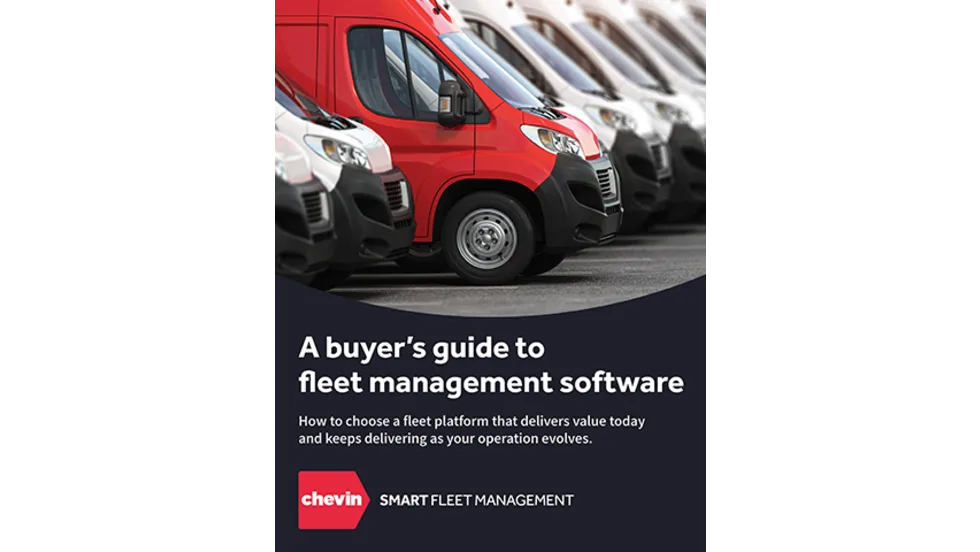
A buyer's guide to fleet management software in 2027
Buying fleet management software in 2027 means looking beyond features and price. As fleet operations, technology and expectations evolve, this guide explores what today’s fleet professionals should consider when choosing a system that can deliver value now and adapt to what comes next.
Read More →
What Will Shape the Next Era of Fleet Management?
EVs, AI, and autonomous vehicles are reshaping fleet management. Discover what’s ahead—and how fleet leaders can prepare for the next era.
Read More →
How Fleets Can Recruit and Train Veterans for Technician Roles
Here's how the technician shortage has affected uptime for fleets, and what to do about it.
Read More →
Avis Budget Group Deploys Neology Toll Management Technology Across Major Brands
Neology’s neoFleet platform will manage toll transactions and toll-authority operations for vehicles across Avis, Budget, Payless, Budget Truck and Zipcar.
Read More →
Fleet Personal-Use Charges Edge Higher in 2026
Nearly eight in 10 surveyed fleets allow personal use of company vehicles, while just over half of respondents report charging employees for the privilege.
Read More →
The Future of Fleet + What’s Changing Right Now | AF News Recap
Could developments overseas offer a preview of what’s coming for U.S. fleets? This week, we’re looking at the future of AI, autonomy, and electrification, plus Ford Pro’s new certified pre-owned program, smarter vehicle offboarding, and a new way for fleets to manage toll expenses.
Read More →
How to Handle Vehicle Offboarding
What do fleet managers need to do when a driver leaves?
Read More →
Fleet Manager’s Ultimate Playbook: Navigating the New Standard in OEM Connectivity
Rising operating costs, driver safety concerns, and unplanned downtime are putting unprecedented pressure on modern fleets. Discover how fleet managers use embedded OEM connectivity and real-time vehicle data to cut TCO, prevent downtime, and protect drivers without aftermarket telematics hardware.
Read More →