




Malfunction Indicator Mandated for 2010 Emissions Standards
Starting in 2010, OEMs will be required to install dashboard malfunction indicator lights and diagnostic trouble codes on heavy-duty trucks to warn drivers of emission problems.

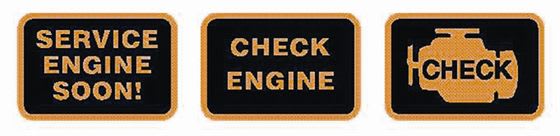
The prevention of 8,300 premature deaths, more than 9,500 hospitalizations, and 1.5 million lost work days are just a few of the substantial benefits the Environmental Protection Agency (EPA) hopes to realize by reducing annual vehicle emissions with its recent onboard diagnostics (OBD) requirement. Formally approved Dec. 4, the ruling seeks to reduce overall diesel emissions by more than 90 percent through a 2010 mandate requiring heavy-duty truck manufacturers to install OBD technology.
Designed to monitor performance of an engine's major components, the built-in, computer-based systems will provide a simple, quick, and effective way to alert drivers when engine emission systems are malfunctioning or deteriorating, according to the EPA.
The Air Resources Board (ARB) reported 33 states and local areas have already begun incorporating the use of onboard diagnostics to comply with the Clean Air Act's goal of reducing air pollutant emissions, a number surely to expand over the next year with the EPA's new rule.
Cleaning is 'Greening'
In September, with OBD considered a critical element in an overall emissions control program, the EPA worked with the State of California to finalize a consistent set of heavy-duty onboard diagnostic (HDOBD) requirements. As a result, the EPA's HDOBD program largely resembles the California program in almost all important aspects.
The EPA requirement will provide truckers dashboard malfunction indicator lights and diagnostic trouble codes similar to those on passenger vehicles since the mid-'90s. A provision in the rule also requires manufacturers to make available to mechanics information necessary to perform repairs and maintenance service on OBD systems and related components.
The highly technical and detailed 475-page rule applies to 2010 and later model-year engines and will be phased in gradually. Beginning in 2010, engine manufacturers will be required to produce one engine line for heavy-duty trucks that complies with the new rule. By 2013, the dashboard lights will be mandatory for all highway engines.
Without the warning device, a driver could easily overlook emission problems, the EPA regulation stated.
Despite concerns from groups such as the Engine Manufacturers Association that meeting the OBD requirements would present challenges, the EPA said sensors needed to comply with the requirements already are available and will exist in time for 2013 compliance. In addition, the EPA said it will "keep abreast of technological advances in the coming years" in the event the requirements must be modified.
To find out which areas require OBD technology in vehicle emissions tests, go to www.epa.gov/obd/status.htm.
More Green Fleet

Merchants Fleet Reports 290M EV Miles as Fleets Navigate Changing Electrification Market
From millions in operating savings to hundreds of millions of EV miles, Merchants Fleet’s latest report reveals what’s working and what’s changing in fleet electrification.
Read More →
The EV Breakdown Nobody's Talking About: Why Most Electric Vehicle Roadside Calls Aren't Mechanical Failures
Here's why EV breakdowns are widely misunderstood.
Read More →
ChargePoint Now Available in Energy Pass
ChargePoint and additional planned charging network integrations were added to GM's Energy Pass.
Read More →

First Look: Slate Auto's Electric Fleet Pickup
Could an affordable, modular EV pickup make electrification more practical for fleets?
Read More →
Slate Debuts Colorful, Unique EV Models
A recent media and client event, studded with electric vehicles dressed up on platforms, planted a new position for the manufacturer in the wider EV market. Fleets will find cost-saving advantages.
Read More →
Slate Electric SUV, Pickup Switchable Model Aims For Light-Duty Fleets
Everything about this EV is counterintuitive and understated, making it stand out from the crowd.
Read More →
Inspiration Mobility Acquires Key Electrada Assets
Inspiration Mobility Group has acquired select assets of Electrada, adding the fleet electrification provider's team, technology, and charging infrastructure development capabilities to its energy management business.
Read More →
Turning Connected Vehicle Data Into Decisions That Matter
Fleet leaders have more data than ever, but turning that data into clear, actionable decisions remains a challenge. This white paper shows how leading organizations are using connected vehicle data to improve safety, reduce costs, and optimize fleet performance. Learn how to turn insight into action across your fleet.
Read More →
Are You Tracking Your Fleet's True Total Cost of Ownership?
Bobit Business Media surveyed 190 fleet professionals and found that while most fleets are tracking costs, fragmented systems and data gaps are keeping true TCO visibility out of reach. With rising pressure to control spend in an increasingly volatile environment, the gap between what fleets think they know and what the data actually shows is wider than you might expect. See how your peers are managing costs today and where the industry still has room to improve.
Read More →