




Making a Better Connection
Sprint has teamed up with Airbiquity to provide wireless connected vehicle services to fleets, which can help improve driver productivity and efficiency.
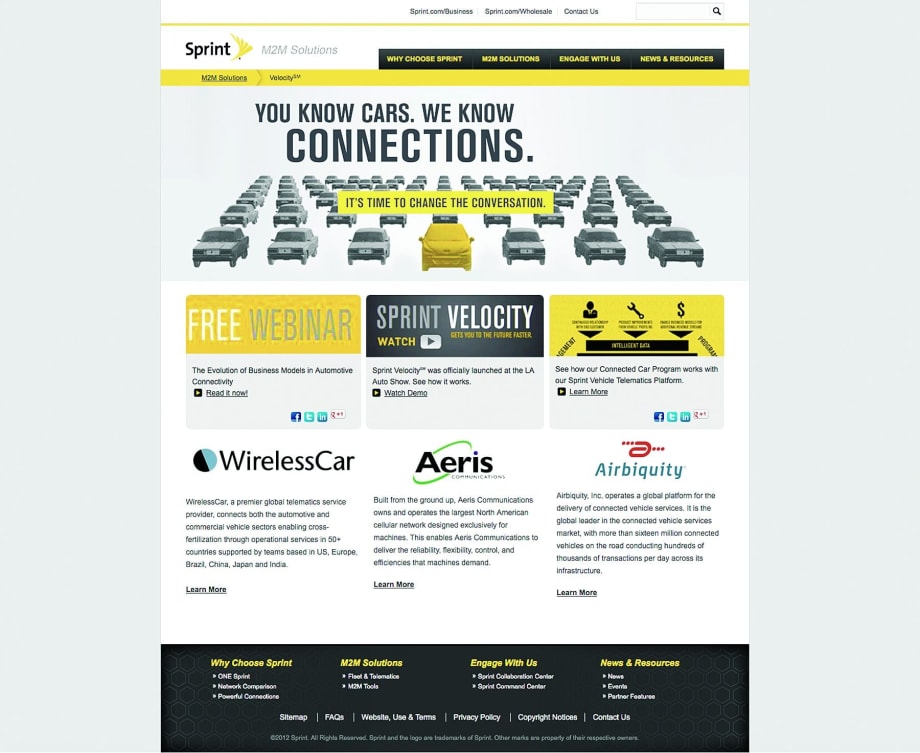
A screen capture of Sprint and Airbiquity's new solution.
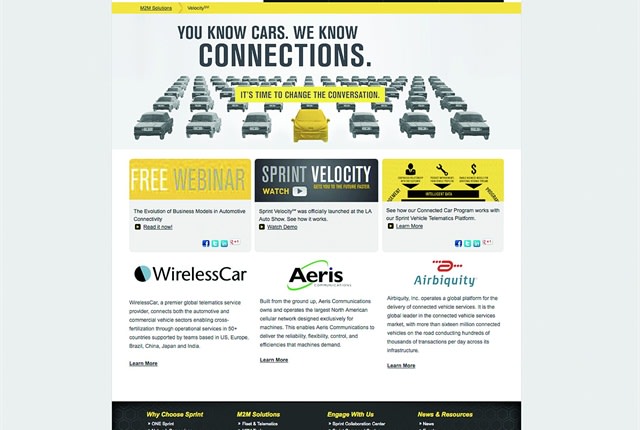
A screen capture of Sprint and Airbiquity's new solution.
Sprint has joined forces with Airbiquity, a wireless connected vehicle services company, for its Sprint Velocity global connected vehicle system. The move, according to Airbiquity, could help automakers provide connected vehicle services and ease integration of in-vehicle communication systems. It could also help companies with vehicle fleets go green by monitoring driver behavior and vehicle performance, minimizing fuel consumption and idle time.
Improving Productivity
Airbiquity provides connected services to more than 20 million vehicles on the road today, globally. The Airbiquity Choreo service delivery platform will be used within the Sprint Velocity solution to offer vehicle manufacturers a complete turnkey solution or customizable modules to suit their specific needs. Capabilities can encompass telematics, ecosystem development, consumer relationship marketing, and advanced global network connectivity.
Wayne Ward, vice president of Emerging Solutions for Sprint, said Sprint Velocity combines “technical integration with an intense level of expertise in wireless customer experience, customer relationship management, and wireless applications.”
Companies can monitor vehicle lifecycles by plugging in Airbiquity’s service capabilities, such as geofencing, according to Leo McCloskey, vice president of marketing for Airbiquity.
“We’re constantly tracking a vehicle everywhere it goes,” he said. “We’re taking a snapshot of a vehicle’s location and performance, as well as driver performance data every few seconds. We’re accumulating the data so when looking at improving and changing routes, you can play back across the day where the driver went and what the driver did, what deliveries were made, and how fast he or she made them.”
Connected services also allow a fleet manager to monitor individual driver behavior and provide specific reports.
The system can reveal negative behaviors, such as “rapid acceleration, harsh braking, tough cornering, and issues that would indicate it’s not a smooth journey, because smoothness means efficiency,” McCloskey said. “And, efficiency means reduced cost.”
Communicating remotely with fleet drivers is another example of connected services. For example, Airbiquity technology provides real-time traffic conditions in a company’s service area. Through a fleet monitoring center, McCloskey said the fleet manager can see if a specific driver is going to encounter a traffic delay that will make that driver late for his or her appointment. To remedy this, the fleet manager has the ability to communicate a different route to the driver through a hands-free sound system in the vehicle.
Promoting Efficiency
Fleet managers can use connected vehicle services to maximize fleet performance, for example, by monitoring driver behavior and enforcing geographic limits.
An additional benefit of Airbiquity’s connected service is ensuring a fleet’s insurance policy is in force, no matter where the vehicle is. The Airbiquity system can provide an insurance company actual data showing the vehicle’s location and verifying its operation within company-authorized regions.
Helping companies “go green” is another major part of the service. The system helps reduce fuel consumption by making sure the vehicle is properly tuned and that the driver is behaving in a way that’s most efficient for the route and for fuel consumption and CO2 emissions management.
“Drivers sometimes do silly things, such as hurrying up to get to the next light, or they keep on the accelerator pedal until just before the light, and then it’s right from acceleration to braking,” McCloskey said.
With the Airbiquity system, a fleet operator can find out information such as the vehicle’s levels of fuel, oil, and transmission fluid, as well as the condition of the brakes.
Airbiquity also has the ability to pull vehicle data similar to the way service shops do using ports that plug into the vehicle.
“We don’t have to plug into that port with a mobile device. It’s just streaming to us wirelessly,” McCloskey said. “We accumulate the data and therefore can provide analytics and reports that show the fleet operator how best to maintain that vehicle. We can source services wherever we happen to be. We can present them to the driver in a way that is best suited for both performance and the driving task. Everything should be conducive with the driving task, because that is the primary purpose of the driver until he comes to a stop.”
Sprint Velocity was officially launched at the 2012 L.A. Auto Show. Go online to see a video of how the Velocity system works: m2m.sprint.com/m2m-solutions/velocity.
More Telematics

GM Launches OnStar Fleet Intelligence Platform With AI Assistant
The new platform brings vehicle data, order tracking, connected services and fleet analytics into one system, with an AI assistant that can answer fleet questions using natural-language prompts.
Read More →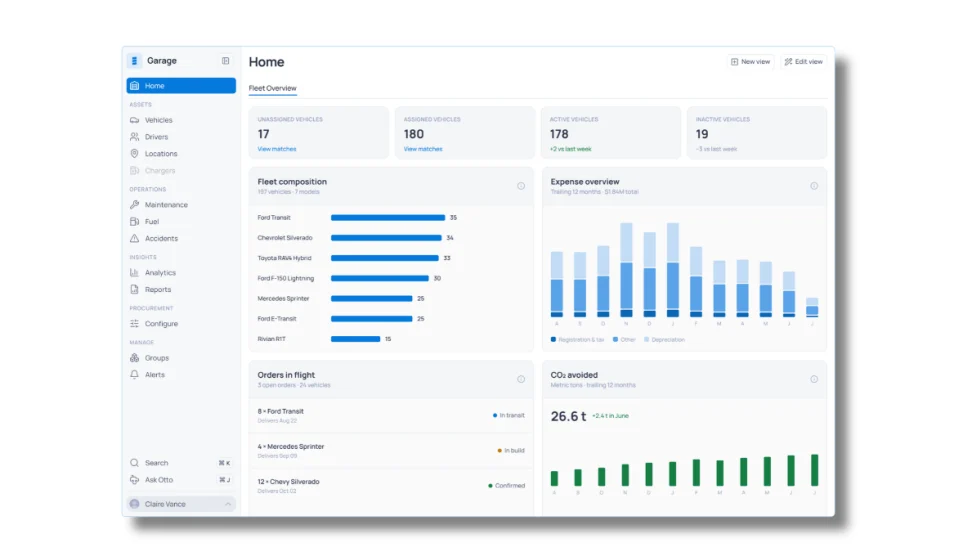
Inspiration Fleet Introduces Garage 2.0 Fleet Intelligence Platform
Fleet managers increasingly have access to data from vehicles, telematics, fuel, charging, and other systems, but those sources don't always communicate with one another. Inspiration Fleet's Garage 2.0 platform brings that information together while letting fleets keep working with different technology and service providers.
Read More →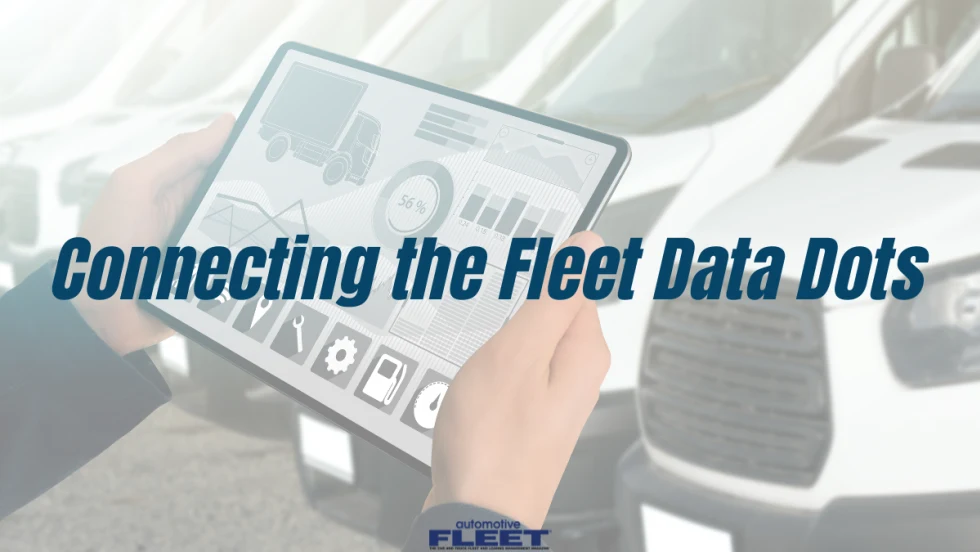
Inside Inspiration Fleet’s New Platform for Connecting Fleet Data
Inspiration Fleet CTO Chris Getner explains how the new Garage 2.0 platform is designed to connect disparate fleet data and what that could mean for fleet managers in practice.
Read More →
Fleet Manager’s Ultimate Playbook: Navigating the New Standard in OEM Connectivity
Rising operating costs, driver safety concerns, and unplanned downtime are putting unprecedented pressure on modern fleets. Discover how fleet managers use embedded OEM connectivity and real-time vehicle data to cut TCO, prevent downtime, and protect drivers without aftermarket telematics hardware.
Read More →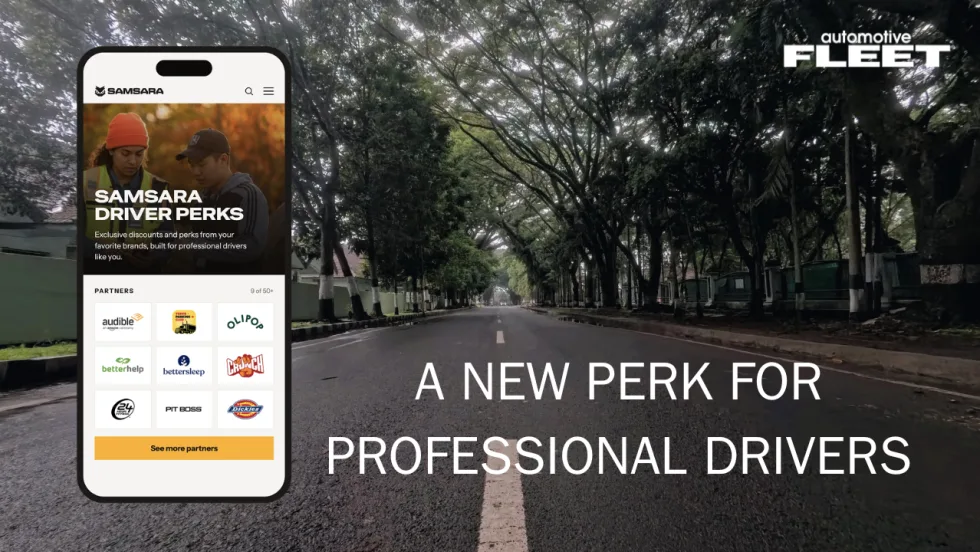
Samsara Driver Perks Adds New Benefit for Corporate Fleet Drivers
The rewards program gives eligible professional drivers access to discounts from more than 50 brands while giving fleets another way to support recruitment, retention, and the driver experience.
Read More →
Inside the Church of Jesus Christ of Latter-day Saints’ Two-Track Telematics Strategy
With 20,000 vehicles and two fundamentally different driver populations, the Church faced a fleet management problem that a single telematics program couldn't solve. How it responded offers a replicable framework for any fleet where one size doesn't fit every driver.
Read More →
How Conversational AI Can Make Fleet Tasks Easier for Drivers
While most generative AI tools help fleet managers interpret data at their desks, Connex2X is applying voice interaction to tasks behind the wheel.
Read More →
Why Fleets Are Creating Dedicated Fleet Analyst Positions
Are fleet analyst positions the new norm? Listen here to find out.
Read More →
Teletrac Navman Begins Next Chapter as Standalone Private Company
What's new with Teletrac Navman and its new owner?
Read More →
Why Fleets Are Creating Dedicated Fleet Analyst Positions
Telematics, AI, EVs, and connected technologies are generating more fleet data than traditional teams can effectively manage. Reed Jackson explains why dedicated fleet analytics roles are emerging to turn that information into better operational decisions.
Read More →