





Related: Sunoco to Accept Car IQ Contactless Payment for Fleets
Lose the Card: Vehicle as Fleet Payment Device
Car IQ’s system eliminates card swipes at gas stations. But the greater benefit may be the reduction in unused cards, fraud, and fees — as well as the streamlining of payment processing across multiple merchants, municipalities, and toll authorities.
June 2, 2023
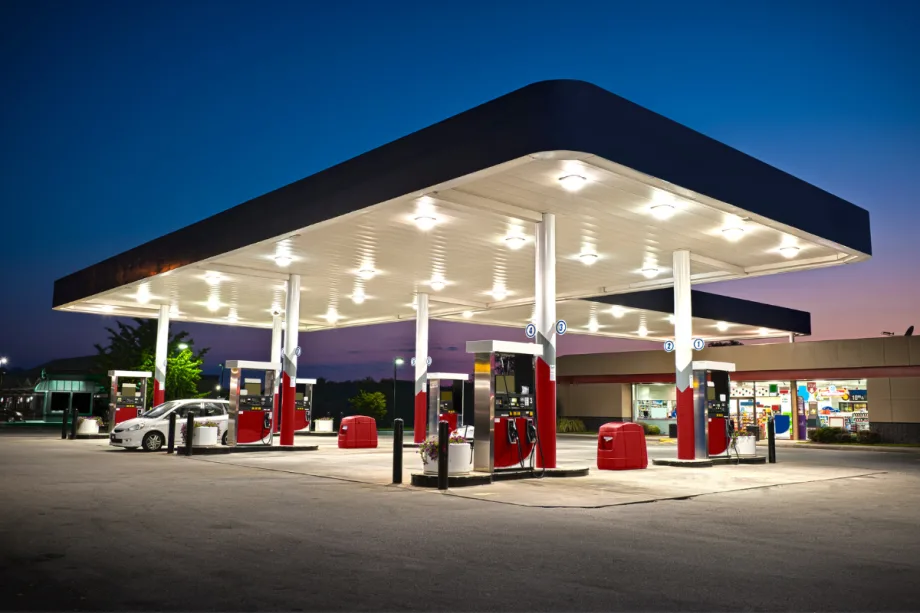
Car IQ has created a payment network that eliminates the need for fleet drivers to use a physical card at gas stations and other merchants. The unique data stream of each vehicle allows the vehicle itself to transact securely.
Photo: Canva
7 min to read
For the last five years, Sterling Pratz has been asking big questions:
Why do we need a credit or a debit card? Why do we need to put a box in our cars for tolling and parking, an app on our dash for fuel and EV charging, and have ACH processes for service and repair? And how can we prevent transactional fraud?
Pratz’s answers to those questions formed the basis of the company he founded, Car IQ Inc. “We’re rethinking how things get paid,” he says, which means scrapping the credit card process entirely.
“I was frustrated that people still use credit cards,” he says. “I find it ironic that we use 40-year-old credit card technology to buy dead dinosaur juice for our cars. (Credit cards) have limited visibility into the transaction and they’re not very intelligent.”
Car IQ has created a payment network that eliminates the need for physical credit or fleet cards and enables vehicles to connect to merchants and transact securely. The payment network is built around proprietary identity management technology that uses the unique data stream of each vehicle — allowing the vehicle itself to become the payment device.
“That became what Car IQ was all about,” he says, before asking another question: “How do we use the data from the car and around the car to create trust between the vehicle, the bank, and the merchant, so that the vehicle can transact without using cards or human processes?”
How the Tech Works
When a Car IQ-enabled vehicle passes the geofence for a partnering fuel station, EV charging station, or toll booth, the system connects to the vehicle and scans the telematics data from the car’s onboard sensors.
Before the pump or charger is turned on, the system, called Car IQ Pay, triangulates information between the vehicle, the bank, and the fuel station or merchant, by identifying:
the vehicle matched to the account;
source and availability of funds to pay for the fuel;
account’s transaction history;
whether the vehicle is lost or stolen;
fuel tank size;
present amount of fuel in tank, and
frequency of stops at the present fueling station and competitive stations.
After the data is collected and the vehicle passes security clearances, the pump or charger is enabled. The driver enters the pump or charger number into their phone or in the future the dash app, dispenses the fuel or electricity, and the transaction is recorded to the account.
There is no waiting for the system to process. Pratz claims Car IQ Pay is faster than any credit card or mobile app on the market today.
After the fuel is dispensed, the system does something a credit card can’t — it scans the vehicle again to identify the amount of fuel it received and compares it to what the pump says was dispensed. Any inconsistencies between existing fuel in the tank, tank size, and amount of fuel pumped is flagged immediately.
“We tell the merchants that the transaction was real,” Pratz says. “And we tell them that there was no fraud, no friendly fraud, no chargebacks, no disputes, no man-in-the-middle scenarios. All that goes away.”
Streamlining Costs & Back Office
Car IQ also aims to streamline the inefficiencies in how organizations with fleets process payments for hundreds or thousands of cars and all the merchants with which they interact.
The average fleet vehicle is involved in 20 to 30 transactions per month — from purchasing fuel eight to 12 times and paying five to 10 tolls, to paying parking citations and service and repair bills.
Users of the Car IQ platform add fleet vehicles into the system, associate a bank account, pick their merchants, and set parameters around time and spending, such as when a certain vehicle is allowed to transact and for what amounts.
The transactions are processed in a real-time ledger that can be sorted by make, model, brand, merchant, payment type, and other factors. “Imagine instead of having 10 people in your finance department scrolling over 20,000 payment transactions per month, you literally have one document that you can sort by whatever data you choose,” Pratz says.
Payments can be settled in close to real time if needed, instead of a 30- to 60-day settlement period.
Fraud represents another cost and inefficiency, which occurs in about 3% to 8% of transactions. Of overall fraudulent transactions, “friendly fraud,” when the cardholder willfully fills up another vehicle’s tank, accounts for another 5% to 7%. “It's the fraud no one can measure because when they have a credit card, they have the right to use that card,” he says, “but they're just using it for purposes that weren't intended.”

“We’re rethinking how things get paid,” says Sterling Pratz, founder and CEO of Car IQ.
Photo: Car IQ
Reducing Fees & Unused Cards
With a more streamlined system, Car IQ is then able to reduce fees.
Like traditional fleet payment cards, the same interchange rates for mobile payments applies for Car IQ. However, 8% to 15% of a traditional card’s monthly billing is associated with fees. Because the Car IQ platform is virtual, there are no fees for setup, mailing, or lost or stolen cards.
Of the universe of credit cards, some 30% go unused. This happens in the fleet world when drivers are given a card associated with their vehicle, and the driver changes vehicles, leaves the card somewhere, or leaves the organization. These unused cards become another management and cost issue, with the company paying card-on-file fees.
“They're paying for that credit card to sit there and ‘hang out.’” Pratz says. “We make all that go away as well.”
Incentivizing Behaviors & Loyalty
Car IQ connects to telematics systems that collect data around driving behaviors such as speeding and harsh braking and other metrics such as fuel economy and revenue per stop. Tied to Car IQ, this data can be used to reward or incentivize drivers. For instance, if a driver achieves a goal around efficiency or safety, the system could trigger an offer from a fleet manager or a sponsor for the driver to pick up a free lunch at a participating merchant.
Or if drivers frequent a certain merchant, they can accumulate points for rewards through integrations with merchants’ loyalty programs.
Expanding Footprint & Payment Types
Car IQ’s customers range from fleet management companies and large commercial fleets in various vocations to last-mile delivery. A new partnership with a large trucking manufacturer will allow new trucks to come off the assembly line as “payment capable.”
Car IQ contracts with close to 25,000 fueling stations nationwide today with another 25,000 expected to come on board by year’s end. (There are about 110,000 gas stations in the U.S.)
In the future, payments will extend beyond just fuel: If the driver wants to purchase a burrito and a soda from the merchant, a QR code is sent to the driver's phone to scan instore. The app can be configured for that merchant’s branded experience.
Car IQ has partnered with a carwash company, Everwash, for contactless transactions. Car IQ is also talking to daily rental companies, as the system alleviates the renter interaction in paying for fuel and tolls, along with greater control and visibility into payments for the rental company.
The company also has agreements with companies that manage tolling transactions. Taking it one step further, Pratz says Car IQ is investigating using vehicle data in lieu of license plate readers or scanning bar codes. This will lower transactional costs as it alleviates the need for software and cameras and mitigate fraud relating to cars with switched license plates.
Municipality as Merchant
When it comes to partnerships, Pratz is thinking bigger, and asking more questions: “What if fleets could connect directly with municipalities, and digitizing a payment turns a municipality into a merchant?”
Taking last-mile delivery fleets as an example, delivery vehicles typically get about one or two parking tickets or traffic citations per week from multiple municipalities. Settling those payments could take up to 10 hours every two weeks by multiple staff members.
Through Car IQ, municipalities could form relationships with fleets that travel within their boundaries and administer fines using participating vehicles’ geolocations and data, reducing the need for parking enforcement officials or expensive cameras to monitor parking. With reduced overhead, the municipality could reduce the cost of the citation. And the fleet could pay quicker, with only a single virtual ledger to pay.
At the same time, the municipality could identify areas in which it would be beneficial for fleets to park, and then charge them virtually through the system.
“The data in that car can be traded with the city; it’s highly valuable,” Pratz says. “My belief is that cars will trade data for the right to transact, and the city will benefit from it like any merchant such as Shell, Sinclair, or Sunoco.”
Subscribe to Our Newsletter
More Operations

What's Best Handled by an FMC, and What's Better Done Directly?
Fleet managers continue to rely on FMCs for essential services but are taking a closer look at where working directly with suppliers can improve efficiency and responsiveness.
Read More →
Fleet Meets: Erin Gilchrist
Meet Erin Gilchrist, the inaugural Mike Antich Spirit of Fleet Award winner, as she shares insights on leadership, mentorship, the power of industry connections, and why people remain at the heart of fleet's future.
Read More →
How 2026 Fleet Visionary Jamie McKay Manages 2,400 Vehicles Across 37 States
How do you keep 2,400 vehicles running across 37 states? Fleet Visionary Award winner Jamie McKay shares how collaboration, flexibility, and a few simple strategies help her tackle fleet management challenges at Aptive Pest Control.
Read More →

Managing Fleet Costs in an Era of Permanent Volatility
Fleet operating costs have risen more than 20% since 2020, raising a key question: When does extending a vehicle's service life stop making financial sense?
Read More →
The Next Evolution of Fleet Management: Autonomous Operations
This opening keynote session at the Fleet Forward Conference highlights the future of autonomous driving for fleets.
Read More →
How to Reduce the Total Cost of Risk From Catalytic Converter Theft
A stolen catalytic converter can cost fleets far more in downtime and lost productivity than in repairs. A total-cost-of-risk approach can help fleet managers quantify their exposure and prioritize theft prevention.
Read More →
Personal-Use Charges Rise as Vehicle Values Fall | AF News Recap
Personal-use charges are climbing, wholesale used-vehicle values are declining, and commercial fleet sales growth is slowing. This week, we're breaking down the latest fleet data, plus how Element Fleet Management is helping Waymo prepare for its first Canadian robotaxi market.
Read More →
Here's When You Should Make an Exception to Fleet Policy
Fleet policies are designed to create consistency, but not every driver or situation fits neatly within standard rules.
Read More →
AI-Native or AI-Acquired: What Should Fleet Managers Look for in an AI Platform?
Six questions can help fleet managers look beyond AI marketing claims to evaluate integration, data access, and real-world operational performance.
Read More →
Sponsored•October 14, 2026
A buyer's guide to fleet management software in 2027
Buying fleet management software in 2027 means looking beyond features and price. As fleet operations, technology and expectations evolve, this guide explores what today’s fleet professionals should consider when choosing a system that can deliver value now and adapt to what comes next.
Read More →