




Look Outside of Fleet for Future Fleet Management Trends
If you want to know what the next big trend will be in fleet management, you need to look outside of the fleet management industry.


If you want to know what the next big trend will be in fleet management, you need to look outside of the fleet management industry.These were wise words spoken to me more than 10 years ago by Jim Noonan, a since-retired vice president at PHH. I always remembered Jim's advice and I believe it is as true today as it was 10 years ago. At that time, Jim was referring to the then-new trend of outsourcing fleet administration services, which was the latest manifestation of an earlier corporate trend that started with outsourcing data processing functions to companies such as IBM and outsourcing mail room responsibilities to companies such as Pitney Bowes.
Fleet management, for the most part, is not an innovator of new technology; however, it is often an early adopter of new technology as exemplified by the industry's rapid transition to Internet-enabled fleet management systems.
It is my contention that corporate purchasing departments will play a greater role in changing fleet procurement practices. I recently voiced this observation in an editorial in the 3rd Quarter 2001 issue of our sister magazine, Fleet Financials. There I discussed the trend by corporate purchasing departments to use reverse auctions to negotiate pricing for fleet management services and multi-year new-vehicle acquisition contracts. Reverse auctions are a relatively new technology, in use since 1995, and intially used only to purchase commodities. However, the use of reverse auctions quickly shifted beyond this to negotiating prices for other products and services, to ultimately the first fleet-related reverse auction in early 2000.
A current hot topic in corporate purchasing departments is Internet-enabled purchasing, namely the emerging e-procurement revolution. The great potential for e-procurement is to lower procurement administration costs, increase the use of preferred suppliers, shorten acquisition cycles, lower requisition costs, and improve the ability to monitor demand. In the simplest terms, it seeks to curtail inefficient buying practices. One aspect of e-procurement is the migration to "single portal procurement," which is designed to minimize "maverick spending" by employees and to aggregate purchases, thereby providing greater leverage to negotiate volume discounts.
To accomplish this, companies such as Ariba, Commerce One, and Oracle, to name a few, have developed software platforms to help companies manage their total spend. And it seems to work. Clients such as Aetna expect to save $100 million in 2001 by moving to e-procurement. Likewise, DuPont has migrated to the use of the Ariba B2B eCommerce platform to help it significantly reduce the cost of goods by aggregating and channeling company-wide purchases to contracted suppliers at preferred prices.
Many companies are also seeking to minimize or eliminate paper purchase orders and invoices because the process is so labor-intensive. One study shows that handling purchase orders can cost corporations up to $200 per transaction. These costs are substantial, especially at large corporations, which generate hundreds of thousands of purchase orders each year. A shift to an e-procurement system, such as Ariba, would result in a dramatic reduction in purchase orders. A growing number of companies are requiring their vendors to have these electronic capabilities. This is one of the reasons why there is such a scramble among fleet management providers to become Ariba-certified.
How Would e-Procurement Work?
In one e-procurement scenario, employees would use an Internet-style interface to browse through electronic catalogs of information from an existing multi-supplier product index stored on the local network or via the Web. The e-procurement system allows for direct links to supplier Web pages so employees can access additional information such as technical specifications, pictures, or detailed descriptions. Users can view product information on a vendor's Web site, add items to the virtual shopping cart, and route requisitions through the company's approval process. The e-procurement system automatically creates requisitions, routes them for approval, and submits them electronically to contracted suppliers. When the products are received, the system will alert the accounts payable system to make the payment to suppliers.
If you think about it, this same process could be used for a variety of current and future fleet management services, which has not escaped the notice of some purchasing departments. Although e-procurement was not developed specifically for fleet management, I foresee the fleet departments of many Fortune 1000 companies becoming the early adopters, either by mandate or voluntarily.
Let me know what you think.
More Operations
What Fleet Managers Really Want From Vendors
From customer service frustrations and technology breakdowns to RFQs, change management, and the growing impact of turnover across the industry, this conversation pulls back the curtain on the real operational challenges fleet managers are navigating every day.
Read More →
Fleet Safety Masterclass: Industry Leaders on Storytelling, Strategy & Innovation
In this special masterclass episode, industry leaders break down what it really takes to build safer fleets in today’s increasingly distracted and data-driven world.
Read More →
Integrating Legacy Fleet Systems and Historical Data
In this episode, we bring together fleet and technology leaders to unpack the realities of data integration, system migrations, and the evolving role of AI in fleet management.
Read More →


From Resistance to Results: Change Management Strategies for Fleets
From new technologies and safety programs to evolving regulations, fleets are under constant pressure to adapt. But as Dr. Betz explains, success isn’t about the system you implement—it’s about whether your people actually use it.
Read More →
Where We're Headed: A Practical Look at AI in Fleet
Discover how AI is actually being deployed in fleets, not just marketed, including practical use cases and emerging risks.
Read More →
How Coca-Cola United Protects Its Fleet from Growing Legal Risk
Growing legal exposure can put fleets at risk. Here's one company's approach.
Read More →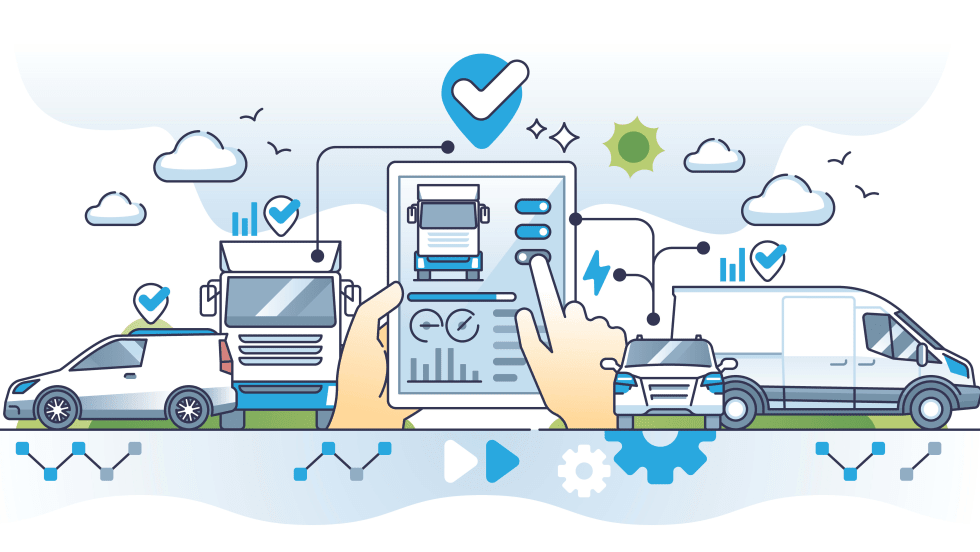
Fleet Managers Think They Understand Their Costs. The Data Says Otherwise.
Most fleet managers say they have a strong handle on their costs, but new research from Bobit Business Media tells a different story. A 2026 survey of 190 fleet professionals reveals a widespread "confidence gap" where fragmented systems, disconnected data, and delayed reporting are leaving major blind spots hidden beneath the surface. Find out what the data actually shows.
Read More →
Cameras, Safety and Insurance: From Reactive Claims to Real-Time Prevention (Part 2 of 2)
Part Two: Commercial auto remains one of the most challenging and costly lines of coverage for fleet operators and insurers alike. Continue learning more about how to effectively address these issues from Onur Aksan, Enterprise Business Development Executive, Geotab
Read More →
New Trucks, AI & Summer Downtime | AF News Recap
From new truck updates to AI-powered driver coaching and summer maintenance tips, this week's fleet headlines are all about keeping things moving.
Read More →
Beyond Utilization Rates: Smarter Fleet Replacement Decisions
Vehicle replacement decisions affect every aspect of fleet performance, from operating costs to asset availability. This guide explores how fleet leaders use integrated data, benchmarking, and lifecycle analytics to determine the right fleet size and optimize replacement timing with greater confidence.
Read More →