




Lease Accounting Rule Changes Draw Closer
The Financial Accounting Standards Board and International Accounting Standards Board will issue a draft of new lease accounting rules this summer. The proposed changes will significantly impact fleet balance sheet, P&L, and lease administration.

The long-anticipated change to lease accounting rules is drawing closer to completion, and its impact on fleet leasing arrangements is under careful analysis.
Since 2006, the Financial Accounting Standards Board (FASB) and International Accounting Standards Board (IASB) have been working on a joint project to establish one global leasing standard. This new standard approaches lease accounting from an asset and liability or financial components perspective. In the U.S., the approach primarily has been a risk and rewards approach, the basis for the lease classification in Financial Accounting Standard 13.
Bill Bosco, principal of lease consulting and training company Leasing 101, recently discussed with Fleet Financials the status of impending rule changes and its significance to U.S. commercial fleet lease arrangements. With more than 36 years experience in the leasing industry, Bosco's areas of expertise include accounting, tax, financial analysis, structuring, and pricing. He is a member of the Equipment Leasing Association accounting committee, a group he chaired for 10 years.
FF: Is the lease accounting change going to happen?
Bosco: Yes, it is targeted for completion in 2012 with implementation estimated to be 2012 or 2013. The public will have an opportunity to comment on the proposed rules when the FASB and IASB issue the Exposure Draft of the proposed rules sometime this summer. I urge you to comment. The new rules will affect U.S. as well as foreign companies.
FF: How will fleet leases be treated under the new rules?
Bosco: We don't have all the answers yet because they are still working on it, but we know what proposed rules they have discussed. There will be significant changes in your balance sheet, P&L, and lease administration.
FF: How will it impact a fleet's balance sheet?
Bosco: Operating leases are "off balance sheet" under current rules. The proposed rules would have lessees capitalize operating leases by recording an asset (the right to use the fleet car) and an obligation to pay rent.
[PAGEBREAK]
FF: How will recorded amounts be calculated?
Bosco: We don't have all the answers as I said; FASB and IASB are still working on it, but have said you present-value the expected payments over the expected lease term using the rate at which your company borrows for a loan of the same term (your incremental borrowing rate).
FF: You said "estimated payments" and "estimated term," Please explain.
Bosco: This is one of the main problem areas. You will have to estimate the lease term if you have the right to renew. So, if you have a 12-month lease with the right to renew to 60 months, you will have to estimate how many months you will renew. Past behavior will be a guide, so if you keep your cars, on average, for 24 months, you assume you have a 24-month lease and include 24 payments in your present value calculation.
You must also estimate the amount of contingent rents based on mileage. If you think you will have a payment under a residual guarantee, you must include it. If you think you will buy the car, you have to include the estimated purchase price. You present-value all estimated payments and record the lease. The new rules will require reviewing and adjusting estimates when changes in estimates occur.
FF: What will a lease expense be under these new rules?
Bosco: The P&L treatment is the other major issue. You will report higher lease costs in the first half of the lease, but lower costs in the second half. The reason is the new rules say rent expense is no longer showed, but rather, the lease asset straight line is amortized over the lease term, and imputed interest on the capitalized lease obligation is reported. It is a temporary difference, but an important issue.
FF: Are open-end and closed-end operating leases treated differently?
Bosco: No, the concepts are applied in the same way, but of course, the terms of the two lease types are different, and they will result in different amounts booked. I can't give the actual differences as the amounts recorded depend on the terms of the individual leases and your estimates as to the payments.
FF: Will there still be an advantage to lease?
Bosco: Of course there will be advantages to lease. Accounting advantages will continue to exist as the capitalized amounts should be much less than if you buy your fleet cars. Also, all the other reasons for leasing - low cost, outsourcing, fleet management and services, convenience, etc. - will remain unchanged.
FF: Where can further information or answers to questions concerning the project be found?
Bosco: Questions or requests for more detailed information can be directed to me at wbleasing101@aol.com. A consultant to the leasing industry, I also serve on the FASB/IASB Lease Project Working Group. The FASB Web site, www.fasb.org/home, also contains detailed information on the project.
More Operations

Top 50 Executive Fleets
It is that time of year again! Time for the 2026 list of the Top 50 Executive Fleets, presented by Automotive Fleet and Volvo as part of its annual Fleet 500. Download now to see this year's list of companies!
Read More →
Gary Van Orden Retires After Nearly Four Decades in Commercial Fleet
From answering customer calls at Ford Motor Company to leading fleet sales across multiple OEMs and a fleet management company, Gary Van Orden's career reflects nearly four decades of leadership in commercial fleet.
Read More →
How Stellantis Plans to Get Ahead of Fleet Downtime
Vehicle acquisition may grab the headlines, but fleet uptime increasingly determines operating success. Darren Bradshaw of Mopar North America gives the details.
Read More →
Hyundai Releases 2027 Commercial Program Incentives
The 2027 Model Year "Fleet Street Incentives" are available to commercial and government fleets.
Read More →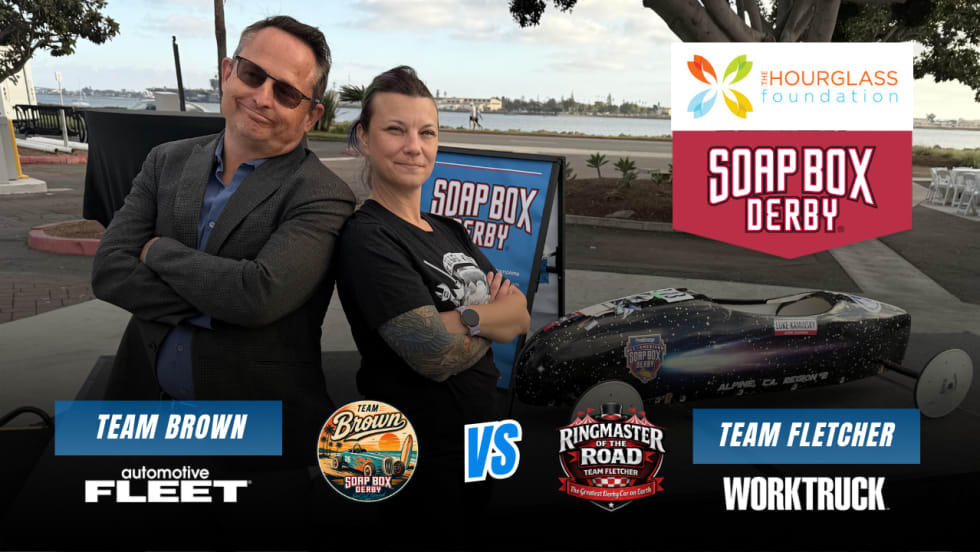
It's All Downhill from Here! Fleet Industry Raises $22,000 for Skilled Trades Scholarships
Work Truck’s Lauren Fletcher and Automotive Fleet’s Chris Brown turned a friendly racing rivalry into $22,000 for automotive technology and skilled trades scholarships.
Read More →
The Top 300 Commercial Fleets
The Top 300 Commercial Fleets: See the List
Read More →

Your Local Dealer Knows More Than You Think
Your local dealer can provide an information advantage that extends well beyond courtesy deliveries.
Read More →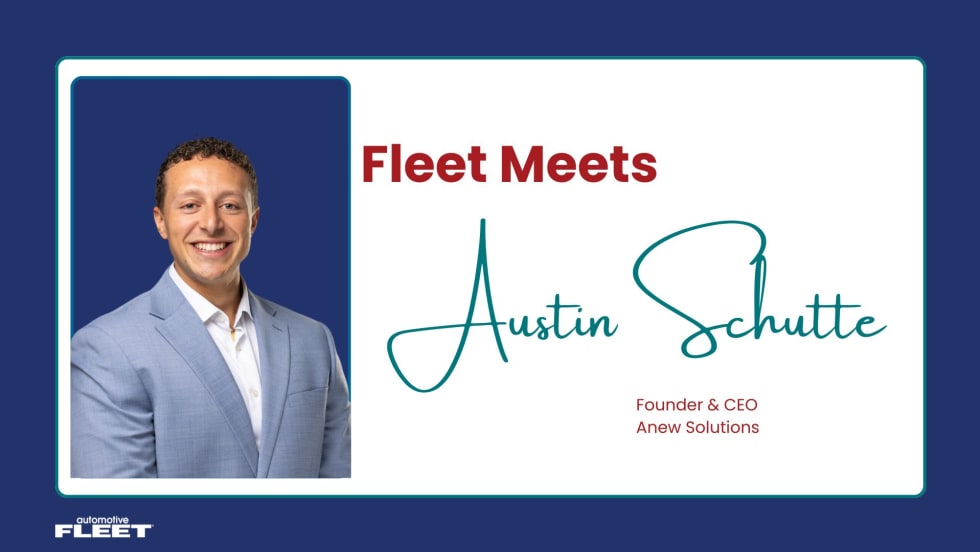
Fleet Meets: Austin Schutte
Here are some industry insights, personal touches, and words of advice from the CEO and Founder of Anew Solutions.
Read More →
Soap Box Derby Challenge: What’s Powering Team Brown
The car is coming together, the students are solving real build problems, and the fleet industry is helping push Team Brown toward the starting line.
Read More →