A fleet service manager discusses his methods for efficient servicing of last-mile delivery vehicles. His main advice: “Check everything daily. One simple problem will cost you big.”
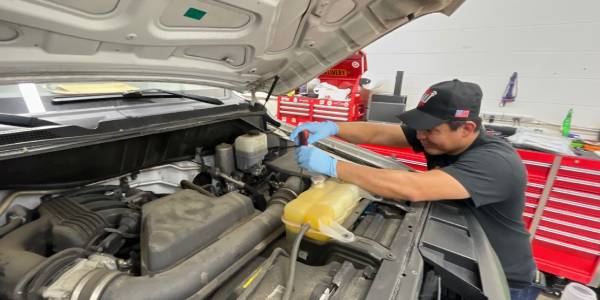
With mobile servicing, AD and his crew regularly travel to Wheelz Up’s delivery vans and perform several oil changes and tire rotations at one time.
Photo: Adrianne Cordero, Wheelz Up
With last-mile delivery vehicles needing to be on the road all day, it’s important for companies to keep up to date on vehicle maintenance.
Ad Loading...
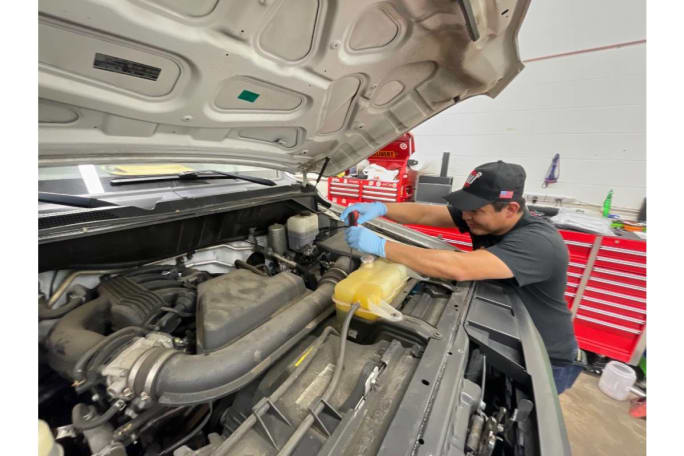
“It’s all about preventive maintenance,” says Adrianne Cordero, service manager/lead technician for Wheelz Up Garage. “Check everything on the vehicle. Let’s say you’re low on coolant and you didn’t check that. Then the next week, the vehicle overheats and then you messed up the head gasket. One simple problem can cost you big.”
Ad Loading...
Cordero (known as “AD”) services the fleet vehicles for Wheelz Up, an auto parts delivery company. Additionally, he manages the maintenance of 125 last mile delivery vans, which are part of Wheelz Up’s Amazon Delivery Service Partner (DSP) contract.
Because last-mile delivery vans are on the road for 10 hours per day, AD and his crew do most of the vehicle maintenance work at night.
“Usually I work Wednesday, Thursday, and Friday late,” he says. “I’m here until 10 or 11 at night. It depends on what needs to be done on the vehicles.”
Speedy, Consistent Service
To keep the delivery vans on the road and avoid vehicle downtime, AD and his five-man crew do oil changes every 5,000 miles on each van. The oil change includes tire rotations and a multi-point inspection of the van. If a new tire is needed, the tire is replaced, he says.
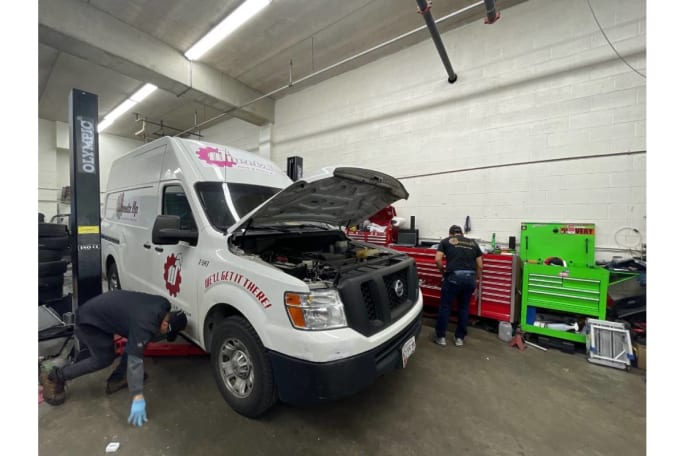
In addition to managing Wheelz Up’s repair garage, AD also operates a mobile repair van. “On the mobile van, we have a tire machine,” says Cordero. “We have the oil, and everything is set up. It’s basically a running shop.”
Ad Loading...
With mobile servicing, AD and his crew regularly travel to Wheelz Up’s delivery vans and perform several oil changes and tire rotations at one time; the garage takes care of more involved repairs. AD insists on using a fully synthetic, high-quality oil and an OEM oil filter (as opposed to an aftermarket filter). For his high-use vans, “Regular oil burns and causes sludge,” he says.
Wheelz Up parks its Amazon delivery vehicles at a local dealership overnight; the drivers pick up the vans there each morning. That way, the mobile van can go to the dealership at night and work on multiple vehicles at once.
“With my crew of five, we can service 20 vans in less than three hours, including the tire rotation,” he says. “Most fleets have one mechanic come to the site and work on a vehicle for an hour. But with a crew of five working on one van, we can finish an oil service in 10 to 15 minutes.”
When it comes to the most common parts failures for last-mile vehicles, AD says tires, brakes, and rotors.
Photo: Adrianne Cordero, Wheelz Up
Common Maintenance Issues
When it comes to the most common parts failures for last-mile vehicles, AD says tires, brakes, and rotors. Carrying heavy loads can cause overheating of the brake pads and overheating of the rotors, leading to vehicle damage and downtime if not properly maintained.
Because delivery vans can put on many miles per day, the tires get worn quickly. Depending on the type of van and the number of daily miles, the tire life can be only three to five months or 10,000 to 15,000 miles, according to AD.
Ad Loading...
Wheelz Up’s last-mile fleet contains different cargo vans, including the Nissan NV and the Ram ProMaster. AD
In AD’s experience, the ProMaster’s tire life tends to be shorter than the Nissan NV’s tire life.
“It depends on how the driver drives the van, but the ProMaster’s front-wheel-drive design leads to a shorter tire life,” he says. “The power of the engine and the steering are on the front, which causes the tires to get worn out faster.”
Working on Wheelz Up’s delivery vans, he and his crew generally change tires on the ProMasters every 5,000 to 10,000 miles. On the NV vans, the tires usually need to be changed between 10,000 and 15,000 miles.
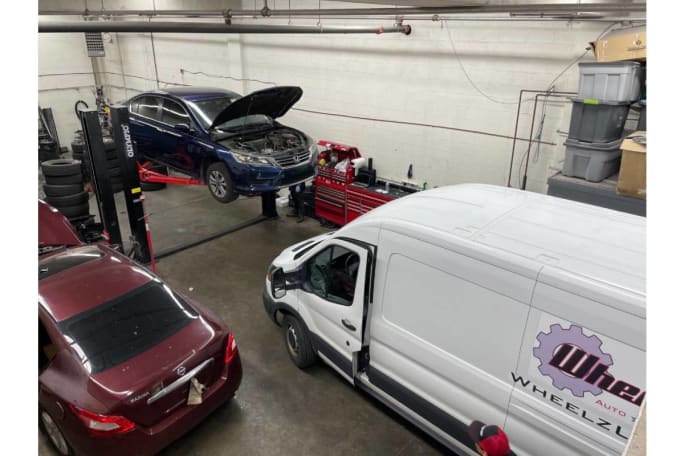
If a van breaks down or requires more intensive repairs, AD stores spare cargo vans at the Wheelz Up Garage.
Ad Loading...
“If a driver calls and says that his van has broken down, we can deliver a spare van and then take the van back to shop to work on it,” he says. “We’re always prepared because the whole day of deliveries can get messed up if a vehicle breaks down.”
In addition to regular oil changes and preventative maintenance checks, AD also recommends that drivers perform a minimal vehicle inspection before getting on the road each morning.
Photo: Adrianne Cordero, Wheelz Up
Advice to Last-Mile Fleets
In addition to regular oil changes and preventative maintenance checks, AD also recommends that drivers perform a minimal vehicle inspection before getting on the road each morning. Each day at Wheelz Up, every driver completes his or her vehicle report on the company app. On the app, the driver can take photos of the van and report any new damage or needed repairs.
The company’s telematics system also helps keep track of vehicle maintenance by identifying diagnostic trouble codes (DTCs). Knowing the DTCs allows the mobile team to arrive with the right tools to attack the problem. “Without telematics, we’re just guessing,” he says.
“We always tell drivers to do a check on the vehicles, but they don’t do it,” he says. “They will see the tire looks flat, but if they continue to drive on it, they will need a new tire. Once you drive on a flat tire, it causes the tire’s sidewall to collapse. Then you can’t use that tire anymore.”
After checking the tires, drivers should also check the vehicle’s lights, wipers, brakes, and make sure that the parking brake is working.
Ad Loading...
“If you see the brake light come on, do something,” says AD. “Don’t let it become a bigger problem. Let’s say you didn’t check the brake lights, and the next morning, the driver gets a ticket or repair order from a state trooper. Then the vehicle would be grounded until it’s taken care of.”
“Or let's say you're low and coolant, you didn't check that. And then the next week you overheated. And then you messed up the head gasket, you've blown everything. One simple problem will cost you big.”
AD’s Tips to Maintain Last-Mile Delivery Vans
Use synthetic, high-quality oil and an OEM (not aftermarket) oil filter.
Keep an eye on tires: Tire life on his vans are three to five months or 10,000 to 15,000.
Instead of routing vehicles to a shop, a mobile service operation can cut hours of downtime.
Inspect vehicles before every trip — fluids, tires, lights, wipers, brakes, parking brake.
If you see something, say something. Little problems only become bigger.
Rising operating costs, driver safety concerns, and unplanned downtime are putting unprecedented pressure on modern fleets. Discover how fleet managers use embedded OEM connectivity and real-time vehicle data to cut TCO, prevent downtime, and protect drivers without aftermarket telematics hardware.
Fleetio’s Brianna Perry demonstrates how Service Advisor evaluates maintenance requests, identifies pricing anomalies, and provides the context fleet managers need to focus their attention on potential problems.
Fleet compliance isn't just about having policies — it's about consistently enforcing them. This practical guide reveals six hidden compliance risks common in public sector and shared fleet operations and outlines proven strategies to improve visibility, accountability, and audit readiness
Vincentric’s three-year, 60,000-mile projections reveal wide differences for both scheduled and unscheduled maintenance among selected vehicle categories. Projected maintenance visits also play a factor.
Keeping fleet vehicles on the road has become as important as buying them. Darren Bradshaw of Mopar North America explains how connected vehicle data, AI, and proactive service strategies are helping Stellantis reduce downtime and move closer to predictive maintenance.
Merchants Fleet has expanded its relationship with Pep Boys, increasing the service provider's role within its national maintenance network. The move is intended to enhance maintenance coordination and support commercial fleets through Pep Boys' nationwide footprint.
Cesar Ayala of O’Connell Landscape Maintenance shares how he transitioned from the Marine Corps to managing a 460-vehicle fleet—and the real-world challenges of maintenance, compliance, and driver management in California.