




Kansas City is Kicking the Petroleum Habit
Kansas City Regional Clean Cities Coalition is helping fleets transition to alternative fuels.
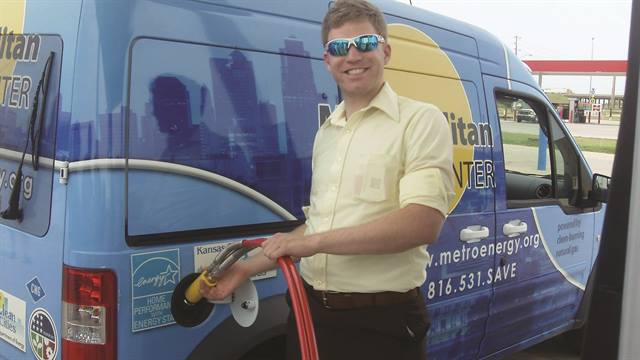
Kansas City Regional Clean Cities Coalition Co-coordinator Aaron Brown fills up the Metropolitan Energy Center’s compressed natural gas (CNG) van.
Those with a taste for top-notch barbecue know that Kansas City, Mo., is hallowed ground. But, this Heartland town has a lot more going for it than smoky meats and spicy sauces — it’s gaining a reputation as a hotbed for the deployment of alternative fuels.
In 2012, fleets and other transportation stakeholders in the greater Kansas City region displaced more than 4.5 million gallons of petroleum and averted nearly 35,000 tons of greenhouse gas (GHG) emissions through the adoption of fuels such as natural gas, propane autogas, and electricity, and the implementation of fuel-saving efficiency measures.
Getting a Helping Hand
Much of this progress is taking place with the help of the Kansas City Regional Clean Cities Coalition (KCRCCC), which has offered technical expertise, financial assistance, training, and networking opportunities to its stakeholder fleets since 1998.
“The best part of this work is being out in the field talking with fleet managers, learning about the challenges they’re having, and figuring out how to work through them,” KCRCCC Coordinator Kelly Gilbert said.
A hybrid-electric bucket truck in the City of Wichita’s fleet.
Among those who have seized on the benefits of alternative fuels is Kansas City, which operates about 300 vehicles that run on compressed natural gas (CNG); approximately 15 percent of its fleet. The City fleet first focused its CNG deployment efforts in the light-duty arena, but, in recent years, it has begun replacing heavy-duty diesel trucks with natural gas trucks to increase fuel cost savings.
One of the biggest boosts to the region’s green fleet operations was the Midwest Region Alternative Fuels Project, which used American Recovery and Reinvestment Act funds to help deploy 370 alternative-fuel vehicles in Missouri, Kansas, and Nebraska. The project also supported the development of 30 alternative-fuel stations that serve hundreds more vehicles fueled by CNG, electricity, biodiesel, and E-85.
“This project did exactly what it was supposed to do in terms of seeding the market with new stations,” Gilbert said. “Now private companies see a clear business case for installing new stations without any help from taxpayers. ”
Get Involved with Clean Cities
Through the work of nearly 100 local coalitions, Clean Cities advances the nation’s economic, environmental, and energy security by reducing petroleum use in transportation. Clean Cities is an initiative of the U.S. Department of Energy. Find out more at www.cleancities.energy.gov.
For more information about KCRCCC and its parent organization, Metropolitan Energy Center, e-mail Kelly Gilbert at kgilbert@kcenergy.org or visit www.metroenergy.org/kccleancities.aspx.
More Green Fleet

EV Charging Use Is Outpacing Infrastructure Growth
ChargePoint’s 2026 Charging Forward Report points to rising charger use, higher-powered charging, commercial vehicle electrification, and energy-management technology. Here’s what fleets should know.
Read More →
Merchants Fleet Reports 290M EV Miles as Fleets Navigate Changing Electrification Market
From millions in operating savings to hundreds of millions of EV miles, Merchants Fleet’s latest report reveals what’s working and what’s changing in fleet electrification.
Read More →
The EV Breakdown Nobody's Talking About: Why Most Electric Vehicle Roadside Calls Aren't Mechanical Failures
Here's why EV breakdowns are widely misunderstood.
Read More →
ChargePoint Now Available in Energy Pass
ChargePoint and additional planned charging network integrations were added to GM's Energy Pass.
Read More →

First Look: Slate Auto's Electric Fleet Pickup
Could an affordable, modular EV pickup make electrification more practical for fleets?
Read More →
Slate Debuts Colorful, Unique EV Models
A recent media and client event, studded with electric vehicles dressed up on platforms, planted a new position for the manufacturer in the wider EV market. Fleets will find cost-saving advantages.
Read More →
Slate Electric SUV, Pickup Switchable Model Aims For Light-Duty Fleets
Everything about this EV is counterintuitive and understated, making it stand out from the crowd.
Read More →
Inspiration Mobility Acquires Key Electrada Assets
Inspiration Mobility Group has acquired select assets of Electrada, adding the fleet electrification provider's team, technology, and charging infrastructure development capabilities to its energy management business.
Read More →
Turning Connected Vehicle Data Into Decisions That Matter
Fleet leaders have more data than ever, but turning that data into clear, actionable decisions remains a challenge. This white paper shows how leading organizations are using connected vehicle data to improve safety, reduce costs, and optimize fleet performance. Learn how to turn insight into action across your fleet.
Read More →