




Johnson & Johnson Cares About Going 'Green'
With a fleet vehicle goal of 36.4 mpg, Johnson & Johnson’s U.S. fleet operations strategies include use of hybrid and alt-fuel vehicles and encouraging changes in driver behavior.



Johnson & Johnson (J&J), a global manufacturer of healthcare products, is in the business of caring. Founded in 1886, J&J's fundamental objective is to produce high-quality products and services to help heal, cure disease, and improve the quality of life.
J&J's current fleet goals to reduce fuel consumption and diminish greenhouse gas (GHG) emissions echo a corporate concern for environment and the earth's natural resources.
Suzanne Gallagher, commodity manager, and Louise Davis-Lopez, fleet manager, are responsible for the comprehensive management of the company's U.S. fleet, which numbers more than 11,000 vehicles.
According to Gallagher, the company's long-standing corporate green policy guides "the way we perform our work responsibilities on a day-to-day basis."
"In 2005, we tapped our existing relationship with Toyota, the emergent leader of fleet-friendly hybrids at the time, to consider a plan to accommodate our short- and longer-term needs," says Davis-Lopez.
The company's initial 2005 goal was to incorporate 200 hybrid vehicles in its fleet. Currently, J&J operates about 1,400 hybrids from a number of OEMs. By 2010, J&J plans to have 5,000 hybrid vehicles in fleet. "If it wasn't for the partnership/cooperation of the manufacturers, and the commitment of our sales organizations to achieve the goals, we wouldn't be here today," adds Davis-Lopez.
"We have a set mpg requirement that we provide to the OEMs when we go through our bidding event for new model-year vehicles," says Gallagher, who personally drives a hybrid.
The company's fleet goal is to achieve a 36.4 mpg average in 2010, a 30-percent absolute GHG reduction compared to 2003. "We do other things to get to our goal of 36.4 mpg," says Davis-Lopez. "Our sales organizations understand the importance of the commitment to 'green the fleet,' and we are counting on behavioral changes to positively influence mpg performance."
Additionally, the J&J fleet now includes nearly 1,000 E-85 vehicles, 3,000 four-cylinder vehicles, and 1,300 five-cylinder vehicles. In the past, the fleet operated six-cylinder vehicles. "So you can see a trend going another way," notes Davis-Lopez.
J&J's new-vehicle selection is cooperatively developed with J&J Worldwide Health & Safety and is guided by several key factors. Although safety always tops the list, environmental desirability also ranks high, valuing both efficiency and cost effectiveness.
According to Davis-Lopez, company employees who drive the fleet's hybrids — sales reps, district managers, retail managers — choose whether to drive the fuel-saving vehicles. "They like the fact that they don't have to gas up as much, so it saves time and increases productivity," says Davis-Lopez.
More Green Fleet

EV Charging Use Is Outpacing Infrastructure Growth
ChargePoint’s 2026 Charging Forward Report points to rising charger use, higher-powered charging, commercial vehicle electrification, and energy-management technology. Here’s what fleets should know.
Read More →
Merchants Fleet Reports 290M EV Miles as Fleets Navigate Changing Electrification Market
From millions in operating savings to hundreds of millions of EV miles, Merchants Fleet’s latest report reveals what’s working and what’s changing in fleet electrification.
Read More →
The EV Breakdown Nobody's Talking About: Why Most Electric Vehicle Roadside Calls Aren't Mechanical Failures
Here's why EV breakdowns are widely misunderstood.
Read More →
ChargePoint Now Available in Energy Pass
ChargePoint and additional planned charging network integrations were added to GM's Energy Pass.
Read More →

First Look: Slate Auto's Electric Fleet Pickup
Could an affordable, modular EV pickup make electrification more practical for fleets?
Read More →
Slate Debuts Colorful, Unique EV Models
A recent media and client event, studded with electric vehicles dressed up on platforms, planted a new position for the manufacturer in the wider EV market. Fleets will find cost-saving advantages.
Read More →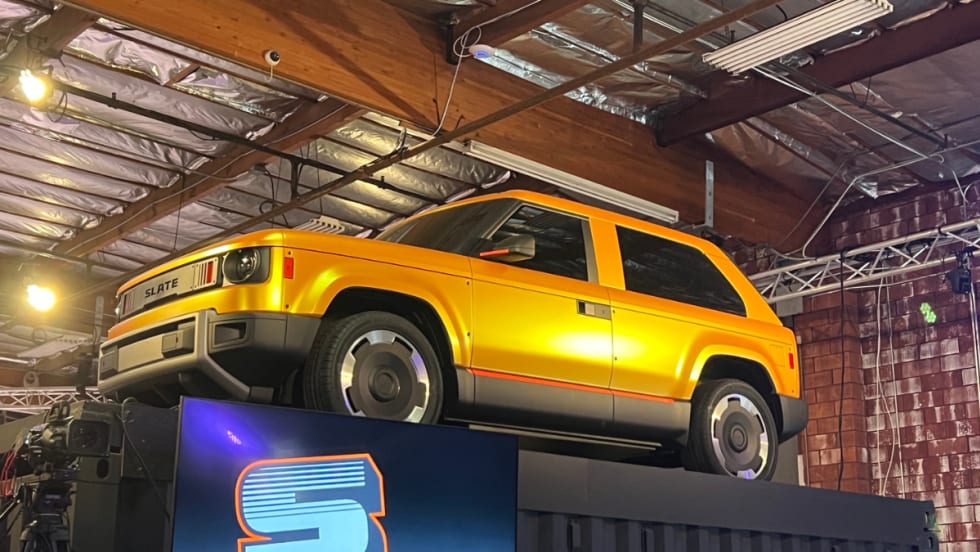
Slate Electric SUV, Pickup Switchable Model Aims For Light-Duty Fleets
Everything about this EV is counterintuitive and understated, making it stand out from the crowd.
Read More →
Inspiration Mobility Acquires Key Electrada Assets
Inspiration Mobility Group has acquired select assets of Electrada, adding the fleet electrification provider's team, technology, and charging infrastructure development capabilities to its energy management business.
Read More →
Turning Connected Vehicle Data Into Decisions That Matter
Fleet leaders have more data than ever, but turning that data into clear, actionable decisions remains a challenge. This white paper shows how leading organizations are using connected vehicle data to improve safety, reduce costs, and optimize fleet performance. Learn how to turn insight into action across your fleet.
Read More →