




Job Suitability Is #1 Acquisition Factor for Commercial Fleets
Initial cost and depreciation are the No.2 and 3 factors considered by fleets in making vehicle acquisition decisions, according to the National Association of Fleet Administrators' 2002- Model Year Acquisition Survey.
Highlights of the NAFA Survey
Job suitability was again listed as the most important factor for commercial fleet managers when making acquisition decisions.
Sixty-two percent of commercial fleets surveyed have no executive vehicle purchasing policy.
The average cost of a commercial fleet executive vehicle rose 9.6 percent since the 2009-model year.
If you ask Dale Pollard for some of the reasons he chooses a particular vehicle model for his fleet, he mentions acquisition cost, reliability, and the quality of the warranty program.
"But job suitability is No. 1," said Pollard, fleet manager for Boyd Coffee Co. in Portland, OR. "You can lose money if the vehicle doesn't do the job."
Job suitability is again the top factor fleets look at when choosing which vehicles to acquire. According to the 2002-Model Year New Vehicle Acquisition Survey released by the National Association of Fleet Administrators (NAFA), the to three reasons fleets give for choosing a particular model are job suitability, initial cost, and safety record. The same three reasons, in the order, were listed in NAFA's previous survey in 2000.
Kelli Pugh, fleet administrator for Guide One Insurance in West Des Moines, IA, said safety was an important factor to her this year.
The selector list for the fleet at Guide One Insurance includes mainly the Pontiac Grand Prix, Buick Century, and Chevrolet Impala. The Guide One Insurance fleet has 140 vehicles.
In looking at costs, the company was considering going to smaller vehicles, Pugh said. "But we looked at the safety records of the smaller vehicles and stayed with the intermediates," Pugh Said.
Chad Roberts, who manages 840 vehicles as fleet manager for Gordon Food Service in Grand Rapids, MI, said company image is important to his fleet, as is acquisition cost and job suitability. He said management came to him for ideas on cost-cutting and he started to look at whether to go with a less expensive van on the selector.
"They took my recommendation and switched to the Chevrolet Venture, which produced cost savings," he said
Job Suitability Still No. 1 Factor in Acquisition Decisions
(1=Not Important, 5=Very Important)
Commercial Fleet
Average Weight
Job Suitability
4.5 Initial Cost
4.4 Depreciation
4.3 Safety Record
4.2 Delivery Time
4.0 Repair Record
4.0 Serviceability
3.9 Warranty Program
3.8 Fuel Economy
3.6 Company Image
3.5 Administrative Ease 3.3 Incentive Program 3.3 Country Where Built
3.3 Driver Preference 3.0 Insurance Cost 2.9 Fringe Benefit Value
2.4
Total Number of Vehicles Expected to Be Acquired for 2002-Model Year: Autos Still the Vehicle of Choice
Autos | Passenger Vans | SUVs | Cargo Vans | Light-Duty Trucks | Medium-Duty Trucks | |
Lease | 31.7% | 13.2% | 5.2% | 9.5% | 5.7% | 1.6% |
Purchase | 19.7% | 7.1% | 3.0% | 1.2% | 0.9% | 1.2% |
Half of Commercial Fleet Drivers Don't Get to Choose Make and Model from Established Selector List
No Choice | 51% |
Can Choose Both Make and Model | 32% |
Can Choose Make, Not Model | 8% |
Can Choose Model, Not Make | 9% |
35% of Drivers Can Choose Exterior Color; 34% for Interior Options
Exterior Color | Interior Options | Seating Packages | Option Packages | Other | No. Choice |
35% | 34% | 9% | 11% | 6% | 9% |
22.8% of Commercial Fleets Place New-Vehicle Orders in September
(Percentage of fleets responding)
Total 2002-MY
Jan. | Feb. | Mar. | Apr. | May | June | July | Aug. | Sept. | Oct. | Nov. | Dec. | |
Ordered | 2.6 | 4.3 | 3.5 | 1.8 | .9 | 1.8 | 12.3 | 16.7 | 22.8 | 17.5 | 13.0 | 1.8 |
Delivered | 10.5 | 4.4 | 7.0 | 8.8 | 3.5 | 2.6 | 1.8 | 3.5 | 8.8 | 19.3 | 14.9 | 14.9 |
Most Commercial Fleets Have No Policy of Side Airbag Purchases
No Policy........................................................................ 71%
Only Vehicles with Side Airbags When Available............ 17%
Allow Drivers to Select at Own Expense........................ 11%
Only Vehicles with Side Airbags....................................... 1%
2002-Model Year Medium Trucks & SUVs Have Highest Commercial Fleet Cap Costs
Auto........................................ $22,719
Passenger Vans...................... $22,762
SUVs........................................ $27,897
Cargo Vans.............................. $21,053
Light- Duty Trucks.................... $22,666
Medium-Duty Trucks ................ $39,551
62% of Commercial Fleets Have No Executive Vehicle Purchasing Policy
Selector List............................... 16%
Set Dollar Value......................... 22%
No Policy.................................... 62%
46% of Commercial Fleets Order Only Vehicles with ABS
Only Vehicles with ABS.............. 46%
Only Vehicles with ABS When Available.................. 26%
Do Not Order, No Policy.................................... 24%
Allow Drivers to Select at Own Expense............... 3%
Allow Drivers............................... 1%
Average Cost of a Commercial Fleet Executive Vehicle from Selector List Rises 9.6%
Selector List | Set Dollar Value | |
2002-MY | $31,058 | $38,162 |
2000-MY | $28,350 | $38,740 |
More Operations
Turn Fleet Data Into Smarter Decisions
Fleet leaders have access to more operational data than ever, but disconnected systems and unclear metrics often slow decision-making instead of improving it. This article outlines five practical steps fleets can take to transform fragmented data into actionable insights that improve planning, safety, utilization, and long-term performance.
Read More →
Hybrids: Electrification Without the Challenges
For fleet managers, fuel is one of the biggest line items in the budget — and it's one hybrids can shrink without changing how your people work. Download the eBook to see the numbers, understand the technology, and get a step-by-step guide to making the switch.
Read More →
How NOV Uses Telematics to Improve Fleet Safety Across 160 Locations
James Victory of NOV discusses how the company manages fleet safety, maintenance, and telematics across more than 150 locations supporting oilfield operations throughout the U.S.
Read More →
Fleet Meets: Steven Santostasi
This edition of the Fleet Meets series features Steven Santostasi, the current TSP channel manager for Ford Pro.
Read More →
Why Fleet Managers Are Replacing Departmental Vehicles with Shared Motor Pools
Departmentally assigned vehicles often create hidden costs through underutilization, poor visibility, and increased administrative burden. This white paper explores how shared motor pool strategies help fleets reduce costs, improve accountability, and optimize vehicle utilization.
Read More →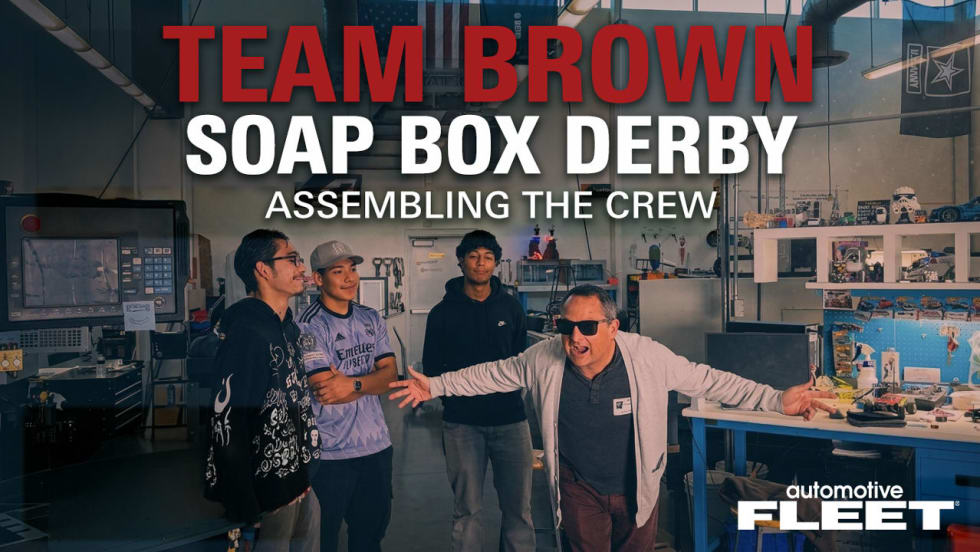
Soap Box Derby Challenge: Assembling the Crew
Meet Gabriel, Matthew, and Angel — the team helping bring this soap box derby build to life.
Read More →
BBL Fleet Acquires Velcor Leasing Corporation
BBL Fleet expanded its footprint in the fleet management industry with the acquisition of Velcor Leasing Corporation of Madison through a stock purchase agreement finalized Feb. 27, 2026.
Read More →
Lytx Introduces New AI Fleet Technologies at Protect 2026
The company introduced new AI-driven fleet safety and operations technologies during its annual user conference.
Read More →
Fleet Costs Are Rising: Here’s How Leaders Are Responding
Fleet leaders are under pressure to reduce costs, adapt to economic uncertainty, and make smarter decisions. See how peers across North America are responding with real data, proven strategies, and forward-looking insights. Download the 2026 Market Pulse Report to benchmark your strategy and uncover where you can gain an edge.
Read More →
From Waffle House to AI: Fleet Trends You Need to Know
In this AF news recap, host Faith Howell covers how Waffle House stepped up during disaster response and new AI tech on the market.
Read More →