




It's a Roll of the Dice Without Risk Assessment
Among the many challenges fleet managers face is controlling various risks, including the company’s fleet drivers. Concrete steps can be taken to mitigate the risk those drivers can pose.
Sometimes, amid the-day-to-day activities all fleet managers must face, it seems much of what is done is entirely reactive. “Closing the barn door after the horse gets out” can be frustrating and counterproductive. However, experienced fleet managers know the actions to take to keep that door closed in the first place.
Giving an employee the keys to a company vehicle entails risk — the
risk that he or she won’t operate the vehicle safely, won’t take proper care of it, or won’t follow company policy and procedure. Managing these risks begins before the driver is even hired and
is an ongoing process that can provide substantial savings and cost avoidance.
What are the Risks?
The risks associated with providing
company vehicles to employees go beyond the obvious legal issues. Before discussing what assessments can be performed, it is first necessary to define the risks. There are several categories under which risks can be placed.
Financial. The most obvious risk (though not necessarily most serious) is financial. Placing employees in a company asset that costs tens of thousands of dollars and generates thousands of dollars of expense during its time in service carries a substantial financial risk.
Safety. Not only the safety of the driver, but also the safety of passengers and the general public is at stake every time a fleet driver gets behind the wheel.
Liability. Placing an employee in a company vehicle also places the company in a position of responsibility for all the driver’s actions. One of the most important assets any company has is its reputation in its community and industry.
Failure to properly assess these risks carries the potential for serious cost, and the fleet manager is responsible to take the necessary steps to mitigate them.
Managing risk is a process that begins before drivers are even hired and continues until the driver not only is no longer a driver (for whatever reason), but also until the conclusion of any and all actions the driver may have taken. Everything an employee does while on the job (and sometimes when not on company time) reflects upon the company, and many activities incur costs — costs that can be controlled and, in some cases, eliminated if the fleet manager understands these risks and how to manage them.
Where to Begin
As with any broad-based program, proper approvals must be obtained before launching the project. Other department and discipline input is critical for the success of driver assessment.The first step in proposing a driver assessment program is to define specifically what risks the program will track and control, and what resources and tools the fleet manager sees as most effective. For example, the most common (nd important) assessment tool is the motor vehicle record (MVR). While it may seem common sense that the company has the right to review the driving record of an employee entrusted with a company vehicle, legal and policy issues must be addressed first.
Several other checks can assist the fleet manager in assessing the risks of assigning company vehicles:
Criminal background checks.
Credit checks.
Previous employment/references.
Each of these tools obviously carries even more potential legal issues than the simple MVR review. Management must decide if these issues can be addressed and if the effort involved in addressing them outweighs the benefit.
Driver assessment involves a number of corporate disciplines and departments. Each should be directly involved in providing input in developing an assessment program. At minimum, these departments should include:
Fleet.
Risk Management/Treasury.
Legal.
Human Resources.
Drivers (Sales, service, etc.).
Senior management.
Next, the specific risks that the program is meant to assess should be outlined. These include:
Safety.
Liability.
Cost.
Finally, once the program has been developed, approved, and implemented, each driver should be provided a copy to review and sign — before hire for new employees, after hire for existing drivers.
Assessing Safety Risks
A basic fleet management function is providing for the safety of fleet drivers, their passengers, and the public with whom drivers interact. Assessing safety risks the driver imposes begins with MVR reports.MVRs are available from every state and come in several different formats. Most large fleet lessor and service companies offer MVR programs. The primary advantage such programs can provide is a single report format.
Safety risk assessment should begin before the driver is hired. An MVR review should be part of any pre-employment screening and should continue on a regular schedule (quarterly, semiannually, annually) for as long as the driver is employed. Further, if the company policy permits personal use of a company-provided vehicle by nonemployees (licensed family members, for example), their driving records should be obtained and reviewed as well.
Clearly, some violations reported on an MVR carry the potential for greater risk than others.
Equipment violations, such as broken signal or taillight lenses or burned out headlights, do not presage serious safety risk and are often simply a matter of bad timing (a bulb burns out, and the driver is cited before there’s an opportunity to have it repaired). However, don’t completely overlook these citations. A record that indicates a pattern of such violations might reveal a lack of care for the vehicle, which can ultimately incur additional expense.
Moving violations pose a serious risk at various levels and should be acted upon. At the lowest risk level are violations such as failing to signal or yield right-of-way. Higher up the scale of risk are more serious violations, such as failing to observe traffic controls, including stop signs or lights and speeding. A driver with these violations on his or her record can pose serious risk to the company if assigned a vehicle. These violations demand immediate action by the company.
The most serious violations, in some cases, can be felonies, such as driving while impaired, reckless driving, or even speeding beyond a state-imposed threshold (more than 20 mpg over the posted limit, for example). A new-hire candidate with these types of violations should pause the hiring process. Consequences of serious violations by existing drivers should consider suspension of company vehicle privileges.
All new-hire candidates should be informed that prior to employment, the MVR will be sourced and reviewed before a company vehicle is assigned, and if applicable, for any family members who may be driving the vehicle as well. Once the MVR has been reviewed, the policy should clearly outline consequences to violations the company considers risk indicators. For example, a single moving violation might result in probationary use of the company vehicle for a year, with any subsequent violations resulting in suspension of privileges. A serious violation such as DWI might mandate the driver use his or her own vehicle for a similar period, free of further violations, before a vehicle is reassigned. For family members whose records contain violations, the simple answer is to bar personal use.
Similar actions can be taken for existing drivers. The assessment policy should call for MVR review on every driver at least twice each year. For larger fleets, these semiannual checks can often reveal one or more drivers who do not have a valid license. Few practices carry more risk than driving without a license, and the driver should be removed immediately from behind the wheel of the company vehicle and prevented from conducting any company business that requires driving.
Many companies assign points to various violations that, when accumulated, trigger company actions when the risk requires response. However implemented, the safety of the driver, family members, the general public, and the reputation of the company in the community at large are foremost in importance, with the costs associated with such risk an additional consideration.
MVR reviews can reveal other risks. For example, drivers who do not follow up on equipment violations or are prone to them can carry such inattention and sloppiness to their job and their treatment of other company assets. Obviously, a driver who has been cited for DWI isn’t a good candidate for any job. Overall contempt for the law isn’t the kind of quality one looks for in a potential employee.
Understanding Liability Issues
We live in a litigious culture, and the search for “deep pockets” by enterprising tort lawyers is a corporate fact of life. Drivers who exhibit the kinds of risks MVRs can reveal place the company at greater risk of liability for their on-the-job actions or even on personal time if the violation occurs while driving the company vehicle. Reimbursement programs, in which employees drive their own vehicles and are reimbursed for the cost, are no panacea. Just as the pizza parlor may be liable for delivery driver’s accident that injures or causes other loss to a third party, so too, may a pharmaceutical company risk liability for a crash caused by an employee driving a personal car on business.Injured third parties or those whose property is damaged seek redress most vigorously if a corporate pocket is involved, and the penalties can be huge. This risk is definitely one of the most critical a driver assessment program can help manage. The MVR, again, is the primary tool a fleet manager can use. However, other checks are available. Criminal background checks can be used to determine if the employee has been convicted of a crime, which can be a major point in a lawsuit for damages the employee causes.
Three legal concepts come to play in assessing the liability risk involved with providing a vehicle to an employee.
Negligent Entrustment. Under negligent entrustment, an employer can be held liable for damages if a person to whom the employer provided a “dangerous instrumentality” (i.e., a vehicle) causes damage or injury to another party with that instrument. Thus, anyone who causes damages or injures a third party or parties while driving a company vehicle exposes the employer (provider) of the vehicle to risk of liability under negligent entrustment law. Generally, the employer is held liable if the employer knew, or could have easily found, that the person had a propensity to be dangerous via the possession or use of the vehicle.
Negligent Hiring. Negligent hiring is identical to negligent entrustment in all but two key aspects. First, the person must be an employee (negligent entrustment risk covers anyone to whom the employer provides the vehicle, including family members or other non-employees). Secondly, the employer needn’t provide “dangerous instrumentality,” the employee’s actions in any circumstance suffice. Indeed, when a company vehicle driver (employee) has an accident, the company experiences the risk of liability under both negligent hiring and negligent entrustment.
Vicarious Liability. Vicarious liability differs from the two previous liabilities in that the employer can be held liable for damages caused by an employee even if the employer did nothing wrong, i.e., performed the requisite background and driver checks and found no evidence of a propensity for dangerous behavior.
Clearly, the risk a company faces when providing a vehicle to an employee is substantial, and assessing those risks must be a critical process in hiring and continued monitoring of fleet drivers. Negligent entrustment usually holds the greatest risk of monetary damages in the form of punitive damages since it requires first that the company provide the “dangerous instrumentality,” and secondly, that the company is negligent in conducting a diligent search for a record that would have revealed the driver’s propensity to cause accidents and resultant injury.
Incurring Unnecessary Cost
The risk of incurring unnecessary cost is more difficult to assess, but the signs are apparent if the overall program is structured well. In the previously given example, a driver who receives multiple equipment violations may bring the same cavalier attitude toward overall vehicle maintenance and to the job in general.Vehicle condition reports are an excellent tool in tracking cost risks. Reports (and accompanying photographs) that reveal unusual wear and tear, even accident damages, that aren’t addressed in a subsequent report may indicate other costs the driver is incurring while using the vehicle. Those costs, going forward and uncontrolled, can cost thousands of dollars in resale value when the vehicle is remarketed. In addition, if the vehicle is not maintained in peak condition, its safe operation may be compromised, opening the door for safety and liability risks.
For ongoing risk assessment, an accident review process can be very helpful. Drivers have accidents; there is no way around it. Determining whether the driver was at fault or did everything possible to avoid it can provide insights into the risk the driver poses. Accident review committees generally consist of representatives from several disciplines, including fleet, risk management, and driver functions. Such committees may also include legal and human resources, particularly if strict penalties are assigned for chargeable accidents.
Developing and Implementing a Risk Assessment Program
Possible participants in developing a risk assessment program were listed previously. There are good reasons for all of them to be involved. Most importantly, when personal records of an employee or prospective employee are reviewed, especially when that review will affect the hire or continuing employment of the driver, the company’s human resources and legal departments must provide input in how the review is performed. Drivers should be made aware of the policy (and the overall fleet policy as well), and should “sign off” on it, providing their permission and approval for the company to proceed.Once the program has been implemented, it is absolutely critical it is applied and adhered to in all instances, without exception. Anecdotally, a large company in the Southeast was hit with a multimillion-dollar penalty when a driver was involved in an accident causing serious injuries to a third party. Even though the driver wasn’t at fault, attorneys for the other party discovered that although the company did have a policy for MVR review, it was not able to produce proof that, for this particular driver, an MVR had been obtained. Having a policy and not enforcing or following is as risky as not having a policy at all.
To recap, assessing driver risk, because of the serious consequences for failing to do so, is an important segment of a successful fleet program. Program development should include all stakeholders and responsible parties, and, when implemented, must be applied to consistently and without exception. Doing so can help the company avoid substantial cost, both in liability and vehicle costs, and maintain its reputation in the industry and the community..
More Operations
How to Manage Conflict for Your Fleet Operations
Conflict management is becoming a core leadership skill. Here are five strategies fleet leaders should know.
Read More →
Turning Connected Vehicle Data Into Decisions That Matter
Fleet leaders have more data than ever, but turning that data into clear, actionable decisions remains a challenge. This white paper shows how leading organizations are using connected vehicle data to improve safety, reduce costs, and optimize fleet performance. Learn how to turn insight into action across your fleet.
Read More →
Cameras, Safety and Insurance: From Reactive Claims to Real-time Prevention
Commercial auto remains one of the most challenging and costly lines of coverage for fleet operators and insurers alike. Learn more about how to effectively address these issues from Onur Aksan, Enterprise Business Development Executive, Geotab.
Read More →

Are You Tracking Your Fleet's True Total Cost of Ownership?
Bobit Business Media surveyed 190 fleet professionals and found that while most fleets are tracking costs, fragmented systems and data gaps are keeping true TCO visibility out of reach. With rising pressure to control spend in an increasingly volatile environment, the gap between what fleets think they know and what the data actually shows is wider than you might expect. See how your peers are managing costs today and where the industry still has room to improve.
Read More →
Turn Fleet Data Into Smarter Decisions
Fleet leaders have access to more operational data than ever, but disconnected systems and unclear metrics often slow decision-making instead of improving it. This article outlines five practical steps fleets can take to transform fragmented data into actionable insights that improve planning, safety, utilization, and long-term performance.
Read More →
Hybrids: Electrification Without the Challenges
For fleet managers, fuel is one of the biggest line items in the budget — and it's one hybrids can shrink without changing how your people work. Download the eBook to see the numbers, understand the technology, and get a step-by-step guide to making the switch.
Read More →
How NOV Uses Telematics to Improve Fleet Safety Across 160 Locations
James Victory of NOV discusses how the company manages fleet safety, maintenance, and telematics across more than 150 locations supporting oilfield operations throughout the U.S.
Read More →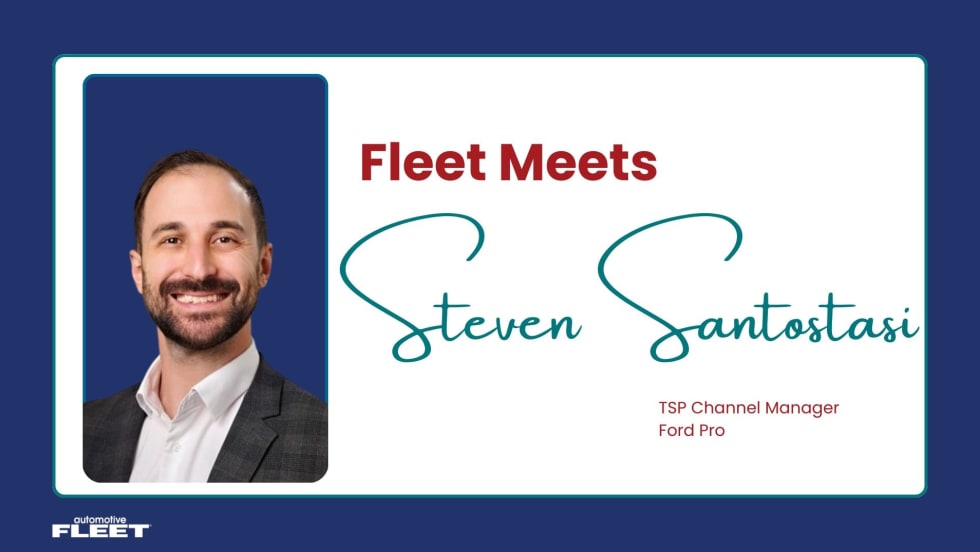
Fleet Meets: Steven Santostasi
This edition of the Fleet Meets series features Steven Santostasi, the current TSP channel manager for Ford Pro.
Read More →
Why Fleet Managers Are Replacing Departmental Vehicles with Shared Motor Pools
Departmentally assigned vehicles often create hidden costs through underutilization, poor visibility, and increased administrative burden. This white paper explores how shared motor pool strategies help fleets reduce costs, improve accountability, and optimize vehicle utilization.
Read More →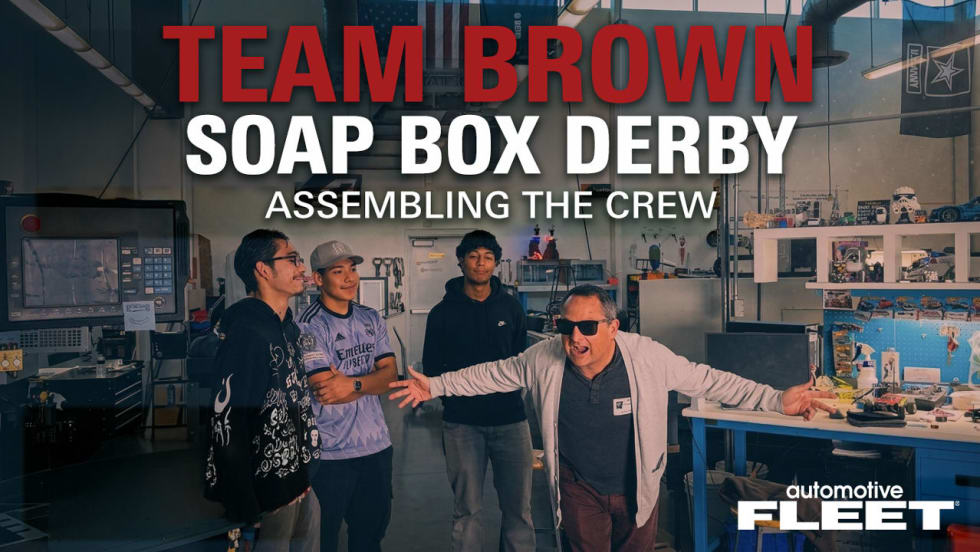
Soap Box Derby Challenge: Assembling the Crew
Meet Gabriel, Matthew, and Angel — the team helping bring this soap box derby build to life.
Read More →