




Infrastructure Issues Persist, But Alt-Fuel Future is Bright
Although refinery capacity and product availability will continue to be a challenge, high gas prices and the prominence of environmental issues in the news will increase demand for alternatives.
The biodiesel industry produced about 50 million gallons of the product six years ago. Last year, that number rose to 240 million gallons. This year, the industry expects to produce even more biodiesel, about 350 million gallons.
While that might sound like a lot of fuel, the biodiesel industry is still in its infancy, according to Donnell Rehagen, chief operating officer for the National Biodiesel Board.
“We’ve been doubling production numbers over the past several years and we’re looking at an industry right now in the U.S. that currently has around 750 million gallons of capacity,” said Rehagen.
Due to the high cost of fuel, environmental concerns, and other factors such as public relations, fleets have been considering and actually switching portions of their fleets to alternative-fuel sources such as biodiesel and ethanol. Hybrid vehicles are also gaining popularity. However, issues such as refinery capacity and availability of product will continue to command attention as producers are challenged to increase supply of the alternative fuel sources.
Biodiesel: Plants Still Under Construction
Several factors come into play when determining why biodiesel plants are producing only 350 million gallons of fuel, when overall plant capacity is approximately 750 million gallons.
First, you must have enough feed supply. Biodiesel is a cleaner burning diesel replacement fuel made from natural, renewable sources such as new and used vegetable oils and animal fats.
Another factor is labor. A biodiesel plant could increase its capacity by operating 24 hours a day, with three shifts working eight hours each.
Yet another factor is determining the best way to deliver the product. “Our biggest issue right now is availability of biodiesel to consumers, and that’s more an issue of distribution,” said Rehagen.
The biodiesel industry is working to find more distributors to carry and supply biodiesel. According to Rehagen, more than 1,000 distributors currently exist in the U.S. Again, that may sound like a lot, but “there are tens of thousands more out there that distribute [petroleum] fuel,” said Rehagen. A large percentage of the transportation of diesel fuel and gasoline is in underground pipelines, but that level of infrastructure is not available for biodiesel. Instead, a plant in Iowa pumping 30 million gallons of biodiesel a year transports that fuel in rail cars or on the back of a semitruck.
“Petroleum infrastructure has had a bit of a head start,” said Rehagen.
Ethanol Infrastructure an Important Factor
Ethanol production in the U.S. is experiencing growth for two reasons, according to Phillip Lampert, executive director of the National Ethanol Vehicle Coalition. One reason is the Energy Policy Act of 2005, which established a renewable fuels standard. The act mandates that renewable fuels such as ethanol represent at least 7.5 billion gallons of the U.S. fuel supply by 2012.
The second reason is the public outcry over the use of the methyl tertiary butyl ether (MTBE) additive to gasoline, which was shown to be a hazardous material.
“Those two items have been extremely beneficial toward the increased use of ethanol,” said Lampert. To express that in real numbers, the supply of ethanol has increased from 1.6 billion gallons in the year 2000 to more than 4.8 billion gallons produced in 2006.
Natural Gas Infrastructure Strong in California
California has the largest infrastructure in the country for natural gas, with more than 450 fueling stations, according to Michael Eaves, president of the California Natural Gas Vehicle Coalition. About two-thirds of those are private stations where companies install their own compressor systems and fuel their own fleets on site.
California also has a network of about 160 public access stations —the largest in the country, said Eaves. He added that most of the public access stations take credit cards and the coalition is working to standardize the stations’ acceptance of Visa and MasterCard. Many of the public access stations accept Voyager and Wright Express cards from government fleets, he said.
“We’re trying to create a growing network of publicly available compressed natural gas [CNG] stations,” said Eaves.
Included among the 450 California stations are approximately 50 stations that carry liquefied natural gas (LNG), which Eaves said might be an option for vehicles with space constraints. CNG takes about five times the volume in physical space as a liquid fuel such as gasoline or diesel fuel, while LNG only takes up about two times as much space. Refuse trucks that carry a lot of hydraulic equipment or large Class 8 trucks that pull containers and trailers are good candidates for LNG use. “Some of the different designs of those trucks run very well with LNG,” said Eaves.
One fairly unknown development is a home refueling appliance, called Phill, that allows drivers to fuel their natural gas vehicles (NGV) through the gas lines in their home. The appliance mounts on the wall and is hooked up to a gas line. By connecting the Phill to a car at night, a full tank of natural gas could be ready by the next morning.
Honda is offering incentives for people to buy the home refueling appliance to use on the Honda GX dedicated natural gas vehicle, according to Eaves. Other incentives for the appliance include a $1,000 federal tax credit and about $2,000 in Southern California.
As for environmental incentives, Eaves believes NGVs are some of the cleanest products available. Natural gas in a vehicle results in anywhere between a 23- and 30-percent reduction in greenhouse gases. Using renewable natural gas, made out of animal waste such as manure, or agricultural crop waste, results in a significant reduction in greenhouse gases.
“We think that natural gas is going to be a real player,” Eaves said.
Propane: The Least Expensive Alternative to Gasoline
According to the National Propane Gas Association, propane operating costs for fleet vehicles range from 5- to 30-percent less than conventional or reformulated gasoline. The association states that overall, propane is the least expensive alternative to gasoline.
Propane, also known as liquefied petroleum gas (LPG), has been used in vehicles since the 1920s. Today more than 200,000 propane vehicles operate in the United States and about 9 million worldwide, according to the U.S. Department of Energy’s Alternative Fuels Data Center.
Propane vehicles can be equipped with dedicated fueling systems designed to use only propane, or bifuel fueling systems that enable fueling with either propane or gasoline. Hybrid Technology: Plug-ins Gaining Ground
Development of plug-in hybrid vehicles is making headway as of late, said Bill Van Amburg, senior vice president of WestStart-CALSTART. The California- headquartered WestStart-CALSTART supports the growth of the advanced transportation technologies industry and its related markets, with the goals of cleaning the air and improving energy efficiency.
A plug-in hybrid is a regular hybrid vehicle with a large high-capacity battery bank that can be recharged by plugging in to normal household current, as well as using the on-board charging capabilities of normal hybrids.
Until this year, automakers had not talked much about plug-in hybrids, but activity has picked up recently. Van Amburg says Toyota and General Motors have been leading the way in plug-in hybrid development work. Van Amburg mentioned the agreement General Motors signed in August 2007 with battery maker A123 Systems that could propel GM in the race to bring plug-in hybrid and electric cars to market.
“A hybrid is a very important technology,” Van Amburg said. “We view it as a critical enabling technology for future capability. The bottom line is we’re going to see more and more electrification of the drive line. For instance in passenger cars, the hybrid is one of those first steps, and it has value now, which is what’s great about hybrids. At the same time, the ultimate plug-in vehicle, if you want to call it that, is maybe not necessarily a hybrid but a battery-powered car down the road. But we’re not quite there yet.”
More Operations
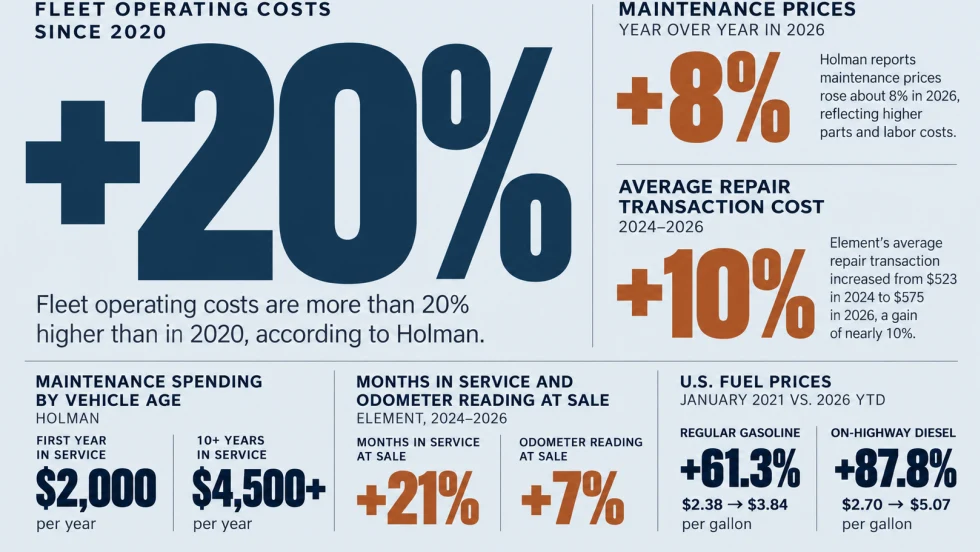
Managing Fleet Costs in an Era of Permanent Volatility
Fleet operating costs have risen more than 20% since 2020, raising a key question: When does extending a vehicle's service life stop making financial sense?
Read More →
The Next Evolution of Fleet Management: Autonomous Operations
This opening keynote session at the Fleet Forward Conference highlights the future of autonomous driving for fleets.
Read More →
How to Reduce the Total Cost of Risk From Catalytic Converter Theft
A stolen catalytic converter can cost fleets far more in downtime and lost productivity than in repairs. A total-cost-of-risk approach can help fleet managers quantify their exposure and prioritize theft prevention.
Read More →

Personal-Use Charges Rise as Vehicle Values Fall | AF News Recap
Personal-use charges are climbing, wholesale used-vehicle values are declining, and commercial fleet sales growth is slowing. This week, we're breaking down the latest fleet data, plus how Element Fleet Management is helping Waymo prepare for its first Canadian robotaxi market.
Read More →
Here's When You Should Make an Exception to Fleet Policy
Fleet policies are designed to create consistency, but not every driver or situation fits neatly within standard rules.
Read More →
AI-Native or AI-Acquired: What Should Fleet Managers Look for in an AI Platform?
Six questions can help fleet managers look beyond AI marketing claims to evaluate integration, data access, and real-world operational performance.
Read More →
A buyer's guide to fleet management software in 2027
Buying fleet management software in 2027 means looking beyond features and price. As fleet operations, technology and expectations evolve, this guide explores what today’s fleet professionals should consider when choosing a system that can deliver value now and adapt to what comes next.
Read More →
What Will Shape the Next Era of Fleet Management?
EVs, AI, and autonomous vehicles are reshaping fleet management. Discover what’s ahead—and how fleet leaders can prepare for the next era.
Read More →
How Fleets Can Recruit and Train Veterans for Technician Roles
Here's how the technician shortage has affected uptime for fleets, and what to do about it.
Read More →
Avis Budget Group Deploys Neology Toll Management Technology Across Major Brands
Neology’s neoFleet platform will manage toll transactions and toll-authority operations for vehicles across Avis, Budget, Payless, Budget Truck and Zipcar.
Read More →