





Related: Ways to Improve Fleet Productivity
Improving Efficiencies and Boosting Profit Through Telematics
AUX Home Services has used its new telematics platform to improve the number of appointments its fleet drivers are able to accomplish per day. The company has also been able to improve its on-time performance.
November 17, 2018
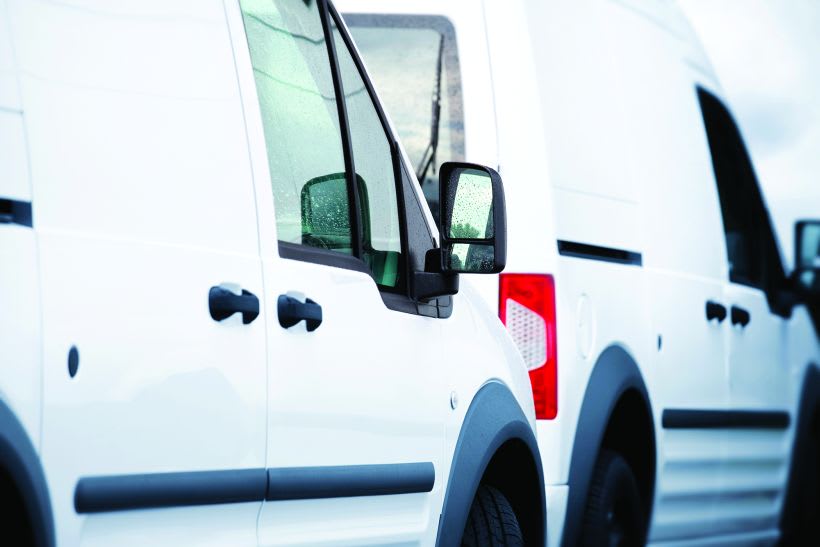
AUX Home Services has used its new telematics platform to improve the number of appointments its fleet drivers are able to accomplish per day. The company has also been able to improve its on-time performance.
Photo via Getty Images.
8 min to read
At 6:00 a.m., an AUX Home Services fleet driver is in full uniform and is ready to begin his or her day. All company fleet drivers keep their company vehicles at their residence, so they’re able to begin their work day from home.
AUX Home Services is a Birmingham, Ala.-based heating, cooling, plumbing, and electrical service provider and the company’s founder, Phil Smitherman is a retired U.S. Navy serviceman, so he uses military time to describe his fleet drivers’ schedules.
At about 6:30 a.m. to 6:45 a.m., the driver will get a two-minute “good morning” phone call from their dispatch. The dispatcher will ask how the driver’s morning has been, how he or she slept, and then tell the driver that his or her first appointment is ready. If the driver is ready to begin, the dispatcher will send the appointment’s location to a tablet found within that driver’s vehicle.
Smitherman recently integrated a new telematics system into his fleet operations. The new telematics system, which was provided by TomTom, has automated many processes that were previously accomplished manually, and has seen operational improvements that have improved efficiencies and boosted profits at his company.
When the driver enters the vehicle, the tablet will be pinging to let him or her know that the first appointment has been sent. As soon as the driver hits “accept” on the tablet, the dispatcher will know that he or she is in the driver’s seat, seatbelt on, and ready to accelerate.
By 7:00 a.m. the driver is already on route to his or her first appointment. Each driver’s first appointment has been selected based on geographic location, so no driver has to drive out of the way to reach his or her first appointment.
As soon as the driver begins heading toward his or her first appointment, a large electronic board found in the central dispatch center changes, alerting the company dispatcher that the driver is en route. The board has a large map of the areas the company services, and each driver is denoted in the form of a symbol on the map. At different stages of the driver’s route, the symbol will change color, representing the particular stage of the appointment that driver is in.
Once the driver arrives at his or her first location, he or she will press a button that says “arrived.” The symbol representing that vehicle on the central dispatch board will once again change color to inform the dispatchers that he or she has arrived.
This cycle will repeat throughout the day, as the drivers complete and begin new appointments. A typical driver for Aux Home Services will typically complete three to four appointments per day. Drivers never have to operate the tablet while they’re driving to figure out where they’re going; all if this information is sent directly to them.
Aux Home Services' Fleet
AUX Home Services is no stranger to telematics; for the past 20 years, the company has had some sort of telematics service integrated into its fleet. In the early days of telematics, when telematics services mostly consisted of dots on a map, AUX Home Services installed chips into its vehicles that provided GPS data. But, in order to retrieve any GPS data from those chips they needed to be pulled out of the vehicles at the end of every week.
As telematics systems evolved, Smitherman kept pace and continued to integrate the evolving telematics technologies into his fleet because he recognized the operational enhancements that his fleet could yield by keeping pace with those technologies.
Not all fleets of AUX’s size — roughly 40 vehicles — choose to integrate telematics systems into their operations, but Smitherman understands their value.
Due to the nature of his business, managing logistics is one of the most challenging aspects of managing his fleet.
“Logistics create opportunities, and opportunities are capitalized by logistics. We know that we can be a better contractor for our customer if we can just manage our fleet with the latest technologies to become more efficient,” said Smitherman. “Then we won’t have to raise our prices and we’ll be more competitive and more profitable, and take better care of our employees. We can do a lot of things that not all companies can, just by capitalizing on the technology that’s available for fleets.”
One of the biggest complaints that people have of service providers is the large window of time that they give for appointments, noted Smitherman. Customers are rarely enthused when a company tells them that they’ll be at their home between noon and 6 p.m., because it’s such a big window of time.
Smitherman said his company used to give four-hour windows of time for its service appointments, which is still a bigger window of time than he was happy with. With his company’s new telematics provider, his dispatchers are able to see which drivers are within a 2-,5-, or 10-mile radius from a customer and then optimize the closest driver’s route to give customers the shortest wait time.
“So when my dispatchers are looking at the data, and they get Mrs. Jones on a call, they can see that she has a leaking faucet, and that we have a driver 4.7 miles from them, and tell them that they’ll be there in 11 minutes. It’s a game changer,” said Smitherman.
How Telematics Have Impacted AUX Home Services' Fleet
The morning routine of an Aux Home Services fleet driver looked substantially different to what it looks like today prior the integration of the company’s new telematics service.
A driver would get up in the morning and immediately call a dispatcher to let them know that they’d be ready to go in 15 to 20 minutes. Once the dispatcher found an appointment for the driver, she would call back after those 15-20 minutes to let the driver know she had found his or her appointment and to ask whether or not he or she was ready to begin.
If the driver said yes, the dispatcher would ask if the driver had a pen, because he or she would have to write the address of the first appointment down on a piece of paper. The driver would write down the address of the first appointment and then head to his or her vehicle. Once in his or her vehicle, he or she would enter that address into a standalone GPS device within the vehicle.
If the driver wrote the address down incorrectly, or the GPS device had issues finding the location, the driver would have to call the dispatcher back to inform them the address was not showing up on the GPS device.
The dispatcher would then call the customer to ask for their nearest cross streets. After receiving that information from the customer, the dispatcher would then relay the information back to the driver. This entire process could take up to half an hour, Smitherman noted.
Once the driver reached his or her first appointment, he or she would call dispatch again before beginning the job, in order to let them know he or she had arrived.
Once the driver completed the job, the driver would come back to the vehicle, call to let dispatch know the job was done, and this cycle would begin again. Compared to how drivers interact with dispatch now, Smitherman said it was almost comical how they used to operate.
But, apart from the operational perspective, the company also thought about the safety benefits that telematics could bring.
Smitherman wanted a system that would reduce the amount of distractions that drivers had on the road since some of his drivers operate 10,000 GVWR vehicles, which can lead to a lot of damage in the event of a collision. By sending all relevant data straight to the drivers’ vehicles, and not requiring them to interact with their tablets in order to know where they’re going, this was accomplished
“The only button a driver needs to hit is a great big button that says “Go” on his tablet,” said Smitherman. “His tablet gives drivers their routes and all the data on the customer, anything and everything it takes to build a relationship with that customer.”
The company’s telematics system also alerts Smitherman when drivers exhibit erratic driving behavior. If a driver jumps on the brakes, Smitherman will receive a text alert. The fact that a driver slammed on the brakes doesn’t mean he or she is driving recklessly, it may mean that something may have happened that management should know about.
Management will sometimes check in with the driver after receiving one of these alerts to check if the driver is OK. This aspect of it, using the system to check in on the driver’s well-being, has also helped soothe the driver’s concerns that “big brother” is always watching.
“It’s no longer a big brother obstacle you’re overcoming, it becomes ‘he’s watching out for me,’” said Smitherman. “We’re driving thousands of miles a day and we’re just local. We operate seven days a week so our driers are out there every day of the week.”
Smitherman said that the company had two accidents in 2017 where his drivers were hit. Using the data gathered from his telematics system, he was able to show his drivers speed to the police officer and insurance company to prove they were not at fault.
In addition, to operational and safety improvements, Aux Home Services has also seen monetary gains thanks to the telematics integrations.
Smitherman used his company’s plumbing driver technicians as an example.
A plumbing driver typically completes two to three appointments per day. By leveraging the data given to them by their telematics platform, the company can at times squeeze in an extra call per day, per technician.
If they’re able to accomplish this consistently, that’s an extra appointment per day, per technician for 21 days a month for every work day.
Expanded to the company’s entire fleet of drivers, that would be about 840 more appointments per month.
“You could see some huge revenue opportunities without increasing overhead,” said Smitherman. “You’re not buying more trucks or paying more insurance, you’re just doing more with less.
Smitherman acknowledges that the kind of technology his fleet is using is expensive. But, the operational improvements that a company can experience from this technology can make up for that price.
Subscribe to Our Newsletter
More Operations

What Will Shape the Next Era of Fleet Management?
EVs, AI, and autonomous vehicles are reshaping fleet management. Discover what’s ahead—and how fleet leaders can prepare for the next era.
Read More →
How Fleets Can Recruit and Train Veterans for Technician Roles
Here's how the technician shortage has affected uptime for fleets, and what to do about it.
Read More →
Avis Budget Group Deploys Neology Toll Management Technology Across Major Brands
Neology’s neoFleet platform will manage toll transactions and toll-authority operations for vehicles across Avis, Budget, Payless, Budget Truck and Zipcar.
Read More →

Fleet Personal-Use Charges Edge Higher in 2026
Nearly eight in 10 surveyed fleets allow personal use of company vehicles, while just over half of respondents report charging employees for the privilege.
Read More →
The Future of Fleet + What’s Changing Right Now | AF News Recap
Could developments overseas offer a preview of what’s coming for U.S. fleets? This week, we’re looking at the future of AI, autonomy, and electrification, plus Ford Pro’s new certified pre-owned program, smarter vehicle offboarding, and a new way for fleets to manage toll expenses.
Read More →
How to Handle Vehicle Offboarding
What do fleet managers need to do when a driver leaves?
Read More →
Sponsored•October 1, 2026
Fleet Manager’s Ultimate Playbook: Navigating the New Standard in OEM Connectivity
Rising operating costs, driver safety concerns, and unplanned downtime are putting unprecedented pressure on modern fleets. Discover how fleet managers use embedded OEM connectivity and real-time vehicle data to cut TCO, prevent downtime, and protect drivers without aftermarket telematics hardware.
Read More →
U.S. Bank Adds Verra Mobility Toll Management to Voyager Fleet Platform
The integration allows U.S. Bank Voyager fleet customers to manage toll payments and violations alongside fuel, EV charging and maintenance expenses.
Read More →
ADAS Prevents Crashes. But Repairs Cost More | AF News Recap
ADAS-equipped vehicles may crash less often, but they can cost more when they do. This week, we’re breaking down what that tradeoff means for fleets, plus Subaru’s first Forester Wilderness Hybrid, Nissan’s new e-POWER Rogue, and why Calstart has become Catalyst Mobility.
Read More →
Moventum Fleet Management Names Mark Iorillo Head of Sales
Iorillo brings nearly 20 years of fleet management and sales experience to the role, including previous positions at Element Fleet Management, CEI, Donlen and Ryder.
Read More →