




Implementing a Fleet Safety Program Explained
Fleet Response recently hosted a seminar led by ADTS Vice President Phil Moser for select clients to mark its headquarters renovation and to emphasize safe fleet behavior.

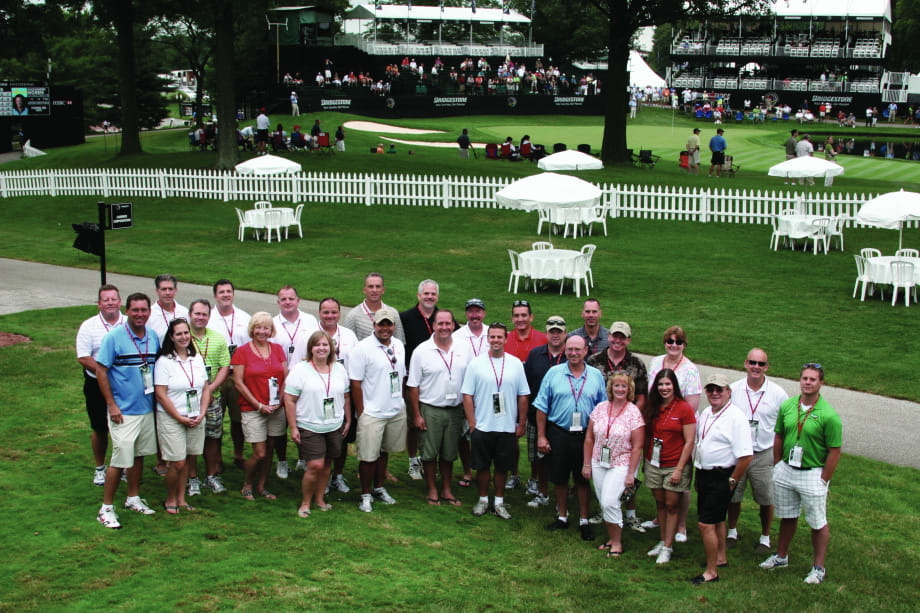
During its recent Product Showcase and Networking Event, Fleet Response hosted a networking event at the16th hole of Akron, Ohio’s Firestone Country Club where attendees were able to witness Adam Scott en route to winning the Bridgestone invitational.
During its recent Product Showcase and Networking Event, Fleet Response hosted a networking event at the16th hole of Akron, Ohio’s Firestone Country Club where attendees were able to witness Adam Scott en route to winning the Bridgestone invitational.
It’s a no-brainer. Fleets need to have a safety program as part of its business plan in order to run smoothly, efficiently, and — most of all — economically. But the big question is how to set up a policy and make it operational so it is effective and serves the bottom line.
A select group of Fleet Response clients and potential customers received an answer to this crucial “how” during the company’s recent Fleet Response Product Showcase and Networking Event.
Throughout a one-hour presentation by Phil Moser, vice president Advanced Driver Training Services (ADTS), the attendees received straightforward, no-nonsense A-to-Z advice on setting up a safety program. ADTS is a provider of driver safety training services and products that include behind-the-wheel training, face-to-face seminars, coaching, and online offerings.
Moser, a regular guest speaker at industry conferences and meetings of trade organizations such as NAFA Fleet Management Association, the Risk & Insurance Managers Society (RIMS), and the Automotive Fleet & Leasing Association (AFLA), discussed in detail what fleet managers could do to meet the safety needs of their individual fleets.
Safety Overview
The presentation began with an overview of what a fleet safety program should look like, then proceeded to discuss what steps fleet managers should take to establish one, and the standards by which it should operate.
Among the safety program elements Moser discussed at length were using driver motor vehicle reports to gauge safety and fitness, fleet accident trend history, how to rate drivers’ safety records, and training.
According to Moser, setting up a safety program boils down to asking a couple of simple questions: What are your problems and what are your needs? The answers can then be used to identify specific, individualized solutions for the fleet.
While Moser’s presentation was a highlight, the focus of the Fleet Response Product Showcase and Networking Event was to unveil the organization’s upgraded and improved online management tools — FleetSuite and Driver History Profile (DHP). FleetSuite is designed for fleet and risk managers to review claim activity, repair updates, maintenance data, subrogation status and fleet safety information. Driver History Profile (DHP) is part of Fleet Response’s safety solution, combining driver motor vehicle records with accident data to create a driver’s risk profile and assign safety training.
Other activities included attendees sitting with the call center, claims, maintenance, and subrogation department supervisors during which time they were briefed about each department’s process regarding claims management, illustrating Fleet Response’s processes and what drivers experience when they call in with a claim.
Making Connections
The Fleet Response Product Showcase and Networking Event was also, in part, a celebration, highlighting the Cleveland-based fleet management services company’s recently completed headquarters renovation.
The gathering at Fleet Response’s headquarters was also a way for the account executives to reconnect with their clients. During Moser’s presentation, the account representatives sat with their fleet manager clients. Several potential customers were also invited to attend the activities, and, after Moser’s presentation, they received a tour and thorough overview of Fleet Response’s business.
The event wasn’t all business. Fleet Response made time for fun as well. This included a VIP tour of Cleveland Browns Stadium, the home of the Forest City’s professional football team.
The festivities ended at the signature 16th hole of Akron’s Firestone Country Club, where attendees were able to witness Adam Scott’s first day of play at the Bridgestone invitational en route to his eventual victory.
While the golf outing was a casual event, Fleet Response’s director of sales of marketing Jeff Fender said that it also had a business function as well. “It was an opportunity for clients and invited potential clients to talk, brainstorm, and network,” he observed.
This year also marks Fleet Response’s 25th anniversary. The company specializes in custom-designed fleet management services for the corporate fleet industry.
More Safety

Nexar-Nauto Merger Aims to Give Fleets Better Safety Intelligence Through Larger Driving Dataset
Stefan Heck tells Automotive Fleet that combining more than 10 billion miles of driving history with Nexar's AI models will give fleets deeper insights into driver risk and roadway conditions than either company could provide independently.
Read More →
Don't Wait for a Crisis: 5 Ways to Build Mental Health Into Your Fleet Safety Program
For Suicide Prevention Month, fleet and safety leaders have an opportunity to put mental health where it belongs: at the center of workplace safety.
Read More →
How Camera Data Can Strengthen a Fleet’s Insurance Renewal
Insights from a commercial insurance carrier and a broker show how fleets can turn video telematic data, driver coaching, and improved claims results into a stronger case at insurance renewal.
Read More →
The Safest Fleets Aren’t the Ones with the Most Technology
You’ve made the telematics investment. Here’s how to capture the other half of its value and build the safest fleet on the road.
Read More →
Hidden in Plain Sight: Fleet Compliance Risks
Fleet compliance isn't just about having policies — it's about consistently enforcing them. This practical guide reveals six hidden compliance risks common in public sector and shared fleet operations and outlines proven strategies to improve visibility, accountability, and audit readiness
Read More →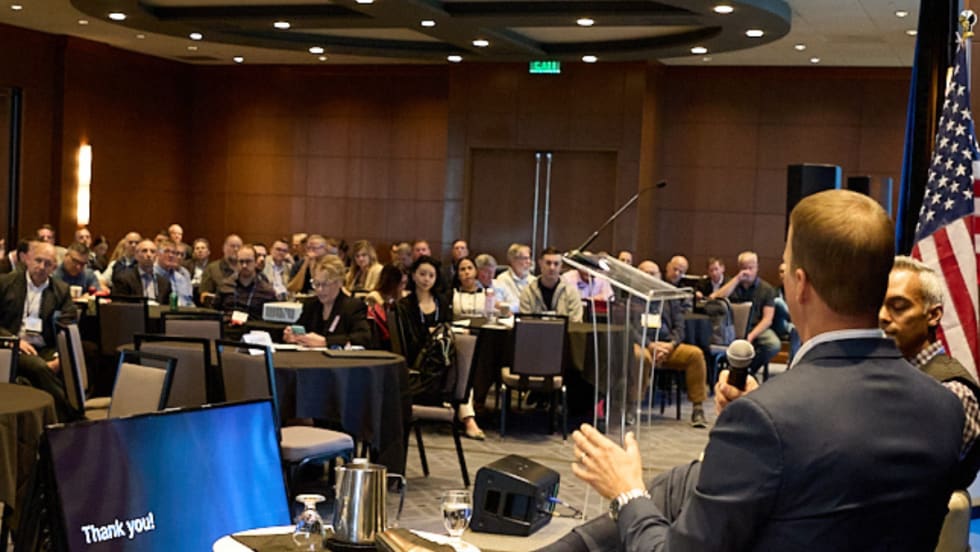
NETS Sets 2026 Fleet Safety Benchmark Conference for Indianapolis
The Sept. 15–17 program will feature fleet benchmarking data, case studies, emerging technologies, and implementation strategies while running alongside the NSC Safety Congress & Expo.
Read More →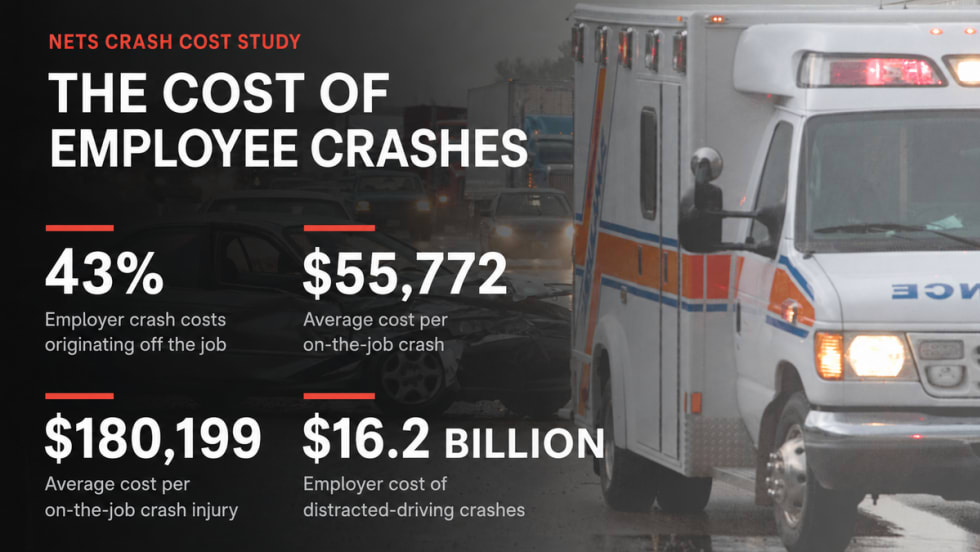
Off-the-Job Crashes Account for 43% of Employers’ $61.7 Billion Crash Burden
NETS quantifies costs dispersed across fleet, risk, HR, and other departments while providing new per-crash benchmarks for employers.
Read More →
Ram Recalls More Than 1.27 Million 1500 Pickups for Seat Belt Anchor Issue
The recall affects certain 2019-2026 Ram 1500 pickups that may have improperly attached second-row seat belt buckle anchors.
Read More →
How Better Visibility Cut Speeding Violations by 48%
Fleet leaders don't need more data, they need clearer visibility into what the data is saying. This case study explores how one utility replaced speeding-event counts with a single metric — miles driven in violation — to strengthen safety and significantly reduce speeding violations.
Read More →
Operation Safe Driver Week: Why the Industry's Oldest Safety Campaign Still Matters to Fleets
A look at how a 2007 enforcement initiative became one of the most consequential weeks on the fleet safety calendar, and what it means for your drivers in 2026.
Read More →