




How Will Future Residual Values Impact Hybrid
While hybrids can reduce fleet fuel expense, the two other major fleet expenses — maintenance/repair and depreciation — must also be considered to determine if hybrids are the answer to reducing overall fleet costs.
With fuel prices showing no signs of dropping from current levels, today’s fleet managers are pressured to find ways to hold, or even reduce, the total cost of fleet ownership. Since higher fuel prices are now the major contributor to rising fleet expenses, operating more fuel-efficient models, such as hybrids, seems an easy solution to lower overall fleet costs.
Hybrid’s improved fuel economy, of course, results in lower fuel expense, but the two other major fleet expenses — maintenance/repair and depreciation — must also be considered to determine if hybrids are the answer to reducing overall fleet costs.
Maintenance Costs a Concern
An early concern with hybrids was that the lower fuel expense would be offset by higher maintenance and repair costs. Maintenance and repair data is still limited for hybrids at higher mileages. However, early industry analysis point to comparable overall maintenance and repair expense curves for hybrids compared to their non-hybrid counterparts within normal fleet replacement parameters.
The remaining major lifecycle cost factor is depreciation. Over the past three years, the exceptional market value retention of hybrid vehicles has been well documented. A quick Internet search provides historical data and articles revealing that established hybrid vehicles have sold for 80-85 percent of MSRP after two years, an incredibly low rate of depreciation. Even considering the hybrid’s higher transaction price, its depreciation cost in absolute dollars is equal to or better than that of a normal fleet vehicle over the same time frame.
Will Favorable Market Continue?
Supply and demand for hybrids during this time frame must be analyzed to determine if this favorable market environment will continue.
The high-value retention over the past few years has been a direct outcome of demand for hybrids exceeding supply. As demand increased for new hybrids, buyers turned to the used market to fill the gap. At the same time, the secondary market supply of two- to three-year-old vehicles was low because a very limited number of hybrid models existed in 2003-2004 (See Figure 1).
Figure 1
Model Availability 2003-2007
2003 2 hybrid models
2004 4 hybrid models
2005 7 hybrid models
2006 10 hybrid models
2007 16 hybrid models
This combination of very high demand and lower supply resulted in higher auction proceeds and favorable depreciation curves for hybrids.
With increased focus on foreign oil dependency and historically high fuel prices, the number of new models has increased dramatically over the past few years. Assuming demand for hybrids remains constant, the increased secondary market supply generated from increased new-vehicle sales will balance supply and demand as these vehicles enter the secondary market.
Also added to the mix are new fuel-efficient vehicle introductions (compacts, subcompacts, and diesels) that will compete in the secondary market against the two- to three-year-old hybrids produced today. Both these changes will result in lower future secondary market prices, and increased depreciation expense, for hybrids.
Does this change to hybrid depreciation curves mean hybrids should be avoided?
No. While it is true, for the most part, there are no longer waiting lists for new hybrids and the secondary market is adjusting to the current environment, hybrids still require consideration depending on individual fleet factors and preferences.
[PAGEBREAK]
How to Estimate Depreciation
How can a fleet manager estimate hybrid depreciation?
In addition to utilizing fleet management company resources for depreciation estimation assistance, fleet managers can use industry-accepted practices to estimate depreciation on hybrid models.
Because of the uncertainty surrounding hybrids previously outlined, some popular residual value guides currently do not publish residual values for hybrids. In the absence of guidebook data, an accepted industry method uses residual value percentages equal to the same make and vehicle type as the hybrid to estimate residual values.
This practice is easy when a non-hybrid counterpart exists. In other cases, a comparable vehicle of the same make must be used. Since hybrid market demand still exceeds supply, using this method rather than current same age/mileage auction sales to estimate values two to three years from now results in more accurate market value projections.
When using this method, remember that not all hybrids are created equal. Some offer less fuel economy for a much higher MSRP than their non-hybrid counterpart.
For these types of "mild" hybrids, the spread between the two vehicles in the secondary market will compress at a fast rate or diminish altogether. Therefore, as a percentage of MSRP, the hybrid may have a lower residual value percentage than its non-hybrid counterpart.
While depreciation assistance and economic modeling regarding hybrids can be requested from a fleet management company, analyzing all current factors (highway versus city driver, replacement cycle, transaction price, tax benefit considerations, and other fleet factors) is always recommended when looking to hybrids as a solution to lowering fleet lifecycle costs.
More Remarketing
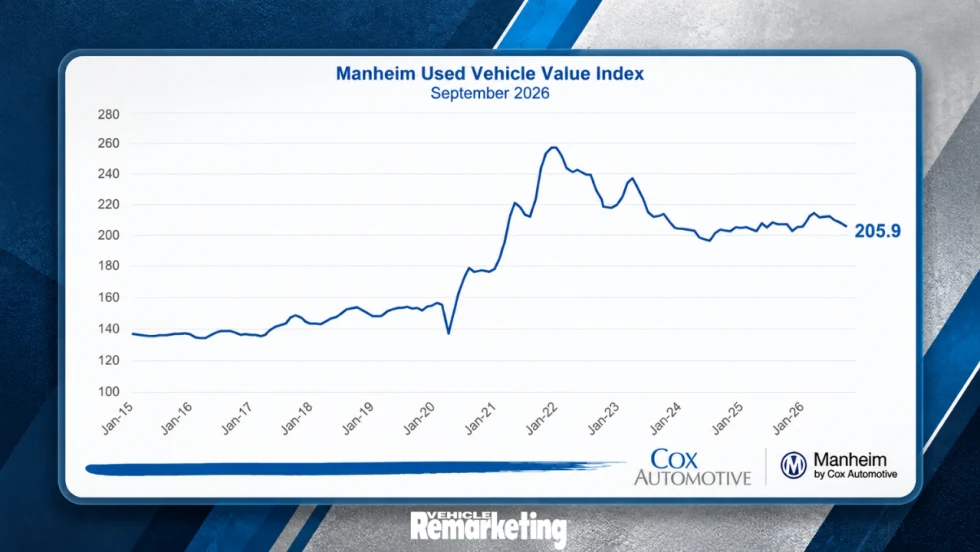
Wholesale Used-Vehicle Values Fall as Cox Automotive Cuts 2026 Forecast
Wholesale used-vehicle prices declined in September as depreciation accelerated, prompting Cox Automotive to lower its year-end forecast.
Read More →
FLD Promotes Three Executives in Leadership Changes
FLD has promoted three longtime executives, naming Gary Mott CEO, Richard Mallek president, and Ron Sanders managing partner.
Read More →
Ford Pro Launches Certified Pre-Owned Program for Commercial Vehicles
Ford Pro Advantage will offer certified pre-owned Class 1-7 commercial vehicles through more than 700 Ford Pro Commercial Vehicle Centers.
Read More →
Copart to Acquire ACV in $1.9 Billion Deal
The acquisition would expand Copart beyond its traditional salvage business into dealer-to-dealer wholesale remarketing while adding ACV’s vehicle data, inspection, and valuation technology.
Read More →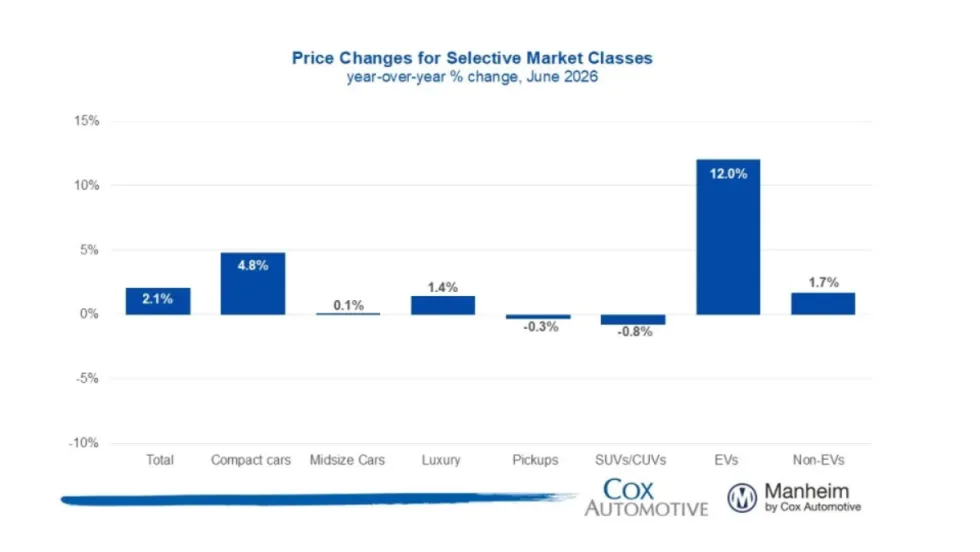
Manheim Index Shows Used-Vehicle Wholesale Prices Up 2.1% in June
The market is seeing stronger appreciation in older used vehicles this year, and the most affordable segments have been among the year’s best performers.
Read More →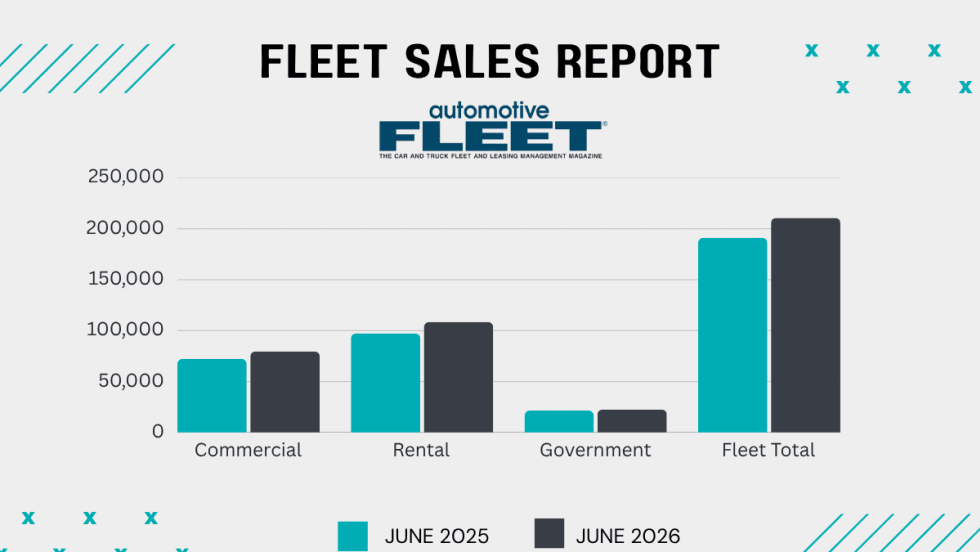
Commercial Fleet Sales Contribute To June, YTD Gains
The fleet sector has boosted its vehicle purchases at a reliable pace in the first half of this year compared with 1H 2025.
Read More →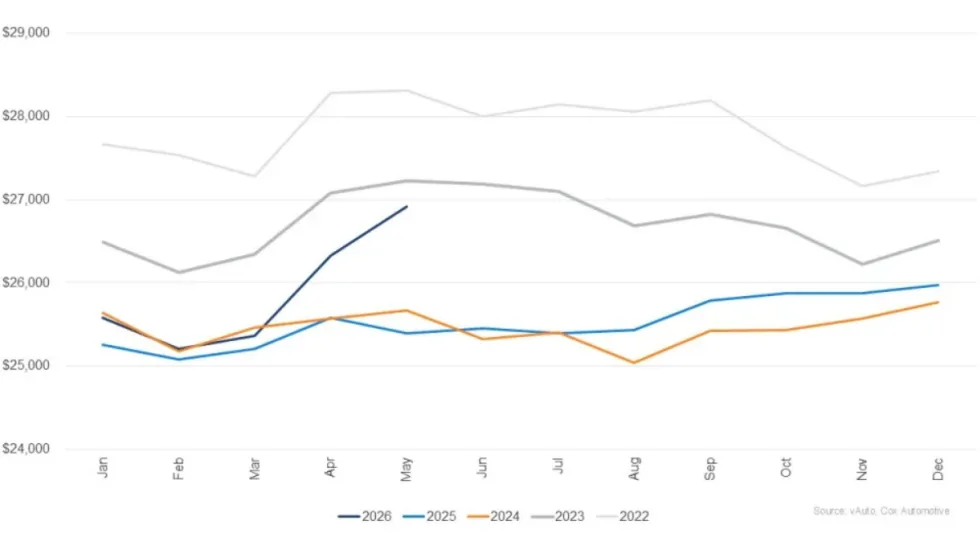
Used Vehicle Prices Climb Higher As Sales Pace Slows
The higher prices at used retail reflect strong wholesale values earlier in the spring, particularly for older, more affordable vehicles.
Read More →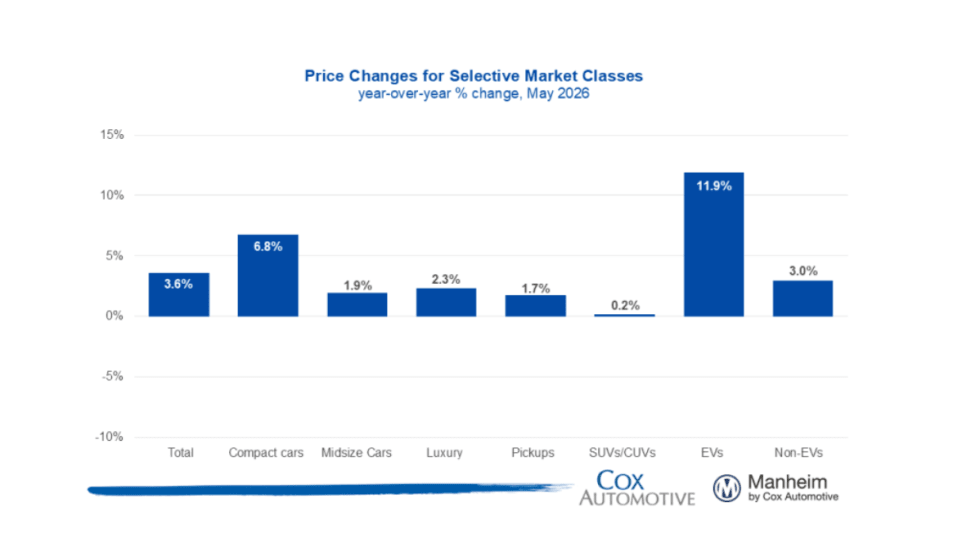
Wholesale Used Vehicle Market Sustains Moderate Rise In Values, Prices
Trends continue to normalize after a strong start to the year, as consumers contend with higher gas prices in the coming summer months.
Read More →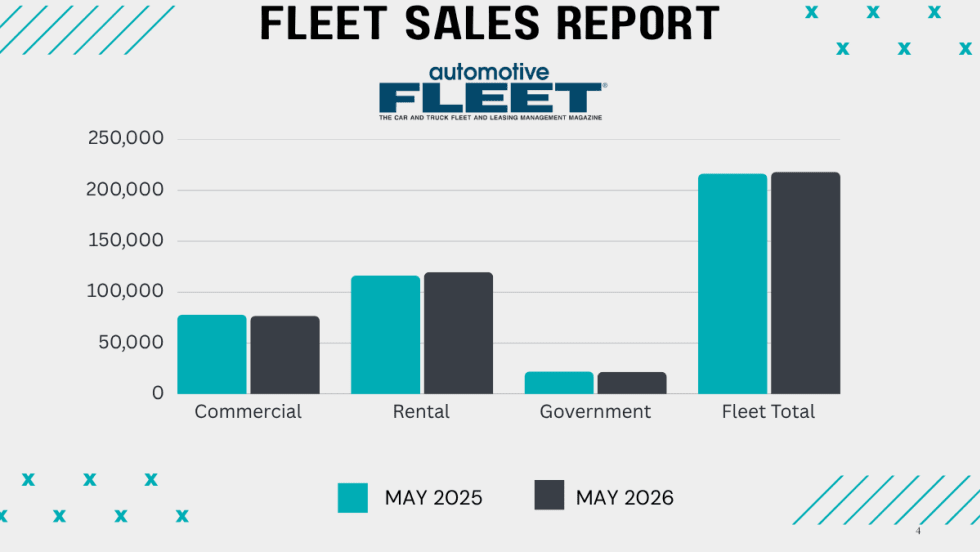
Commercial Fleet Sales Still Lead Sectors Despite May Mini Dip
The U.S. economy's continued growth and positive business investment are creating a favorable environment for fleet vehicle demand.
Read More →
How Connected Vehicle Data Is Lifting Fleet Resale Values
A vehicle health score could improve the value of fleet vehicles at remarketing. The path to a universal standard is forming, and fleets that understand the process early will be better positioned when it arrives.
Read More →