




How Two Fleets Save Time & Money With Centralization and ‘Firm Pricing’
Electric and natural gas company Ameren fuels its fleet vehicles at 16 onsite facilities, while electric utility Southern Company utilizes ‘firm pricing’ to level fuel costs.
As fuel prices continue to fluctuate, some fleet managers struggle to implement a cost-efficient plan for the future. Many managers look to fuel card programs for help, while others manage onsite programs and utilize ‘firm pricing’ strategies. Each alternative represents a viable fuel management solution, depending on a fleet’s specific needs.
Ameren Corporation has combined onsite fueling and retail fuel card use into one fuel management program, resulting in effective, risk-reducing cost management. With headquarters in St. Louis, Ameren’s four operating companies provide service to approximately 2.4 million electric and nearly 1 million gas customers in Missouri and Illinois. Its fleet includes 4,100 powered vehicles. Cal Kretsinger, Ameren’s fleet administrator, offers three fueling models to fleet drivers.
The models include purchase at a retail pump if access to an onsite pump is not available; wet-hose fueling in the Eastern Missouri area; and onsite fueling in Illinois, where there are currently 16 fueling sites.
“We tie all three of our fueling models to the Voyager fuel card,” Kretsinger said. “Our models give us a snapshot of our entire vehicle fueling experience.”
Onsite Fuel Card Program Offers Convenience & Efficiency
Tying the Voyager fuel card to Ameren’s onsite fueling provides convenience and efficiency, while minimizing lost crew time, according to Kretsinger.
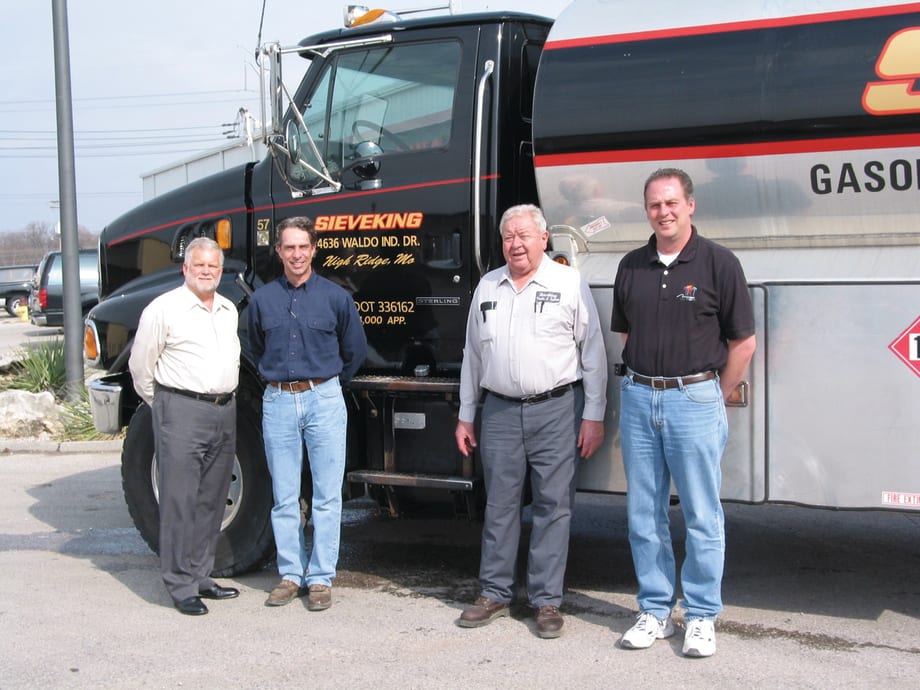
He explains that local managers in the St. Louis metropolitan area (AmerenUE) prefer to use a tanker-to-truck (wet-hose) solution to take advantage of the centralized fleet there. Wet-hose supplier Sieveking, Inc. provides the convenience of onsite fueling after hours and invoices Ameren electronically through Voyager using each vehicle’s Voyager card number. The remaining AmerenUE vehicles in Missouri purchase fuel at the retail pump using the Voyager card.
Administrative law restricts the use of wet-hose fueling in Illinois, so managers at AmerenCILCO and AmerenIP utilize onsite tanks and card readers with the Voyager card to purchase bulk fuel provided by PS Energy Group, Inc.
“On the lot, one driver can fuel the truck while the rest of the crew prepares for a job,” he said. “At an outside fueling station, the rest of the crew has to wait while one crew member pumps fuel.”
Many of Ameren’s onsite fueling stations realize a cost benefit as a result of high volume. At the smaller sites, the cost benefits are more marginal.
Kretsinger pointed out that another significant financial savings with this type of program is having one interface and a centralized data collection point.
Ameren’s partnership with PS Energy, its bulk fuel provider based in Atlanta, has enhanced data centralization. PS Energy not only delivers the bulk fuel, but also manages transactions from the onsite facilities using card readers, then delivers them to Voyager, the centralized data point.
The third Illinois operating company, AmerenCIPS, does not have onsite tanks, but uses the Voyager card to purchase fuel at retail stations. Kretsinger said that their managers find that retail works well for them without making the capital investment for onsite facilities, especially in more rural and less concentrated areas.
Since all three models are tied to a single fuel card, Kretsinger receives one invoice a month, and he writes one check per month for all three models. “It makes administration and data analysis much more efficient,” he said. “All the transactions are electronic, and each transaction ties back to a vehicle without requiring manual data entry.”
Analysis Helped Define Ameren’s Fueling Needs
Ameren used co-branded cards tied to maintenance management companies before switching to Voyager in September 2002. After a successful pilot test using Voyager fuel cards at retail sites, Kretsinger rolled the program out to the entire fleet. Co-branded cards work for fleets that primarily depend on an outside fleet management vendor for data collection and analysis, according to Kretsinger. However, for Ameren’s fleet, it made more sense to conduct analysis in-house. “In our case, we bring data into our internal fleet management system, so it didn’t make sense for us to pay an additional fee for each card,” he said. “With a smaller fleet, it might make sense to farm out data management and analysis.”
Ameren uses this fleet data for regulatory compliance, internal billing, and to schedule preventive maintenance.
Ameren Reduces Fuel Costs After Partnering with PS Energy
Ameren’s partnership with PS Energy has led to further cost savings. “Because of the volatility of fuel prices, it’s important to plan for the future,” Kretsinger said.
The partnership began in fall 2005. PS Energy has helped Kretsinger anticipate industry trends and manage Ameren’s energy needs efficiently and cost effectively. According to Livia Whisenhunt, president and CEO of PS Energy, her company’s role is to help fleets create budget certainty and better asset accountability.
“Onsite fuel is certainly the most cost-effective option, especially when full deliveries are used,” she said.“Reducing the invoicing process cost, the number of vendors, and putting all of the data down to the asset level can lead to a substantial cost savings.”
PS Energy partners with fleet managers to lock in fuel prices for 30 days to one year, depending on specific company budgets and needs. Whisenhunt estimates that companies can save 5-30 percent in volume alone through better accounting and consolidation.
Southern Company Uses ‘Firm Pricing’ to Level Fuel Costs
The Southern Company is another fleet that currently partners with PS Energy. An investor-owned electric utility, Southern Company provides electric service to homes and businesses in Alabama, Georgia, Mississippi, and the Florida panhandle.
Southern Company’s fleet of approximately 10,000 vehicles includes cars, light- and medium-duty trucks, trailers, and mechanized equipment such as aerial devices and digger derricks.
According to Mark Johnson, procurement agent for Southern Company, PS Energy is responsible for monitoring and maintaining levels of fuel at the company’s 91 onsite fueling locations.
“PS Energy is responsible for reporting fuel usage information by vehicle number,” Johnson said. “They are also an integral part of Southern Company’s Storm and Emergency Restoration Plan.”
Southern Company also utilizes PS Energy’s “firm pricing” service.
“On occasion, Southern Company has chosen to contract at firm fuel prices rather than fluctuating market prices,” Johnson said. “The benefits include level fuel costs, removal of some pricing risks in the volatile fuel market, and some cost savings compared to the market.”
According to Johnson, a good “firm price” is established by reviewing the average price of a prior term, and considering conditions that will affect the next term. Johnson sold this strategy to senior management after a thorough analysis and presentation of the potential cost savings.
While onsite fueling works best for the Ameren and Southern Company fleets, Kretsinger, Whisenhunt, and Johnson agree that when implementing a fuel management plan, fleet managers should conduct a thorough analysis and cost comparison of all available programs and options.
More Operations

How Fleets Can Recruit and Train Veterans for Technician Roles
Here's how the technician shortage has affected uptime for fleets, and what to do about it.
Read More →
Avis Budget Group Deploys Neology Toll Management Technology Across Major Brands
Neology’s neoFleet platform will manage toll transactions and toll-authority operations for vehicles across Avis, Budget, Payless, Budget Truck and Zipcar.
Read More →
Fleet Personal-Use Charges Edge Higher in 2026
Nearly eight in 10 surveyed fleets allow personal use of company vehicles, while just over half of respondents report charging employees for the privilege.
Read More →
The Future of Fleet + What’s Changing Right Now | AF News Recap
Could developments overseas offer a preview of what’s coming for U.S. fleets? This week, we’re looking at the future of AI, autonomy, and electrification, plus Ford Pro’s new certified pre-owned program, smarter vehicle offboarding, and a new way for fleets to manage toll expenses.
Read More →
How to Handle Vehicle Offboarding
What do fleet managers need to do when a driver leaves?
Read More →
Fleet Manager’s Ultimate Playbook: Navigating the New Standard in OEM Connectivity
Rising operating costs, driver safety concerns, and unplanned downtime are putting unprecedented pressure on modern fleets. Discover how fleet managers use embedded OEM connectivity and real-time vehicle data to cut TCO, prevent downtime, and protect drivers without aftermarket telematics hardware.
Read More →
U.S. Bank Adds Verra Mobility Toll Management to Voyager Fleet Platform
The integration allows U.S. Bank Voyager fleet customers to manage toll payments and violations alongside fuel, EV charging and maintenance expenses.
Read More →
ADAS Prevents Crashes. But Repairs Cost More | AF News Recap
ADAS-equipped vehicles may crash less often, but they can cost more when they do. This week, we’re breaking down what that tradeoff means for fleets, plus Subaru’s first Forester Wilderness Hybrid, Nissan’s new e-POWER Rogue, and why Calstart has become Catalyst Mobility.
Read More →
Moventum Fleet Management Names Mark Iorillo Head of Sales
Iorillo brings nearly 20 years of fleet management and sales experience to the role, including previous positions at Element Fleet Management, CEI, Donlen and Ryder.
Read More →
Fleet Has a Talent Pipeline Problem. What Comes Next? | AF News Recap
Where will fleet’s next generation of leaders come from? This week, we’re looking at the industry’s talent pipeline, what certification can add to a fleet career, how to build an award-worthy track record, and the return of Automotive Fleet’s Personal Use Survey.
Read More →