




How to Talk to Your Employees About Tracking Their Driving Behavior
By focusing on improving safety and offering rewards, fleet managers can take the edge off tracking driver behavior.

If a fleet is planning a tracking program, they must approach it properly to ensure drivers are comfortable with the transition and understand precisely what is happening.
Photo: Unsplash.com/Paul Hanaoka.
There can be a bit of tension between fleets and drivers when it comes to tracking driver behavior. Drivers not only want their privacy, but their managers’ trust, and fleet managers need to ensure that they are protected. Drivers, of course, have valid concerns, but there are many benefits to tracking driver behavior that everyone should appreciate.
If a fleet is planning a tracking program, they must approach it properly to ensure drivers are comfortable with the transition and understand precisely what is happening. Following are some tips on how to talk to drivers about tracking driver behavior.
Be Honest
The worst thing that can happen is drivers believing one thing and finding out something else is true down the line. Any miscommunication will lead to distrust and damage morale, so it is crucial to be honest. Being upfront and truthful with your employees about tracking their driving behavior shows that you respect them as members of your company. Tracking them in secret and trying to catch them in “gotcha!” moments can potentially make them feel paranoid and disrespected, which can, in turn, make them resistant to any fleet driver training you attempt to implement. Furthermore, being honest lets them know right off the bat what you’re doing, why you’re doing it, and how it will affect them, so there isn’t a stream of questions coming in after implementation.
Explain Why
Employees aren’t children who can be told to do this “because I said so.” They will respond better if they understand your rationale for making changes. First, you should explain the benefits that management gets out of tracking driver behavior. We will explain these benefits in greater detail below, but they include fewer costly accidents, a more productive fleet, and fewer vehicle breakdowns.
Next, explain the benefits for drivers. Drivers will be safer, can enjoy rewards programs, and get more extensive training to add to their toolbelt. If drivers can see all the advantages of implementing driver behavior tracking, they will better understand why you are implementing it.
Show How it Works
Drivers will feel a lot more comfortable working with a system that they understand. Show them how tracking works, preferably on both the management and driver’s sides, before installing it in fleet vehicles. Drivers will have a better idea of precisely what the system tracks, what they will be rewarded or penalized for, and how they can use the system to improve. If they ever have any questions about how things work along the way, you can show them different aspects of the software so that they fully understand. They must have a clear picture to ensure that they are receptive when it’s time for training or feedback on their behavior.
Implement Rewards
One worry drivers have regarding tracking driver behavior is that managers will criticize them for their mistakes. Make sure this isn’t the case by focusing on coaching repeat offenses and on positive actions that your drivers exhibit. For example, Azuga has a driver rewards program that automatically tracks driver behavior and assigns them a score based on how safely they drive. If they have a high score, they can win coupons and gift cards. Implementing programs like this gamifies safe driving, creates a fun sense of competition, and takes the edge off tracking driving behavior.
There are many benefits of tracking driving behavior to discuss with your team. For example:
Improved Safety.Catching frequent mistakes and coaching on fixing them improves safety for both the driver and everyone else on the road.
Fewer Breakdowns/Less Maintenance. Driving behaviors like harsh braking, rapid acceleration, and idling cause wear and tear on vehicles, and eliminating these behaviors will reduce the need for maintenance and the risk of breakdowns.
Productivity. With fewer accidents, cars and drivers spend less time off the road and more time working, which leads to higher production.
Better Training. With actual data at their fingertips, managers can better pinpoint what issues staff has and what training drivers need.
Proof of Good Driving. Good drivers have data to prove that they are safe and effective behind the wheel.
Beginning this conversation with your drivers can be challenging, but it is essential to maintain a positive relationship with them. Being open and honest about significant changes shows your respect. Tracking driver behavior keeps drivers safe and businesses thriving.
About the author: Ananth Rani is the CEO of Azuga.
More Safety

Fleet Manager’s Ultimate Playbook: Navigating the New Standard in OEM Connectivity
Rising operating costs, driver safety concerns, and unplanned downtime are putting unprecedented pressure on modern fleets. Discover how fleet managers use embedded OEM connectivity and real-time vehicle data to cut TCO, prevent downtime, and protect drivers without aftermarket telematics hardware.
Read More →
From Driver Well-Being to EV Charging | AF News Recap
Mental health belongs in the fleet safety conversation. This week, we’re looking at five ways fleets can support employee well-being before a crisis, plus Holman’s expansion in Mexico, new one-day Fleet Forward passes, and why EV charging demand is outpacing infrastructure growth.
Read More →
Nexar-Nauto Merger Aims to Give Fleets Better Safety Intelligence Through Larger Driving Dataset
Stefan Heck tells Automotive Fleet that combining more than 10 billion miles of driving history with Nexar's AI models will give fleets deeper insights into driver risk and roadway conditions than either company could provide independently.
Read More →
Don't Wait for a Crisis: 5 Ways to Build Mental Health Into Your Fleet Safety Program
For Suicide Prevention Month, fleet and safety leaders have an opportunity to put mental health where it belongs: at the center of workplace safety.
Read More →
How Camera Data Can Strengthen a Fleet’s Insurance Renewal
Insights from a commercial insurance carrier and a broker show how fleets can turn video telematic data, driver coaching, and improved claims results into a stronger case at insurance renewal.
Read More →
The Safest Fleets Aren’t the Ones with the Most Technology
You’ve made the telematics investment. Here’s how to capture the other half of its value and build the safest fleet on the road.
Read More →
Hidden in Plain Sight: Fleet Compliance Risks
Fleet compliance isn't just about having policies — it's about consistently enforcing them. This practical guide reveals six hidden compliance risks common in public sector and shared fleet operations and outlines proven strategies to improve visibility, accountability, and audit readiness
Read More →
NETS Sets 2026 Fleet Safety Benchmark Conference for Indianapolis
The Sept. 15–17 program will feature fleet benchmarking data, case studies, emerging technologies, and implementation strategies while running alongside the NSC Safety Congress & Expo.
Read More →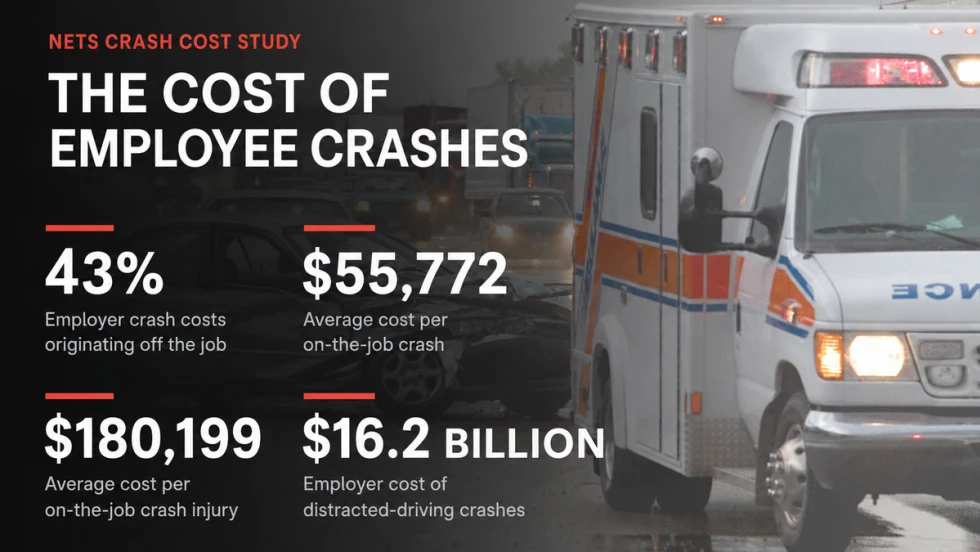
Off-the-Job Crashes Account for 43% of Employers’ $61.7 Billion Crash Burden
NETS quantifies costs dispersed across fleet, risk, HR, and other departments while providing new per-crash benchmarks for employers.
Read More →
Ram Recalls More Than 1.27 Million 1500 Pickups for Seat Belt Anchor Issue
The recall affects certain 2019-2026 Ram 1500 pickups that may have improperly attached second-row seat belt buckle anchors.
Read More →