




How to Survive (and Thrive) In a Strategic Sourcing Environment
Often viewed as an interloper bent upon wresting authority away from fleet managers, strategic sourcing is a relatively new process introduced in the 1980s. Fleet managers should view it as a tool for success.
It has become, in some fleet circles, the monster under the bed — strategic sourcing, the process by which a company analyzes what it buys, then takes actions to fully leverage the spend. It has been introduced into nearly every nook and cranny of company operations, and fleet management is no exception.
Not too long ago, fleet managers used their own experience and knowledge of the marketplace to determine suppliers and when new ones should be sought. It was a relatively cozy industry. Fleet managers knew salesmen, met with them occasionally, and managed the sourcing process entirely themselves.
But the business world has changed, and new processes with new tools have been introduced, some successfully, some not. Strategic sourcing is one of the successful tools. Pining for the old days won’t change that reality. Smart managers embrace these changes and use them to thrive.
No single dictionary definition adequately defines strategic sourcing. Some insist it is a technology-driven process, using online tools to streamline what once was simply called purchasing.
Others use the term to describe the centralization of the procurement process, done to leverage a company’s total spend on any particular good or service. In reality, strategic sourcing is a combination of the two descriptions and can be very effective in lowering company costs and streamlining procurement.
Companies that manufacture or assemble hard goods sometimes differentiate between sourcing product-oriented items and non-product oriented items. Raw materials and subassemblies intended for the production line are sourced separately from goods and services the company uses to conduct business. In such circumstances, fleet management falls under the latter category.
Either way, strategic sourcing allows a company — particularly one whose corporate structure includes diverse business units — to combine into a single amount what these units spend on the same or similar goods and services and then source the market for suppliers.
The technology available today has facilitated the strategic sourcing process. Online bidding tools, reverse auctions, and other tools allow sourcing professionals to quickly and easily obtain information and bids from large numbers of potential suppliers.
When used properly and when carefully structured, strategic sourcing isn’t what many in the fleet industry believe it is: purchasing. The word “sourcing” is used intentionally to describe the process. Two basic steps are involved. First, determine what must be purchased, and second, conduct a search to find sources, suppliers who can provide products or services. Sourcing groups do not simply barge into the fleet (or any other) department demanding an RFP be issued simply to change vendors.
The process usually begins with the sourcing group surveying each function to uncover how, and from whom, resources required to do business are purchased. Sourcing reviews the results of this research and determines where a strategic effort might provide savings.
Fleet managers can often be sensitive when outside influence is brought to bear on their operations, and sourcing is no exception. However, it is in the company’s best interests to make certain what it purchases provides the highest value possible, combining quality and price. This process is not possible without the full participation and cooperation of the fleet manager.
In his book Strategic Industrial Sourcing, Toshihiro Nishigushi describes seven basic steps to strategic sourcing:
Assess the company’s current spend. (What is bought where?)
Evaluate the supply market. (Who offers what?)
Develop a sourcing strategy. (Where to buy what, while minimizing risks and cost.)
Identify suitable suppliers.
Negotiate with suppliers.
Implement new supply structure.
Track results and restart assessment.
There are pitfalls in this process that can prevent a fleet manager from teaming with sourcing to produce useful results. For example, in a diverse corporate environment with multiple business units, each with a fleet operation, individual unit fleet managers may not know (or care) where and how peers in the organization lease vehicles, who handles maintenance management, or any other primary fleet function. This individualized approach can result in a fractured sourcing process, with each unit fending for itself, receiving pricing in line only with its individual spend.
Strategic sourcing principles indicate such situations are particularly disposed to benefit from the process. The difficulty occurs when entrenched interests put up roadblocks. Business unit fleet managers may have long-standing supplier relationships and be loathe to interrupt them with an RFP and the possibility that a new supplier be “forced” upon them.
This kind of reaction can be a fleet manager’s career stopper. It reveals an unwillingness to work in a team setting, a lack of regard for the overall company good, and shortsightedness in placing personal preferences before strategic thinking.
Note carefully that the sourcing process involves more than sourcing staff. What sourcing professionals say is that their job is the process, but they need product/subject experts to be successful. In this environment, the fleet manager can not only survive, but thrive as his or her world intersects with strategic sourcing.
[PAGEBREAK]
The movement to strategic sourcing has been inexorable. More and more fleet managers are becoming involved in the process, willingly or unwillingly. For that reason, a smart fleet manager will get out in front of the trend.
If the company hasn’t yet done so, a fleet manager can actually initiate the sourcing process. In the situation of a company with multiple business units, a fleet manager can group with peers in presenting to management a sourcing plan that leverages the total spend into significant savings.
In doing so, personal preferences must be set aside. If two business units use different lessors, both must prepare for the possibility that one or both may end up using a different one. It is far better, however, for managers in those business units to come to that conclusion and set the process in motion themselves rather than having management do it for them.
Fleet managers can bring valuable contributions to the sourcing process that sourcing professionals lack, and true sourcing pros will be the first to own up to that truth. That’s why the process begins with an assessment of the spend, a process that should include the “why” of that spend. Fleet managers know the marketplace. They know what they can accomplish internally and what can and should be outsourced. They know what programs are available and who can provide them. They understand the sometimes complex fleet service fee structure and what alternatives might be more cost efficient.
For example, consider a company that operates four business units, each with an existing fleet program and each with P&L responsibility. In a desire to push authority down to the P&L level, the company allows each unit to manage its own operations, including fleet. The unit fleet managers source their fleet suppliers separately. Their needs are different; their vehicles are different; their products, services, and customers are different.
Even in this situation, suppliers can be sourced at the strategic level. Most business unit differences can be addressed by a single vendor using disparate processes. A smart fleet manager recognizes this opportunity. Using a single lessor does not require the same lease structure for all. Sourcing with a single manufacturer does not force any individual unit to use vehicles that don’t fit the mission.
A fleet manager brings to the strategic sourcing process the knowledge that the lease rate is sourced; vehicle discounts and rifle shot monies are sourced; maintenance management fees are sourced. Authority for structuring policy and procedure remains where it belongs — with the business unit.
Thus, a key element in the fleet manager’s survival in a sourcing
environment is getting ahead of the process, bringing it to management before the reverse happens. Management will recognize and reward the initiative and concern for cost reduction.
As mentioned, sourcing pros call for product experts — those in the company who can answer the “what” and “who” questions sourcing staff cannot. Fleet managers cloistered in their own fleet world can be caught unawares when the sourcing group comes calling.
If a fleet is company-owned, the fleet manager should make certain that he or she understands — and can document — the options and why ownership is more cost-effective. The point is that a fleet manager must remain informed of available options, both in services and suppliers, rather than cling to status quo.
Much can be said about developing relationships with suppliers, partnerships that can add value when pricing may not be the lowest. It is a canard that sourcing pros are simply “purchasing” — seeking only the cheapest prices without regard to the business fit or nonprice advantages that can add value.
The analogy can be drawn to systems engineers. What manager, when approaching the IT department with a request, hasn’t had to answer the question, “What do you want?” The same holds true for sourcing. They are the first to admit they know little or nothing about the service or product being sourced, and they cannot do the job without someone with that first-hand knowledge and expertise.
Even when a supplier has been a partner for many years, it is smart to use the strategic sourcing process to find out if that supplier, value added included, is the best option. “Keeping suppliers honest” is good business for both supplier and customer, as long-term relationships can take on a level of comfort that can obscure their true purpose.
In these situations, a fleet manager has number of available resources available. The fleet industry is a rich environment of learning, networking, and other information. Using these resources, fleet managers demonstrate performance excellence, showing supervisors their ultimate concern is corporate cost effectiveness and value, not simply their own small fleet “empire.”
Fleet managers have little to fear from strategic sourcing, provided they are willing to step out of their immediate environment to look at a bigger — strategic — picture.
Know what strategic sourcing is and what it isn’t. An important business process, it can result in substantial cost savings and increased value when used properly. Strategic sourcing is not the mere collection of price bids with the business going to the lowest bidder.
Serve as the subject expert. Sourcing pros need the fleet expert to be successful. Whatever the current circumstances, no matter how long existing supplier relationships have been in place, the focus must remain on how costs can be controlled and reduced. Be more than an expert in what you do now; be an expert on how it isn’t done and why.
Initiate the process. Don’t wait for the company to send sourcing to you. Getting out in front of the process demonstrates the initiative senior management looks for.
Fleet management has undergone a number of changes in recent years, and the move toward using strategic sourcing is one such change.
Some fleet managers are uncomfortable with the process, a wariness resulting primarily from not understanding strategic sourcing and how they can become part of it. These fears are unfounded if fleet managers use strategic sourcing as a tool to achieve increased success.
More Operations
Managing Fleet Costs in an Era of Permanent Volatility
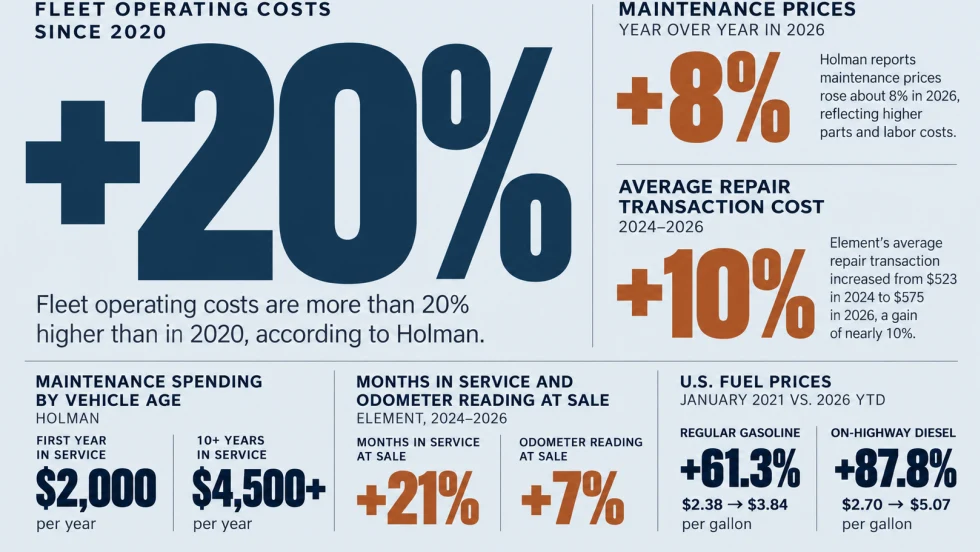
Fleet operating costs have risen more than 20% since 2020, raising a key question: When does extending a vehicle's service life stop making financial sense?
Read More →
The Next Evolution of Fleet Management: Autonomous Operations
This opening keynote session at the Fleet Forward Conference highlights the future of autonomous driving for fleets.
Read More →
How to Reduce the Total Cost of Risk From Catalytic Converter Theft
A stolen catalytic converter can cost fleets far more in downtime and lost productivity than in repairs. A total-cost-of-risk approach can help fleet managers quantify their exposure and prioritize theft prevention.
Read More →

Personal-Use Charges Rise as Vehicle Values Fall | AF News Recap
Personal-use charges are climbing, wholesale used-vehicle values are declining, and commercial fleet sales growth is slowing. This week, we're breaking down the latest fleet data, plus how Element Fleet Management is helping Waymo prepare for its first Canadian robotaxi market.
Read More →
Here's When You Should Make an Exception to Fleet Policy
Fleet policies are designed to create consistency, but not every driver or situation fits neatly within standard rules.
Read More →
AI-Native or AI-Acquired: What Should Fleet Managers Look for in an AI Platform?
Six questions can help fleet managers look beyond AI marketing claims to evaluate integration, data access, and real-world operational performance.
Read More →
A buyer's guide to fleet management software in 2027
Buying fleet management software in 2027 means looking beyond features and price. As fleet operations, technology and expectations evolve, this guide explores what today’s fleet professionals should consider when choosing a system that can deliver value now and adapt to what comes next.
Read More →
What Will Shape the Next Era of Fleet Management?
EVs, AI, and autonomous vehicles are reshaping fleet management. Discover what’s ahead—and how fleet leaders can prepare for the next era.
Read More →
How Fleets Can Recruit and Train Veterans for Technician Roles
Here's how the technician shortage has affected uptime for fleets, and what to do about it.
Read More →
Avis Budget Group Deploys Neology Toll Management Technology Across Major Brands
Neology’s neoFleet platform will manage toll transactions and toll-authority operations for vehicles across Avis, Budget, Payless, Budget Truck and Zipcar.
Read More →