




How To Set Yourself Apart From Other Managers
As a fleet manager, you are competing against other managers at your company. Like you, they want management's attention and the rewards that follow. Here are some tips on standing out in the crowd.
It's a competitive business world. Competition in the marketplace is brutal, as companies are bought and sold, establish strategic alliances, and battle for market share.
The competition isn't always for customers though. Your company competes in the fight to recruit, hire, train, and retain the most talented employees it can find. Within the company, these employees fight for management attention and to rise to the next step in the path up the corporate ladder. The competition can be as cutthroat as that for customers. However, the rewards are significant. Here are some tips on how to stand out in the crowd of your peers and open up your career path to more rewarding opportunities.
Fleet management is essentially a departmental function, established first to manage a substantial corporate asset, and second to create a team of dedicated staff to carry out the mission. Senior management judges the success of any department head in these two broad categories.
How successful have they been in carrying out their responsibilities?
Have they built a staff of similarly successful employees, dedicated to the task and to the company?
Department heads, like sergeants in the army, head the "ground troops" who get the job done. The company wants to know how the fleet stacks up against past performance and outside benchmarks, and the level of service the fleet department provides to drivers and other internal customers.
A fleet manager can exhibit excellent performance in a number of ways, both by fleet numbers and the skill and dedication of the fleet staff.
Never Stop Learning
"One's mind, once stretched by a new idea, never regains its original dimension." – Oliver Wendell HolmesFleet management, like any other departmental function, is full of routine. It becomes easy for fleet managers to believe they've "been there, done that" in all aspects of the job. However, opportunities to learn every day exist not only in fleet, but also in the company’s overall operation. Key areas in which fleet managers can deepen their knowledge and understanding include
Financial. In most companies, fleet managers aren't financial decision-makers. They may contribute to the decision, but more-senior managers call the shots. This reality should not prevent a fleet manager from learning exactly what goes into that decision, how it is made, and how it impacts the company.
Leasing versus ownership, for example, is an important decision every company faces. Fleet managers should learn everything they can about how the leasing decision is made, the structure of the financial model used to make it, the model's components, and the financial circumstances in the company that determine the decision.
Operational. Fleet managers seldom actually see many of the hundreds, often thousands, of vehicles for which they are responsible. This makes it difficult to truly understand how the vehicle/equipment selection impacts the driver. Get out of the office and spend time riding along with a driver in every job that calls for a vehicle.
Fleet Industry. Keep up-to-date on everything going on in the fleet industry. Track trends, talk with other fleet managers, spend time with suppliers (lessor, service providers, manufacturers), and find out what may be new in the coming months and years. Seize opportunities to try new things, new services, different policies, new products.
Staying current with company business, as well as the fleet industry events, help any fleet manager stand out among his or her peers.
Delegate: Tell, Teach & Involve
"Tell me and I forget. Teach me and I remember. Involve me and I learn."– Benjamin FranklinA common mistake managers make as they try to carve their niche in the corporate structure: making themselves indispensable. Whether it comes from a belief that "if I want something done right, I have to do it myself," or from a misplaced paranoia about job security, far too many managers try to do everything, make every decision, and keep staff and others out of the process. Most executives agree that this, more than any other characteristic (save for incompetence), is a career killer.
Most companies promote from within, posting open jobs internally for employees first before recruiting from the outside. Some are filled by word-of-mouth, as a manager in one area approaches another asking about an employee who has performed impressively.
Fleet managers, by virtue of the eclectic nature of their responsibilities, interact with many different disciplines and people in the company. These connections create a textbook opportunity for career advancement, which can take the form of a promotion as well as a lateral move into a different department.
However, when fleet managers insist on being the only "go-to" person in the department, they have made themselves indispensable. The first reaction the boss will often have is, "If we let him or her move, who will run the fleet?" The antidote for this fatal career error is delegation. Franklin's quote is a simple, but elegant, description of delegation.
Don't just "tell." Inexperienced managers may be inclined to simply issue orders. They tell staff what to do and how to do it. This practice is also a trap for both manager and employee. That which is "told" can easily be forgotten, and when mistakes are made, the manager is forced to point fingers of blame. Few things are more destructive to employee morale than a manager who refuses to take full responsibility.
Teach. Rather than simply barking orders, teach staff. Training isn't just for new-employee orientation; it is an important, ongoing process. Make certain staff knows not only what to do, but how to do it and why. Demand that employees learn new things; don't accept excuses.
Involve. The third instruction in Franklin’s quote is the one most often ignored. Good managers keep their doors open and not only encourage staff to stop in occasionally, but walk out themselves and involve staff in the decision-making process. Just as a fleet manager should get out of the office and ride with a salesman, for example, all other staff should be encouraged to do the same. When a fleet manager attends a meeting, he or she should make certain, when returning to the office, that the rest of the department knows what's going on as well. Delegation is teaching and involving, not telling. Any manager, fleet or otherwise, who does not have at least one successor ready to step in is either foolish or has a career suicide wish.
Embrace Risk; Accept Responsibility
"Only those who dare to fail greatly can ever achieve greatly." – Robert F. KennedyManagers, good and bad, make decisions, big and small, every day. They live with the consequences of these decisions, and their performance is judged in no small part on them. But senior managers know it isn't important simply whether these decisions were the right ones — it's important whether the manager is willing to make them that counts every bit as much. It is easy to avoid risk, to keep one's "fingerprints" off decisions in fear of suffering the consequences if those decisions are wrong. But executives who judge management talent don't seek department heads who are always comfortable with the status quo. They search for aggressive managers unafraid to look for better solutions, better policies, better processes, and ultimately better results. Managers who embrace risk and are willing to accept the consequences most definitely will stand out in the crowd.
There is, of course, a difference between taking risks and recklessness. For example, auto manufacturers introduce new models nearly every year, and often launch either a completely new technology or a full redesign of an existing model. Risk-taking for a fleet manager would be to add a sample number of a new model to the selector; reckless would be to replace the entire fleet with it. The corollary to risk is responsibility. Making decisions is part of the job, and talented managers aren't afraid to make them. Managers who stand out, however, are quick to recognize a wrong decision, take responsibility for the mistake, and correct it.
Stand Out and Succeed
"Always bear in mind that your own resolution to succeed is more important than any other one thing." – Abraham LincolnStanding out in a multitude of department managers isn't as difficult as it may seem. Assuming a fleet manager has the basic skills and experience to be hired in the first place, standout performance is a function of several simple things:
Never stop learning, not only within the fleet industry, but in all aspects of the company's operation.
Delegate responsibilities. Don't just tell subordinates what to do. Teach them how to do it and involve them in decision-making. Make certain a successor is always ready to step into your job. Doing so will make it easy for the company to promote you.
Embrace risk and accept responsibility. While avoiding recklessness, don't hesitate to take risks, think "outside the box," make changes, and try new things. But when you do, be ready to recognize when that new thing or change isn't working, take quick action to correct the mistake, and accept full responsibility.
More Operations

A buyer's guide to fleet management software in 2027
Buying fleet management software in 2027 means looking beyond features and price. As fleet operations, technology and expectations evolve, this guide explores what today’s fleet professionals should consider when choosing a system that can deliver value now and adapt to what comes next.
Read More →
What Will Shape the Next Era of Fleet Management?
EVs, AI, and autonomous vehicles are reshaping fleet management. Discover what’s ahead—and how fleet leaders can prepare for the next era.
Read More →
How Fleets Can Recruit and Train Veterans for Technician Roles
Here's how the technician shortage has affected uptime for fleets, and what to do about it.
Read More →

Avis Budget Group Deploys Neology Toll Management Technology Across Major Brands
Neology’s neoFleet platform will manage toll transactions and toll-authority operations for vehicles across Avis, Budget, Payless, Budget Truck and Zipcar.
Read More →
Fleet Personal-Use Charges Edge Higher in 2026
Nearly eight in 10 surveyed fleets allow personal use of company vehicles, while just over half of respondents report charging employees for the privilege.
Read More →
The Future of Fleet + What’s Changing Right Now | AF News Recap
Could developments overseas offer a preview of what’s coming for U.S. fleets? This week, we’re looking at the future of AI, autonomy, and electrification, plus Ford Pro’s new certified pre-owned program, smarter vehicle offboarding, and a new way for fleets to manage toll expenses.
Read More →
How to Handle Vehicle Offboarding
What do fleet managers need to do when a driver leaves?
Read More →
Fleet Manager’s Ultimate Playbook: Navigating the New Standard in OEM Connectivity
Rising operating costs, driver safety concerns, and unplanned downtime are putting unprecedented pressure on modern fleets. Discover how fleet managers use embedded OEM connectivity and real-time vehicle data to cut TCO, prevent downtime, and protect drivers without aftermarket telematics hardware.
Read More →
U.S. Bank Adds Verra Mobility Toll Management to Voyager Fleet Platform
The integration allows U.S. Bank Voyager fleet customers to manage toll payments and violations alongside fuel, EV charging and maintenance expenses.
Read More →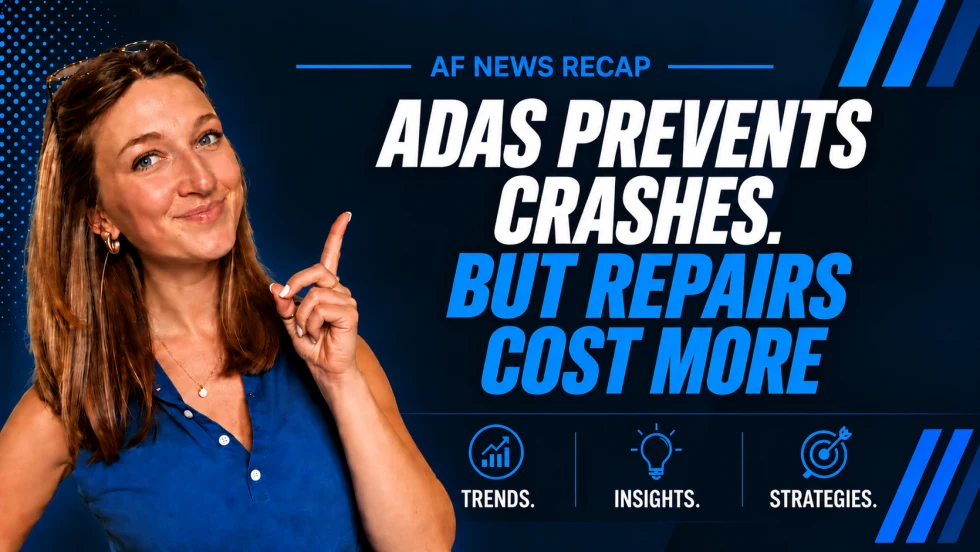
ADAS Prevents Crashes. But Repairs Cost More | AF News Recap
ADAS-equipped vehicles may crash less often, but they can cost more when they do. This week, we’re breaking down what that tradeoff means for fleets, plus Subaru’s first Forester Wilderness Hybrid, Nissan’s new e-POWER Rogue, and why Calstart has become Catalyst Mobility.
Read More →