




How To Prevent Unauthorized Use of Fuel Cards
Accurate and speedy reporting can give fleet managers a handle on exactly what is being done with cards, and by whom. While there is some unauthorized use by employees, most comes from cards that have been lost.
How to Prevent Unauthorized Use of Fuel Cards
Accurate and speedy reporting can give fleet managers a handle on exactly what is being done with cards, and by whom. While there is some unauthorized use by employees, most comes from cards that have been lost.
Fuel cards have proven a boon to some fleet managers. The fact that drivers can use one card for most or all of their needs, coupled with simplified statements and rapid reporting, makes their use attractive.
Windell Mitchell, fleet manager, King County, WA, summed it up like this, "[With a fleet card] I have a great amount of security and accountability. I have accurate information and I have lower administrative costs, so for me, that's the answer."
Agreeing with Mitchell is Scott Mayo, fleet manager for Wendy's International, who said the savings were administrative, more than anything else. "We've reduced the number of cards we were using from eight to one, so with the number of invoices and other paperwork reduced, it's been a great savings," said Mayo.
Cost savings are one of the reasons that the Boeing Shared Services Group of the Boeing Co. has selected the GE Capital Fleet Card to provide its travel and expense (T&E), purchasing and fleet vehicle card payment systems. Boeing represents one of the top 10 T&E programs in volume, nationwide. The total number of cardholders exceeds 60,000.
Identifying Unauthorized Users
The only problem with these cards is that unless controls on the card are kept tight, they may be abused.
According to Mayo, most of the unauthorized use he sees comes from someone finding a lost card and running up a series of charges on it. "We find that if a stranger is using the card, it's an outsider who found it," he said. But he added, "We have had minimal experience with that, especially with the Wright Express card, because o f the ability to cancel the card so fast. Typically, it may be a couple of days before the driver realizes it's gone, because he hasn't used it, but then it is pretty immediate that the card is out of the picture. In the roughly three years that we've been exclusively Wright Express, we've had next to no problems. It's been very minimal.
Mitchell said that King County has gone to the Voyager card system. He noted that with this system, he could lock out the ability to purchase specific categories of goods or services. For example, if one of his drivers wants to purchase tires, it cannot be done on the card.
"If you were to find one of our Voyager cards," he added, "you would not be able to use it, because we code it to the individual. Each person has a code, similar to an ATM card. You have to use the code."
Bill Alvarez of Standard Supply & Hardware says his company has a similar system with its Fuelman cards. He noted that before he put in the system, some gas stations would allow drivers to purchase items other than fuel, but the security features of the Fuelman card prevent that from happening.
"It keeps the drivers away from the temptation of misusing the cards, and it eliminates the possibility of someone being innocently accused of misusing it," Alvarez said.
Other fleet managers noted that some companies use an employee number for a similar effect. "But a disgruntled employee can run up a huge bill before we can cancel the card," was one comment. That fleet manager had a driver lose a card in San Francisco and he noted that before he could cancel it, it had $4,000-$5,000 run up on it. He stressed that it was the responsibility of the driver. The minute that the card is lost, the driver has to report it.
Electronic Reports Get Results
Speed of reporting was a necessary feature of any fleet card system. "I'd like to see my summary reports on a daily basis, as I do now," said Bob Brown, fleet manager of Xerox Corp. "I'd like the capability of seeing fraudulent report, like the bank cards have. If the card catches a significant number of unusual purchases or something like that, I'd like the system to flag it so I can see it on an immediate or 24-hour basis.
"The fact that we have electronic point of sale reporting, like the universal oil cards," Brown continued, "has eliminated a lot of the fraudulence we had in the past." He also noted that when a company has a disgruntled employee, "it's very easy to abuse the card now, because almost all gas stations have mini-marts where they sell everything, and even some of the honest people can be tempted." But except for that, Brown said he was happy with receiving transaction reports from his card provider on a monthly basis.
"If you go online and have the capability of accessing card usage at any time at the customer level, if you do have a disgruntled employee, you can always monitor it on the screen immediately," said Elvie Pizzo, fleet and travel manager for Allied Domeq Spirits & Wine. "Then you can call the leasing company or the card company and take care of it right away," she added.
Lori Ortega of Mobil Pipeline says her company is using the Cendant MasterCard for fuel and vehicle maintenance. "I like the fact that it's very flexible in what it allows you to do, such as having the option to determine the authorization level for each employee. Our drivers really like the fact that, as a MasterCard, it's accepted anywhere they need to use it,"
All fleet managers want some kind of detailed reporting capability, whether it is on paper or on line. Pizzo added that it makes no difference whether the fleet consists of 20,000 vehicles or 200 vehicles.
Mayo said that having all the purchase records available on the Web made it simple to check on unauthorized use by an employee. "When we need a report on a specific driver, we can get it in a matter of minutes," he said. "I just visit the website, pull up that driver and I've got that information. It's becoming a very good tool."
Brown noted that the technology for the type of detailed reporting he wants and needs is already there. "The bank cards have the capabilities of point-of-sale reporting, so why is the technology not being used in your case? I think if you can get to that point, it's no different from the bank technology. If I make a purchase in Seattle today, my bank in Rochester knows about it in whatever time the transaction takes. And if you dial in to find out what the balance is on your account, it's already been reduced by the amount of the purchase from whatever your credit line is."
Mitchell said that he could dial directly into Voyager and instantaneously look at the record and see what his customer (driver) has done. "I don't have to wait even a day. I have instant access. So that is what is being used right now," he concluded.
During a symposium held by AutomotiveFleet, one panelist wanted to know what would happen if he gets a call from the finance department regarding a specific driver.
The panelist put forth this scenario: "Supposing my controller calls me up and says 'Driver so and so, can you get me the last six months of his purchases?' How soon could you get that information?" he asked.
Mitchell responded, "Instantaneously, I can pull it and give it to you in 20 seconds." He added that the actual speed of response depends on how large the fleet is and how much card usage there is.
"We need to have a report every week that gives us a projection for our scheduled maintenance," Mitchell added.
More Operations
How to Manage Conflict for Your Fleet Operations
Conflict management is becoming a core leadership skill. Here are five strategies fleet leaders should know.
Read More →
Turning Connected Vehicle Data Into Decisions That Matter
Fleet leaders have more data than ever, but turning that data into clear, actionable decisions remains a challenge. This white paper shows how leading organizations are using connected vehicle data to improve safety, reduce costs, and optimize fleet performance. Learn how to turn insight into action across your fleet.
Read More →
Cameras, Safety and Insurance: From Reactive Claims to Real-time Prevention
Commercial auto remains one of the most challenging and costly lines of coverage for fleet operators and insurers alike. Learn more about how to effectively address these issues from Onur Aksan, Enterprise Business Development Executive, Geotab.
Read More →

Are You Tracking Your Fleet's True Total Cost of Ownership?
Bobit Business Media surveyed 190 fleet professionals and found that while most fleets are tracking costs, fragmented systems and data gaps are keeping true TCO visibility out of reach. With rising pressure to control spend in an increasingly volatile environment, the gap between what fleets think they know and what the data actually shows is wider than you might expect. See how your peers are managing costs today and where the industry still has room to improve.
Read More →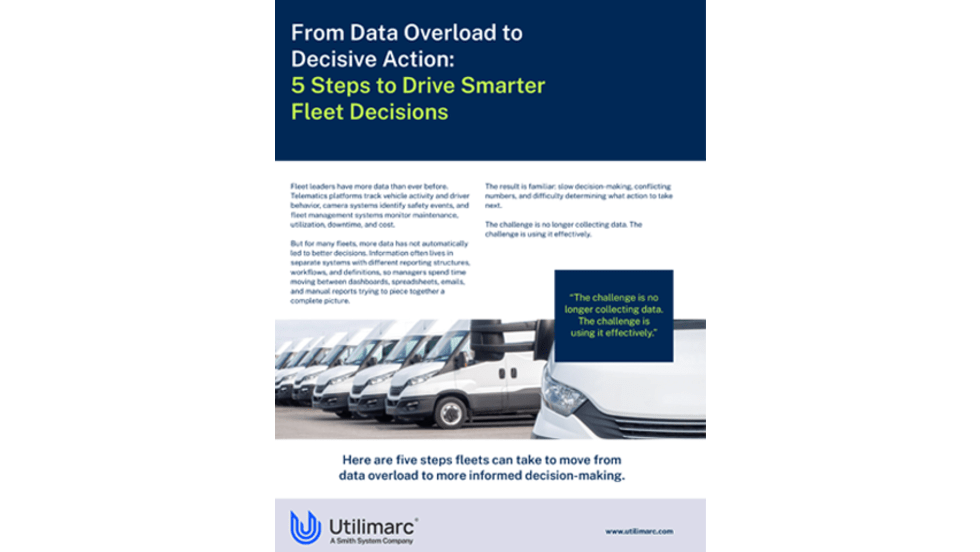
Turn Fleet Data Into Smarter Decisions
Fleet leaders have access to more operational data than ever, but disconnected systems and unclear metrics often slow decision-making instead of improving it. This article outlines five practical steps fleets can take to transform fragmented data into actionable insights that improve planning, safety, utilization, and long-term performance.
Read More →
Hybrids: Electrification Without the Challenges
For fleet managers, fuel is one of the biggest line items in the budget — and it's one hybrids can shrink without changing how your people work. Download the eBook to see the numbers, understand the technology, and get a step-by-step guide to making the switch.
Read More →
How NOV Uses Telematics to Improve Fleet Safety Across 160 Locations
James Victory of NOV discusses how the company manages fleet safety, maintenance, and telematics across more than 150 locations supporting oilfield operations throughout the U.S.
Read More →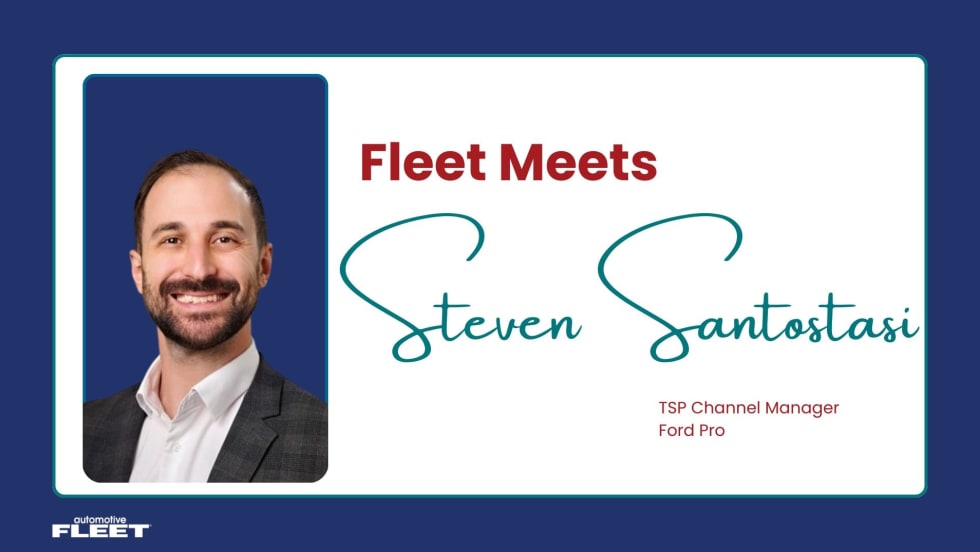
Fleet Meets: Steven Santostasi
This edition of the Fleet Meets series features Steven Santostasi, the current TSP channel manager for Ford Pro.
Read More →
Why Fleet Managers Are Replacing Departmental Vehicles with Shared Motor Pools
Departmentally assigned vehicles often create hidden costs through underutilization, poor visibility, and increased administrative burden. This white paper explores how shared motor pool strategies help fleets reduce costs, improve accountability, and optimize vehicle utilization.
Read More →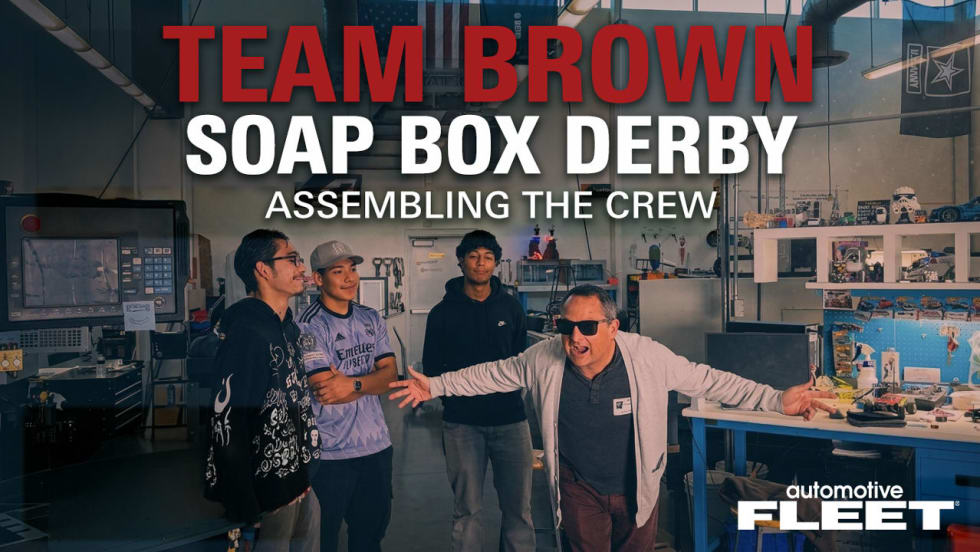
Soap Box Derby Challenge: Assembling the Crew
Meet Gabriel, Matthew, and Angel — the team helping bring this soap box derby build to life.
Read More →