




How to Prevent 'UFOs' Inside Fleet Vehicles
Anything that is not properly stored in a vehicle has the danger of becoming a flying projectile during a harsh or sudden stop. Stay safe and know what dangers to watch for.

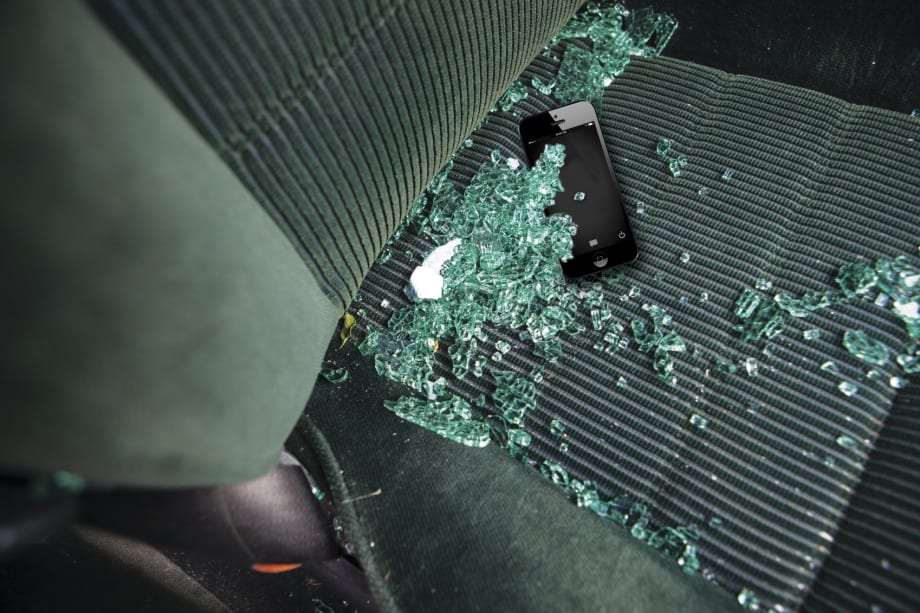
Photo courtesy of iStockPhoto.com.
Photo courtesy of iStockPhoto.com.
Drivers end up keeping many items within arm's reach while driving, such as sunglasses, mp3 players, smartphones, even tablets; however, there is an inherent danger in keeping these items nearby instead of ensuring they're properly stowed while driving.
All fleet managers are aware of the importance of a safety belt to keep a driver safe inside a vehicle; the same goes for personal items.
"At 50 mph, a sudden stop caused by a crash will propel a loose, 16 ounce bottle of water and land a blow on a vehicle occupant with the equivalent force of a 21-pound object," stated Art Liggio, president of Driving Dynamics. "Imagine what a laptop could do to you? It would be painful at a minimum, or, even worse, a hit to the head could cause someone to blackout."
For most drivers and fleet managers, the dangers of loose objects flies under the radar screen and is never considered.
"Around here at Driving Dynamics, we refer to them as 'UFOs,' or unnecessary flying objects," Liggio said. "Loose items present a serious risk to drivers. Each year, loose objects cause thousands of serious injuries."
A 2012 study by Safety Research and Strategies found that ordinary objects in cars and trucks are responsible for 13,000 injuries each year.
"Going over and above the issue of direct contact and harm is the hazard related to loose objects and emergency braking," Liggio added. "When conditions arise requiring drivers to engage in emergency braking procedures, too often they fail to successfully complete the maneuver. Surprisingly, this isn't because they lack the skills or an escape route, but simply because a loose object becomes lodged under the brake pedal."
Similarly, drivers can momentarily become visually distracted (impaired) by an object catapulted through the cabin or by liquids spilling onto him or her.
"In the blink of an eye, this avoidable distraction consumes the time needed to safely react to the situation," Liggio warned.
And, while loose objects add to the risk of a dangerous injury or fatality during a crash, Safety Research and Strategies estimated a driver's risk of dying in a car accident increases by 25 percent if there are unrestrained passengers in the vehicle
"As a driver — in addition to securing loose objects to stay safe — make sure your passengers do not have the potential of becoming 'UFOs.' Insist that everyone buckles up before you start your trip," Liggio noted.
Some tips include:
Keep all bulkier, heavier items stored in the vehicle's truck or use a storage net.
Unless an item (such as a GPS device) has a secure clip-in system, store all such items in a closed compartment.
When spec'ing vehicles, ensure proper storage options are provided if drivers typically must carry files and/or lap tops with them.
Bottom line, drivers must be made aware of the often forgotten, but potentially fatal danger of loose items in a vehicle during a crash or sudden braking activity. Include instructions in the fleet's policy directing drivers to secure all loose items before operating a vehicle.
More Safety

Fleet Manager’s Ultimate Playbook: Navigating the New Standard in OEM Connectivity
Rising operating costs, driver safety concerns, and unplanned downtime are putting unprecedented pressure on modern fleets. Discover how fleet managers use embedded OEM connectivity and real-time vehicle data to cut TCO, prevent downtime, and protect drivers without aftermarket telematics hardware.
Read More →
From Driver Well-Being to EV Charging | AF News Recap
Mental health belongs in the fleet safety conversation. This week, we’re looking at five ways fleets can support employee well-being before a crisis, plus Holman’s expansion in Mexico, new one-day Fleet Forward passes, and why EV charging demand is outpacing infrastructure growth.
Read More →
Nexar-Nauto Merger Aims to Give Fleets Better Safety Intelligence Through Larger Driving Dataset
Stefan Heck tells Automotive Fleet that combining more than 10 billion miles of driving history with Nexar's AI models will give fleets deeper insights into driver risk and roadway conditions than either company could provide independently.
Read More →
Don't Wait for a Crisis: 5 Ways to Build Mental Health Into Your Fleet Safety Program
For Suicide Prevention Month, fleet and safety leaders have an opportunity to put mental health where it belongs: at the center of workplace safety.
Read More →
How Camera Data Can Strengthen a Fleet’s Insurance Renewal
Insights from a commercial insurance carrier and a broker show how fleets can turn video telematic data, driver coaching, and improved claims results into a stronger case at insurance renewal.
Read More →
The Safest Fleets Aren’t the Ones with the Most Technology
You’ve made the telematics investment. Here’s how to capture the other half of its value and build the safest fleet on the road.
Read More →
Hidden in Plain Sight: Fleet Compliance Risks
Fleet compliance isn't just about having policies — it's about consistently enforcing them. This practical guide reveals six hidden compliance risks common in public sector and shared fleet operations and outlines proven strategies to improve visibility, accountability, and audit readiness
Read More →
NETS Sets 2026 Fleet Safety Benchmark Conference for Indianapolis
The Sept. 15–17 program will feature fleet benchmarking data, case studies, emerging technologies, and implementation strategies while running alongside the NSC Safety Congress & Expo.
Read More →
Off-the-Job Crashes Account for 43% of Employers’ $61.7 Billion Crash Burden
NETS quantifies costs dispersed across fleet, risk, HR, and other departments while providing new per-crash benchmarks for employers.
Read More →
Ram Recalls More Than 1.27 Million 1500 Pickups for Seat Belt Anchor Issue
The recall affects certain 2019-2026 Ram 1500 pickups that may have improperly attached second-row seat belt buckle anchors.
Read More →