





Related: 20 Spec'ing Mistakes that Negatively Impact Truck Resale
How to Maximize Truck Resale Values
Regardless of the vocational application, companies are in the business of “manufacturing” used vehicles. Today’s new truck is tomorrow’s used truck. How you spec a truck has a direct bearing on its future resale value.
November 8, 2016
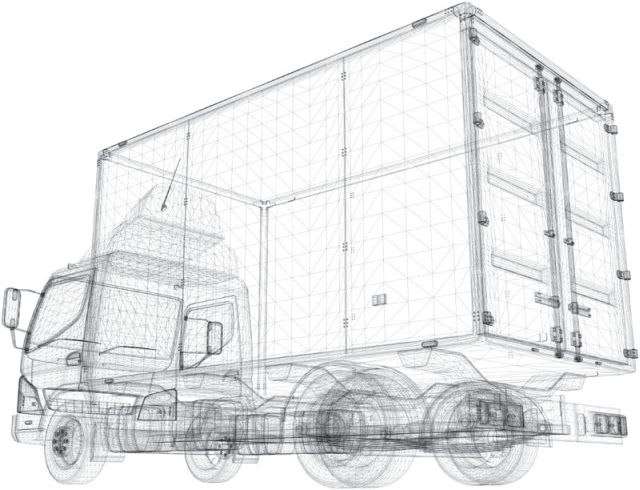
Photo: istockphoto.com
5 min to read
For fleets that run their medium-duties until the “wheels fall off,” resale may not be the highest priority at the time of vehicle purchase. But, for those that intend to replace their trucks every five to seven years or sooner, how a truck is spec’ed has a direct bearing on its future resale, which, if done correctly, will reduce its total lifecycle costs.
Engine Specifications
You should spec diesel engines that can generate more than 230 hp because the higher ratings can be used for a wider range of applications, thereby expanding the potential pool of customers in the secondary market.
With that said, the key is balancing your current needs with future resale considerations. When choosing displacement and horsepower, keep it in perspective. You don’t want to spec engine overkill, such as higher than necessary displacement or horsepower just to get a better residual at the end, because the higher resale could be offset by spending much more on acquisition and fuel than necessary.
Determine the horsepower/torque “sweet spot” where the truck offers sufficient power for its initial duty cycle while increasing your customer pool for future resale, without paying too much up front.
Transmission Implications
“Incorrectly” spec’ing a transmission has enormous implications in the resale market. For instance, avoid spec’ing a manual transmission because this will limit your resale market. There are fewer qualified drivers today capable of driving a manual transmission than in the past. This is why automatic transmissions are acquired by most companies, which makes automatics more desirable from a resale perspective. In addition to resale value, an automatic transmission assists in driver acquisition, retention, lower maintenance costs, and more uptime.
Although a manual transmission offers substantial cost savings initially, that initial price advantage over an automatic transmission will likely be wiped out at the time of resale since there are fewer qualified drivers today capable of driving a manual transmission.
Also, when determining transmission specifications, remember to include the power take-off (PTO) provision, which is used to provide engine power to truck-mounted equipment, such as cranes, hydraulic hoists used to lift dump bodies, and air compressors. Even if there’s no need for PTO for the truck’s initial use, the availability of the PTO provision will make the truck more attractive in the secondary market because it saves the future owner from having to pay to add the provision after the fact. The PTO is a low-cost option that can reap greater dollars at the time of resale.
Under-Spec’ing Limits Buyers
An important resale consideration is not to under-spec a truck. While buying minimal horsepower and low-torque engines and least expensive transmissions may get your job done, will this be desirable to the next owner? Likewise, don’t acquire the lowest acceptable axle weight ratings and GVWR. This will limit the number of buyers who might consider buying the used unit. Similarly, don’t spec light-duty frame rails, wheels, and tires, which will also limit how a used unit can be utilized.
Over-Spec’ing Limits Buyers
Conversely, don’t over-spec a truck. Many companies over-spec trucks to allow them to carry more payload weight or to meet the demands of a severe-duty application. But, in the wholesale market, over-spec’ing impacts resale values because secondary users do not want to buy more truck than they need.
Most trucks today come standard with the necessities for resale and everything else is a choice about spec’ing the truck for a particular job purpose. The biggest spec’ing challenge is not to create a truck that is so specialized that there is little or no interest in the secondary market. Keep the upfit as generic as possible, while still spec’ing to fulfill the needs of your fleet application. This will increase the pool of prospective buyers on the back-end who do not want to spend a lot of additional money having to reconfigure or redesign the upfit when buying a used vehicle.
Admittedly, a vehicle can also be over-spec’ed where the resale isn’t hurt (and it may generate greater dollars) but the initial acquisition cost, lower fuel economy, and overall higher lifecycle costs will make it the wrong choice.
Exterior Color is Important
A good rule of thumb is to avoid spec’ing unusual exterior colors. Typically, white is the common color of most fleet vehicles and, as an exterior color, it conforms to market preference when remarketing a unit.
But, there are exceptions. Some fleets prefer to have their vehicles “stand out” using elaborate paint schemes or unusual colors. While this may be important in meeting a corporate image or reinforcing a marketing campaign, these units require additional expense at the end of their service lives to be “de-identified,” further eroding net resale return. In short, non-standard colors will negatively impact the resale price of a unit. If possible, stay with white as a base color.
An alternative to painting a vehicle in a non-traditional color is to instead use a wrap for a branding scheme.
On the flip side, a full-vehicle wrap or complicated graphics will likewise require de-identification, delaying the remarketing of the unit and adding cost that will be deducted from the net resale proceeds to be realized.
If the graphics are particularly difficult to remove, repainting may still be necessary. The typical secondary buyer is looking to put the vehicle into service as quickly as possible and the need to repaint it will inhibit a sale.
Don’t Forget the Interior
The vehicle cabin interior is one of the first things noticed by used-truck buyers whether they’re looking at an over-the-road vehicle or a vocational day cab. Spec’ing bare-bone units by skimping on driver amenities will lower the resale price. Avoid spec’ing an “economy” grade interior, which offers no radio, power windows, or locks. Attempting to control acquisition costs by minimizing driver amenities is being penny-wise, pound foolish.
Originally posted on Work Truck Online
Subscribe to Our Newsletter
More Vehicle Research

EV Realty Names Henrik Holland President as Charging Platform Expands
The former Prologis Mobility and Shell executive will help expand EV Realty’s truck charging business and move its power-first infrastructure model into autonomous vehicle depots and other fleet sectors.
Read More →
Mercedes-Benz Introduces Electric GLC With Up to 350 Miles of Range
The GLC 400 4MATIC Electric features an 800-volt architecture, 330-kW DC fast charging and a 94-kWh battery, along with Mercedes-Benz's new MB.OS operating system.
Read More →
Fleet Has a Talent Pipeline Problem, not a Talent Problem
Where will the next generation of fleet leaders come from, and what does the industry need to do differently to find them?
Read More →
Fleet Hacks: What Are You Still Doing Manually?
From daily recaps to repeatable workflows, fleet professionals share how AI can cut through busywork while keeping human judgment at the center.
Read More →
How One Fleet Manager Put a New Spin on Safety Training
Joe Lewis turned a pre-trip inspection lesson into an AI-assisted song, then four safety albums. The experiment also revealed why human oversight matters when AI enters driver training.
Read More →
2027 Ram ProMaster City Starts Under $40K
Ram is returning to the smaller commercial van market with a new ProMaster City aimed at delivery, service, trade, and passenger applications. Starting at $39,995 with destination, the 2027 van offers up to 2,000 pounds of towing capacity, more than 2,000 pounds of payload, and multiple cargo and passenger configurations.
Read More →
New Tariff Threats & a Leadership Change at Wheels | AF News Recap
A new tariff threat is creating more uncertainty for fleet ordering, Wheels has named a new president, and we’re asking whether certification is really worth the investment.
Read More →
Certification: What’s in It for the Fleet Manager?
From smarter fleet decisions to stronger career credibility, certification can give fleet managers knowledge they may never gain inside a single operation.
Read More →
Wheels Names Matthew Cole President
Cole brings more than 30 years of automotive and technology experience to the fleet management company, including leadership roles at Aptiv, Visteon and Johnson Controls.
Read More →
AI is changing what fleet managers can build & 849,000 vehicles recalled | AF News Recap
Fleet managers are learning how to build their own AI-powered tools, Stellantis is recalling nearly 849,000 vehicles, and this year’s Fleet Manager of the Year finalists have been revealed. Additionally, we’re examining how to identify repairs that warrant a second look. Here’s what you need to know this week.
Read More →