





Added Insights:How Data and Technology Help Fleets Add EVs
How to Make EV Energy Bills Cost Less Than Fuel Bills
AF Webinar Highlights: The long-term savings of an electric vehicle fleet ties into a smart charging infrastructure that knows how to supply and store electric power at the right times and rates.
August 8, 2023
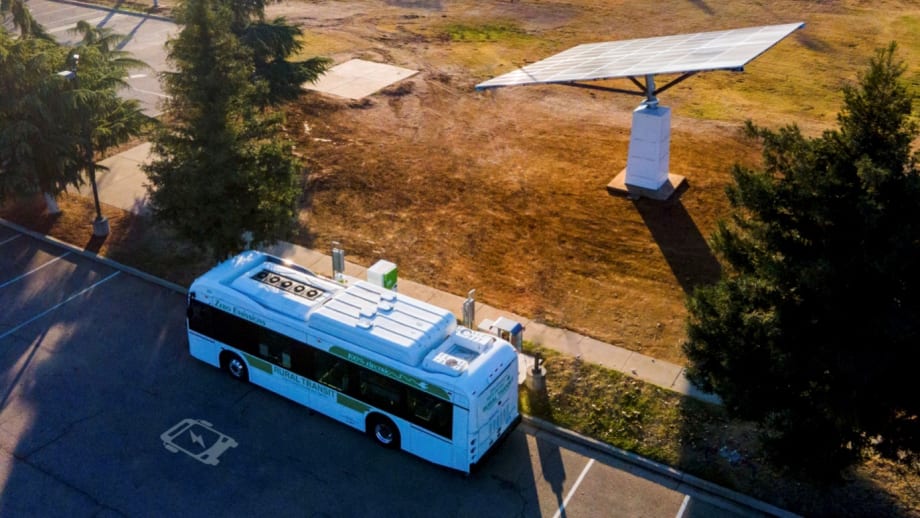
Solar and energy storage systems can be customized to fleet operations based on a close assessment of daily activity, modeling of how vehicles run and use energy, and a cost analysis that identifies savings on EV charging and electricity consumption.
Photo: Beam
7 min to read
While fleet managers understand how to handle diesel and fuel costs, they could benefit further from the new ways electric fleets save time, energy, and money through strategic charging and electric storage.
A recent Automotive Fleet webinar, Electric Bills are the New Fuel Bills, sponsored by Stem, highlights how to navigate electric bills for EV fleets via tiered charging rates and times, utility infrastructure programs, and the latest tax credits and incentives.
Stem offers fleet operators, managers, and owners a selection of hardware, software, and services to create clean energy strategies with solar, storage, and EV charging.
Presenters Tad Glauthier, vice president of eMobility, and Brian Siu, director of federal government affairs, shared some tips on how to get the most out of energy management and run an efficient electric fleet. Here is a summary of the main points:
Updates on E-Charging Rules & Regs
The EPA recently proposed criteria for pollutants and greenhouse gas emission standards for medium-duty vehicles and new light-duty vehicles. Those standards will gradually require auto manufacturers to reduce the air emissions from their vehicles, which are measured on a grams per mile basis.
By model year 2032, manufacturers can partially comply by mixing in more electric vehicles into their vehicle fleets. EVs don't emit any emissions and help reduce average fleet emissions. Such standards may result in introducing more EVs into the marketplace, with a possible adoption rate of 67% by MY 2032.
Federal and state regulatory pressures are being applied in the heavy-duty sector. The actual standard will vary by vehicle class and subclass. In some cases, the date for phasing them in will differ. The EPA anticipates that by model year 2032, sleeper cab sales could be about 25% electric, and the aggregated vocational vehicle sales could be about 50% EV.
Applying Incentives to EV Fleet Infrastructure
The new commercial EV credit established under Section 45W of the Internal Revenue Code, was codified through the Inflation Reduction Act. It allows businesses to buy an EV or clean vehicle for use in the business and not for resale. It gives them a tax credit that's either 30% or the incremental cost of the vehicle, whichever is less. The incremental cost of the vehicle is simply the difference in cost between the EV that the business buys, and the cost of a comparable internal combustion engine vehicle.
Limits apply to the amount each tax credit is valued. For the first tier, vehicles under 14,000 pounds GVW, the tax credit ranges up to $7,500 per vehicle. The second tier is for vehicles above 14,000 pounds, which qualify for a tax credit up to $40,000.
The EV infrastructure tax credit under Section 30 Category C of the tax code is where the Inflation Reduction Act tries to encourage corresponding infrastructure. To support those, the infrastructure tax credit will be either 30% of qualified costs, or 6% of the qualified costs. And whether a project gets 30% or 6% depends on whether it pays prevailing wage and an employee's apprenticeship during the construction alteration or repair of that facility, which gets 30%. Those that do not meet the standard get 6%. In either case, each credit is capped at $100,000 per single item of refueling property. The Department of Treasury sill is collecting comments on how to implement this part of the code and what it considers a “single item.”
Tax credits for stationary technologies, such as distributed energy storage, predate the Inflation Reduction Act, but the act makes some changes to them. First, it extended the tax credit through 2032, which provides a lot of long-term certainty for interested individuals that the credit will still be there when their projects come online. And it avoids these boom-and-bust cycles that can happen with short term extensions of a tax credit and lapses. Secondly, it established an independent tax credit for standalone energy storage, which boosts vehicle charging because of the resiliency and peak reduction benefits that storage provides.
If a project under one megawatt with an energy storage system checks all the other eligibility criteria, and is in the U.S., then it would be eligible for a 30% base credit. That means 30% of the project costs would be defrayed through the federal tax code. In addition, if it incorporates a threshold number of domestic products of U.S. origin components, then it could possibly be eligible for an additional 10% bonus for a total of 40%. These credits are all stackable.
There's also an energy community credit of 10%, a location-based incentive. An energy community could be a place where a coal fired generating unit is retired or closed, or a metropolitan statistical area that highly relied on fossil fuel employment and now suffers from unemployment. The Inflation Reduction Act seeks to revitalize some of these areas through an incentive for projects built there that presumably create jobs and tax revenue. That credit added to the above ones could yield a 50% reduction in charging infrastructure costs.
An Electric Recharging Plan in Practice
EV charging infrastructure will need to be backed up during outages so fleet managers can manage and deploy them seamlessly. A cleaner option than diesel generators are solar and battery storage systems.
Batteries and smart software can even out electricity usage to avoid peak power times of the day with higher electricity rates.
Locations without enough utility provided power can balance usage between solar-storage sources and grid-fueled fast chargers.
Fleet managers and operators can pursue electrification through a combination of arrangements that save time and costs, including one-stop vendors that provide energy planning and sourcing, equipment procurement or access networks, battery storage, installations, and management of electric fleet vehicles through software and control systems.
Fleet depots with limited space do not have to get solar and battery storage and can instead choose one or the other depending on fleet usage. The Inflation Reduction Act has decoupled the tax credits for solar facilities and battery storage.
Solar and energy storage systems can be customized to fleet operations based on a close assessment of daily activity, modeling of how vehicles run and use energy, and a cost analysis that identifies savings on EV charging and electricity consumption.
First and Vital Steps for an EV Fleet Strategy
Develop a comprehensive fleet electrification plan. Often, a mandate to electrify is handed to a fleet operator, either from the C-suite, or based on investor or customer pressure to be more sustainable.
The first step is to figure out what kind of electric trucks to buy that will meet use cases duty cycles. There could be supply chain constraints and higher cost of vehicles, compared to ICE vehicles.
Finding vehicles is easier than setting up a charging plan: Where will the vehicles live? Where will they need to park? When will they need to charge? Where will you get the energy to supply the charging? What options does the local utility provide or accommodate?
Engage with utilities at the same time you are considering EV charging partners.
Done right, a charging infrastructure for EVs will cost less than a fueling plan for ICE vehicles. A lower electricity bill will replace the fossil fuel bill. An electrification plan will cost more upfront but should be structured to save money on fuel/energy, maintenance, and repairs over time. Solar and storage can reduce bills even more.
Calculate total cost of ownership by factoring in all incentives and tax credits and then projecting electric usage at different electricity rates, and savings from accessing stored energy from batteries.
Battery storage can supply higher power charges than the grid electricity it can temporarily replace if a charging management software system can prioritize the types and timing of EV charges. Two megawatts of available reserve power or access to it is most viable.
Organize fleet vehicles into compatible charging groups that can be rotated in and out of charging infrastructure based on priority usage and need.
Battery storage systems cost about $500,000 and up depending on power levels and frequency needed but can help defray overall costs by providing seamless available charging 24/7. The cost of a battery has a lot more to do with the kilowatt hours produced than other factors. How big is the actual battery?
More Resources:Stem website, White House Inflation Reduction Act Guidebook, IRS FAQs
Subscribe to Our Newsletter
More Green Fleet
Sponsored•October 1, 2026
New Propane Autogas Program Offers Fleet Compensation
Qualified commercial fleets can receive $7,500 per eligible propane autogas vehicle and up to $10,000 for new refueling site prep. Learn how the program works and see whether your fleet qualifies.
Read More →
EV Charging Use Is Outpacing Infrastructure Growth
ChargePoint’s 2026 Charging Forward Report points to rising charger use, higher-powered charging, commercial vehicle electrification, and energy-management technology. Here’s what fleets should know.
Read More →
Merchants Fleet Reports 290M EV Miles as Fleets Navigate Changing Electrification Market
From millions in operating savings to hundreds of millions of EV miles, Merchants Fleet’s latest report reveals what’s working and what’s changing in fleet electrification.
Read More →
The EV Breakdown Nobody's Talking About: Why Most Electric Vehicle Roadside Calls Aren't Mechanical Failures
Here's why EV breakdowns are widely misunderstood.
Read More →
ChargePoint Now Available in Energy Pass
ChargePoint and additional planned charging network integrations were added to GM's Energy Pass.
Read More →

First Look: Slate Auto's Electric Fleet Pickup
Could an affordable, modular EV pickup make electrification more practical for fleets?
Read More →
Slate Debuts Colorful, Unique EV Models
A recent media and client event, studded with electric vehicles dressed up on platforms, planted a new position for the manufacturer in the wider EV market. Fleets will find cost-saving advantages.
Read More →
Slate Electric SUV, Pickup Switchable Model Aims For Light-Duty Fleets
Everything about this EV is counterintuitive and understated, making it stand out from the crowd.
Read More →
Inspiration Mobility Acquires Key Electrada Assets
Inspiration Mobility Group has acquired select assets of Electrada, adding the fleet electrification provider's team, technology, and charging infrastructure development capabilities to its energy management business.
Read More →