




How to Deal With Driver 'Amnesia'
Balancing the need to see to it that fleet policy is followed with the sometimes delicate relationship you have with your drivers isn’t easy, but it can be done.


As the old saying goes, “ignorance is no excuse,” but drivers fall back on that excuse for any number of policy violations and lack of response. Balancing the need to see to it that fleet policy is followed with the sometimes delicate relationship you have with your drivers isn’t easy, but it can be done.
Whether it’s “I forgot,” “I never saw the e-mail/memo,” or “nobody told me,” drivers can “forget” things very conveniently when it suits their purposes.
The buying of premium fuel is one example, but the issue can be any number of things — getting expense reports done on time, having preventive maintenance completed on schedule, or submitting vehicle condition reports on time. Whatever your communication is, you’ll have drivers who conveniently “forget” what they’ve been told. Sounds like an easy fix, but think things through carefully before taking action.
How Do You Communicate?
Not all that long ago, the only means of communication available to fleet managers were written (hard copy, letters, memos, etc.) and verbal via land line telephone. Confirming a message or instruction conveyed either way could be difficult, and driver amnesia was fairly common.
Today, this is hardly the case. Messages can be sent electronically, via e-mail, and directly to a driver via cell phone or other personal communications device (BlackBerry or iPhone). They can be targeted to an individual, group, or a mass audience, and can be easily tailored to any of them. Telephones have become free of cables and wires, as cell phones and smart phones keep business people connected and available nearly 24/7. Conference calls via bridge lines combined with live webcast meetings provide an excellent training tool, and the ability to get a message or instruction out to an audience that can run anywhere from local to global saves tens of thousands of dollars in travel expense.
The primary point is that while a simple telephone call or a written memo is very difficult to duplicate, it was difficult to provide evidence that the call took place or that the suddenly forgetful driver ever actually received the memo.
Today? Suffice it to say that anything and everything that is said, broadcast, or written electronically never goes away — much detail on the circumstances of the missive remains after it is sent. Understanding and using these and other permanent pieces of communication evidence can go a long way toward helping drivers with “suppressed memories.”
Avoid Confrontation
As with any other interaction with drivers and other stakeholders in the fleet process, it does the fleet manager little good to be confrontational. Playing “gotcha” by confronting a driver with one of the previously mentioned electronic records may prove your case, but it won’t do your relationship with them (or other drivers) any good going forward.
There are subtle ways to ensure that drivers know beforehand that a record of their receipt of an e-mail, a telephone call, or perhaps their participation in a conference call/webcast will be maintained. Conference call bridge lines, for example, often have a feature where participants state their names for the record. E-mails have options for “return receipt” and senders can check the status after they’re sent (who received it and who has opened it). Prepare recipients and participants by noting during every conference call and on every e-mail that such a record is kept, and that the sender will review who has received the message, and who has opened it.
A simple signature at the bottom of every e-mail can say something such as, “All recipients’ receipts and views of this message will be recorded.”
Cell phone records contain dates, times, locations, and numbers both called and received; they do not, however, note anything about content and thus are of limited use in helping cure driver amnesia.
The overall point here is that modern technology in communications provides the fleet manager with tools that didn’t exist when only land line telephones and paper memos were available. Learn them, and use them to both convey the message itself as well as notify recipients that the record is being kept, and will be reviewed. The goal is not to confront the amnesiac driver with evidence that he or she is being less than truthful, rather to prevent amnesia from occurring in the first place.
[PAGEBREAK]
Build a Process
A fleet manager should consider building a short, effective process for preventing driver amnesia and dealing with it when it occurs. The first step is as described above. Learn what kinds of tracking tools the various modern forms of communication provide and how they can be used to create a permanent record of every message sent.
E-mail: Message status (received, opened) and return receipts.
Conference calls: Bridge lines can be used to “take attendance.”
Webcasts: Participants must log in and a record of these can be kept and reviewed.
Text messages: Both sender and recipient’s devices contain a record of texts sent and received.
Ensuring drivers are aware your correspondence, whatever form it takes, is tracked will help with some of the less severe cases of driver amnesia. Some however, for lack of a better term, can be chronic. Fortunately, you can set up communications with follow-up capabilities; e-mails, for example, to those who have either not received or have not opened the original message. Eventually, they’ll all acknowledge that your message and any instructions they contain have been seen.
Once again, the purpose isn’t to confront an “amnesiac” driver with your “evidence.” You don’t need to put drivers on the defensive; you need their cooperation daily. Follow ups can be couched in non-confrontational terms, for example:
“I realize that with the volume of e-mail and other correspondence you receive, you may have forgotten that you received and opened my e-mail on ___ date at _____time. Please review and let me know….”
If you’ve scheduled a webcast, and “attendance” data shows that one or more drivers did not log in, show them you are aware of this with a quick, traceable e-mail:
“I note that your schedule didn’t permit you to join our webcast this past week. Fortunately, the session was recorded, and you can access this record of the webcast at….”
Don’t confront, but make certain drivers know their cooperation in correspondence is being tracked, and they’ll hear about it if they don’t participate, or refuse to admit they did, and are now claiming they’ve forgotten.
Extreme Cases
As with any other challenge, some are more extreme than others. Remarkable as it may seem, you will inevitably have a driver who, despite the evidence to the contrary, absolutely refuses to admit he or she has seen, heard, or read your communication. And, as hard as you try to remain calm and reason with the driver, he or she becomes more defensive and annoyed at your “accusations.” At this point, you may simply have to resort to “no more Mr. Nice Guy,” and lay down the law — to the driver and his or her supervisor.
If your patience is not rewarded, simply notify the driver and his or her direct manager that, while you can understand someone forgetting they’ve seen something, they cannot deny the evidence you have. The notification can be via e-mail or telephone (if on the phone, conference both parties in). At this point you can be firm, but remain in professional mode. Reiterate the original message, that a driver has a record of ignoring fleet maintenance policy, or not submitting expense reports on time, for example. Be firm in explaining why the policy exists, the cost to the company for noncompliance, and the consequences for violations. Remember, this can be done professionally, without being blatantly accusatory, which will accomplish a great deal. It is important to include the driver’s manager, so that he or she is aware where the issue lies and the attempts you’ve made to handle the problem.
Whatever you do, don’t procrastinate. Don’t let driver amnesia go unaddressed or let the problem fester. You’ll need to deal with it quickly, firmly, and professionally.
The communications tools available to fleet managers today bring with them the ability to garner evidence as to who has seen/heard/read the communication and when they did. These records are a key component in your efforts to help drivers overcome their amnesia, and to help you and the company see to it that your fleet policy is adhered to.
To combat driver “amnesia,” fleet managers should:
Build a process and understand available technology.
Avoid confrontation while still getting the message across.
In extreme cases, be firm, but if your own efforts fail to solve the problem, bring the supervisor into the process.
Be proactive, time only adds to the problem.
More Operations

Top 50 Executive Fleets
It is that time of year again! Time for the 2026 list of the Top 50 Executive Fleets, presented by Automotive Fleet and Volvo as part of its annual Fleet 500. Download now to see this year's list of companies!
Read More →
Gary Van Orden Retires After Nearly Four Decades in Commercial Fleet
From answering customer calls at Ford Motor Company to leading fleet sales across multiple OEMs and a fleet management company, Gary Van Orden's career reflects nearly four decades of leadership in commercial fleet.
Read More →
How Stellantis Plans to Get Ahead of Fleet Downtime
Vehicle acquisition may grab the headlines, but fleet uptime increasingly determines operating success. Darren Bradshaw of Mopar North America gives the details.
Read More →
Hyundai Releases 2027 Commercial Program Incentives
The 2027 Model Year "Fleet Street Incentives" are available to commercial and government fleets.
Read More →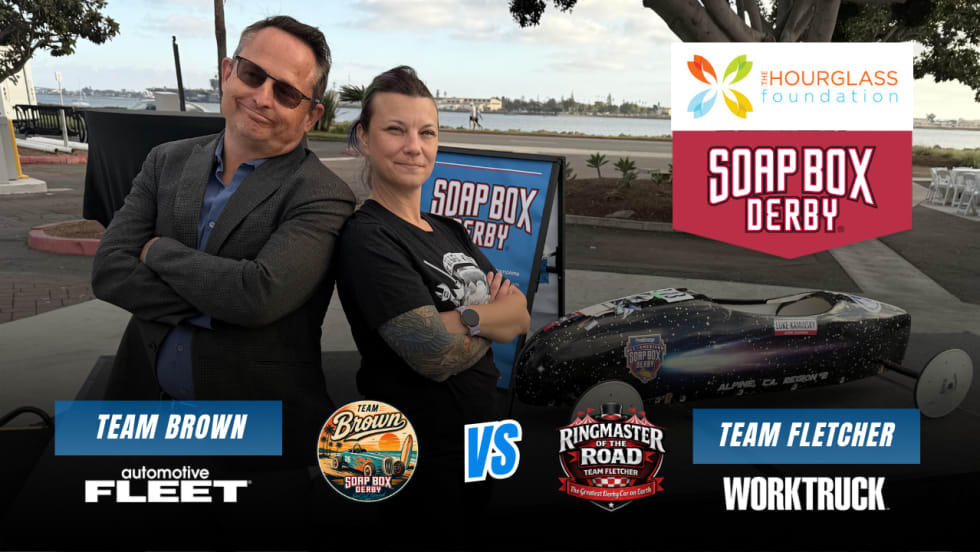
It's All Downhill from Here! Fleet Industry Raises $22,000 for Skilled Trades Scholarships
Work Truck’s Lauren Fletcher and Automotive Fleet’s Chris Brown turned a friendly racing rivalry into $22,000 for automotive technology and skilled trades scholarships.
Read More →
The Top 300 Commercial Fleets
The Top 300 Commercial Fleets: See the List
Read More →

Your Local Dealer Knows More Than You Think
Your local dealer can provide an information advantage that extends well beyond courtesy deliveries.
Read More →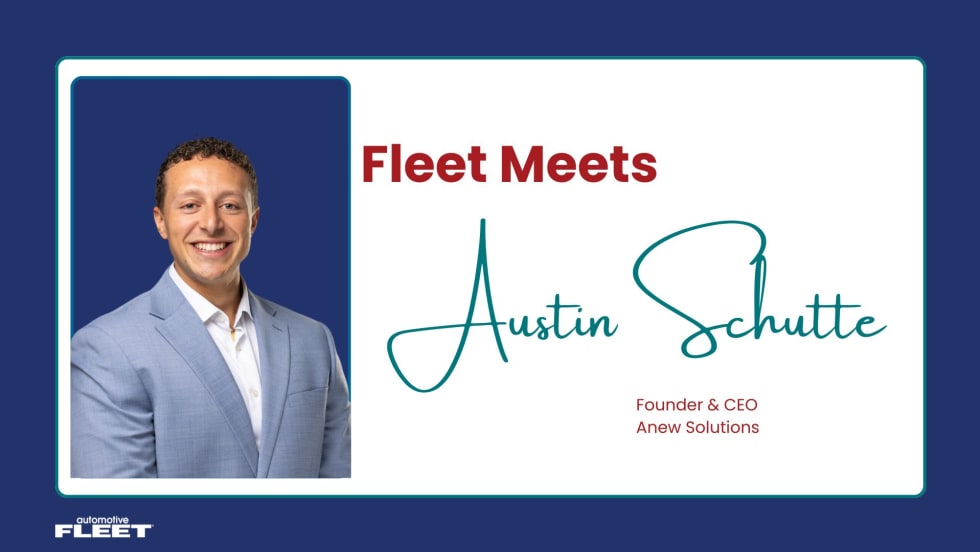
Fleet Meets: Austin Schutte
Here are some industry insights, personal touches, and words of advice from the CEO and Founder of Anew Solutions.
Read More →
Soap Box Derby Challenge: What’s Powering Team Brown
The car is coming together, the students are solving real build problems, and the fleet industry is helping push Team Brown toward the starting line.
Read More →