




How to Deal with Company Drivers Who Don't Measure Up
You can’t afford to ignore “marginal” drivers — especially those with bad driving records. Your fleet policy must specify under what circumstances the company car privilege can be suspended.
Marginal drivers — those whose use of a company-supplied vehicle is subject to review, either because of low business mileage or questionable driving records — can create problems for a company. How should such eligibility be handled? Under what circumstances is reimbursement a viable option?
What is a Marginal Driver?
Put simply, vehicles are provided to employees for one of two reasons: to assist in performing a job or as a form of compensation. Within these categories, marginal drivers can be defined as one of two types:
■ Part-time/low-mileage drivers. Drivers whose duties require limited business travel, and only on an occasional basis.
■ Problem drivers. Drivers who are assigned vehicles, but whose driving record is unacceptable (such as multiple moving violations, accidents, DUIs, hit-and-runs, or poor vehicle care).
In either case, the company must determine what action is to be taken, and under what circumstances to take it. A carefully structured fleet policy/document, approved by executive management, uniformly and consistently applied, is necessary to deal with both categories of marginal drivers.
Dealing with Occasional Drivers
The easiest way to deal with an employee whose function requires occasional vehicular travel is to reimburse them for the use of their personal vehicle. Reimbursement should be portal to portal, and backed by the clear records of mileage driven, along with the date and purpose of the trip. Field staff who might make daily trips to the bank, post office, or drive other regular, but short trips, are best suited to mileage reimbursement.
Some employees, such as internal audit staff, may make fewer trips, but of longer duration. Such drivers might be best handled using short- or long-term rentals, or perhaps pool or surplus vehicles from the regular corporate fleet.
Dealing with Problem Drivers
Multiple moving violations, DUIs, reckless driving, and multiple accidents can create serious problems for an employee and for the company. A fleet policy document must answer these questions:
■ What, if any, level of driver problems (tickets or accidents) is acceptable?
■ How often are driver records reviewed?
■ What criteria are used to determine accident chargeability?
■ What are the consequences for unsafe driving?
■ Who will be responsible for executing these policies?
The most effective method to establish and execute a policy, as well as review driver records and accident reports is through a safe driver committee. The committee should include a representative from fleet (who should “chair” the committee), risk management, personnel, sales/service/traffic management, and the insurance rep.
The committee would review driving records (for both new hires and existing drivers), accident reports, establish preventability/chargeability, and provide for carrying out penalties for problem drivers and to recognize and make awards to safe drivers, as set forth in the policy.
There are a number of penalties commonly used by a fleet to enforce a safe driving policy:
■ Loss of personal use privilege.
■ Loss of vacation use.
■ Requiring the driver to provide
insurance coverage.
■ Dismissal.
Perhaps the most difficult situation to deal with would involve the problem driver, who also happens to be the “star” sales/service person. While this decision is difficult to make, in reality, it should be considered on the basis of balancing the total accident costs involved against the dollar production of the individual involved, and the potential of injury and fatality to that person and others.
Keep in mind that the problem driver is likely to establish an ongoing pattern of unsafe operation: the less severe penalties (loss of personal use or payment of the deductible) should be used for occasional breaches of policy. Short of dismissal, the most widely used penalty for serious or repeated violations is revocation of a company car assignment and placing the driver on a reimbursement program.
Is Reimbursement Effective?
To the extent that the company wishes to eliminate physical damage risk, and perhaps punish a transgressor, substituting reimbursement for a company vehicle is effective. There are, however, a number of issues which remain:
Liability. While the use of personal vehicles may mitigate the risk of liability, it does not eliminate it altogether. There is ample precedent for companies held liable for employees’ actions while conducting company business, even if the vehicle is not company provided.
Condition of employment. The use of a company-provided vehicle may be construed as a condition of employment. Unless the penalty of revocation is spelled out clearly up front, there may be legal problems.
Job function. The performance of some job functions (delivery of field service) requiring specialty vehicles cannot be performed with personal vehicles. Taking away a company service van from a field technician, for example, can be tantamount to dismissal (the job cannot be performed without the van).
Compensatory vehicles. So-called executive perquisite vehicles are used to provide some level of compensation: taking away such vehicles is akin to reducing compensation, and begins to raise the question of encroachment into the personnel function. It is obvious then that the solution to the problem is not quite as simple as taking away the car. FF
SIDEBAR:
Corporate fleet policy must cover both who is eligible for a company vehicle assignment, and under what circumstances the company will suspend or revoke that privilege. To be effective:
■ The policy must be enthusiastically supported at the highest levels of corporate management.
■ The safe driving committee must be given full authority to carry out the policy.
■ The penalties for unsafe driving must be applied consistently and uniformly.
■ The status of problem “star” sales/service people must be evaluated in light of offsetting costs of accidents, downtime, and potential for injury or fatality.
More Operations
How to Manage Conflict for Your Fleet Operations
Conflict management is becoming a core leadership skill. Here are five strategies fleet leaders should know.
Read More →
Turning Connected Vehicle Data Into Decisions That Matter
Fleet leaders have more data than ever, but turning that data into clear, actionable decisions remains a challenge. This white paper shows how leading organizations are using connected vehicle data to improve safety, reduce costs, and optimize fleet performance. Learn how to turn insight into action across your fleet.
Read More →
Cameras, Safety and Insurance: From Reactive Claims to Real-time Prevention
Commercial auto remains one of the most challenging and costly lines of coverage for fleet operators and insurers alike. Learn more about how to effectively address these issues from Onur Aksan, Enterprise Business Development Executive, Geotab.
Read More →

Are You Tracking Your Fleet's True Total Cost of Ownership?
Bobit Business Media surveyed 190 fleet professionals and found that while most fleets are tracking costs, fragmented systems and data gaps are keeping true TCO visibility out of reach. With rising pressure to control spend in an increasingly volatile environment, the gap between what fleets think they know and what the data actually shows is wider than you might expect. See how your peers are managing costs today and where the industry still has room to improve.
Read More →
Turn Fleet Data Into Smarter Decisions
Fleet leaders have access to more operational data than ever, but disconnected systems and unclear metrics often slow decision-making instead of improving it. This article outlines five practical steps fleets can take to transform fragmented data into actionable insights that improve planning, safety, utilization, and long-term performance.
Read More →
Hybrids: Electrification Without the Challenges
For fleet managers, fuel is one of the biggest line items in the budget — and it's one hybrids can shrink without changing how your people work. Download the eBook to see the numbers, understand the technology, and get a step-by-step guide to making the switch.
Read More →
How NOV Uses Telematics to Improve Fleet Safety Across 160 Locations
James Victory of NOV discusses how the company manages fleet safety, maintenance, and telematics across more than 150 locations supporting oilfield operations throughout the U.S.
Read More →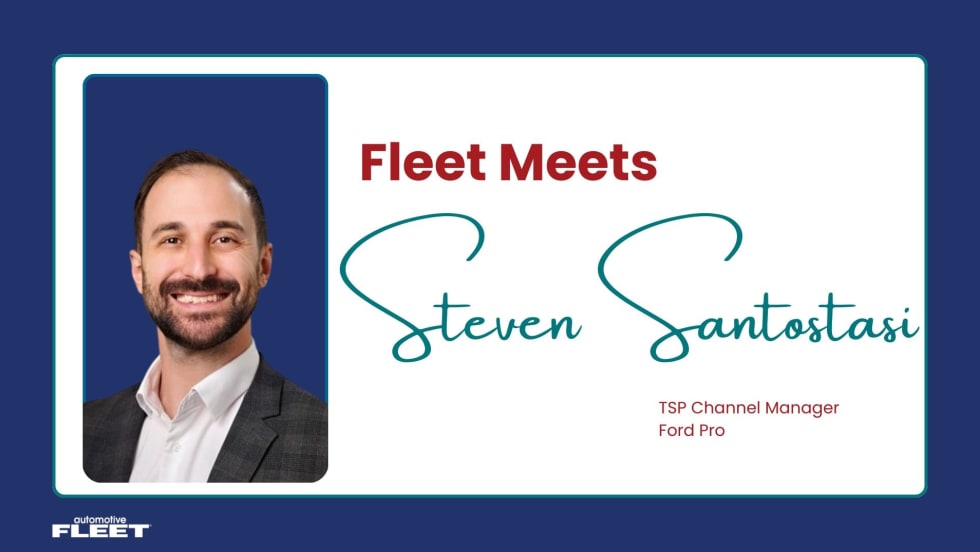
Fleet Meets: Steven Santostasi
This edition of the Fleet Meets series features Steven Santostasi, the current TSP channel manager for Ford Pro.
Read More →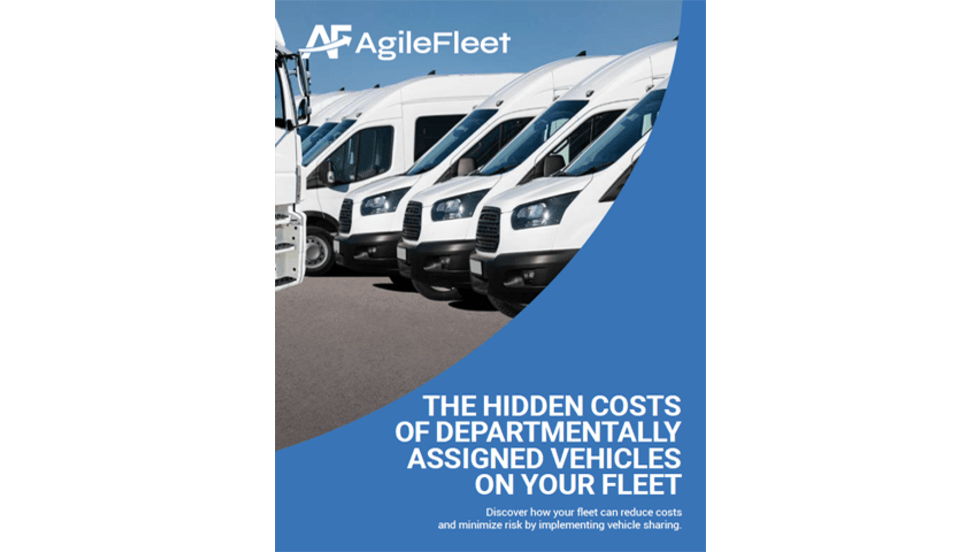
Why Fleet Managers Are Replacing Departmental Vehicles with Shared Motor Pools
Departmentally assigned vehicles often create hidden costs through underutilization, poor visibility, and increased administrative burden. This white paper explores how shared motor pool strategies help fleets reduce costs, improve accountability, and optimize vehicle utilization.
Read More →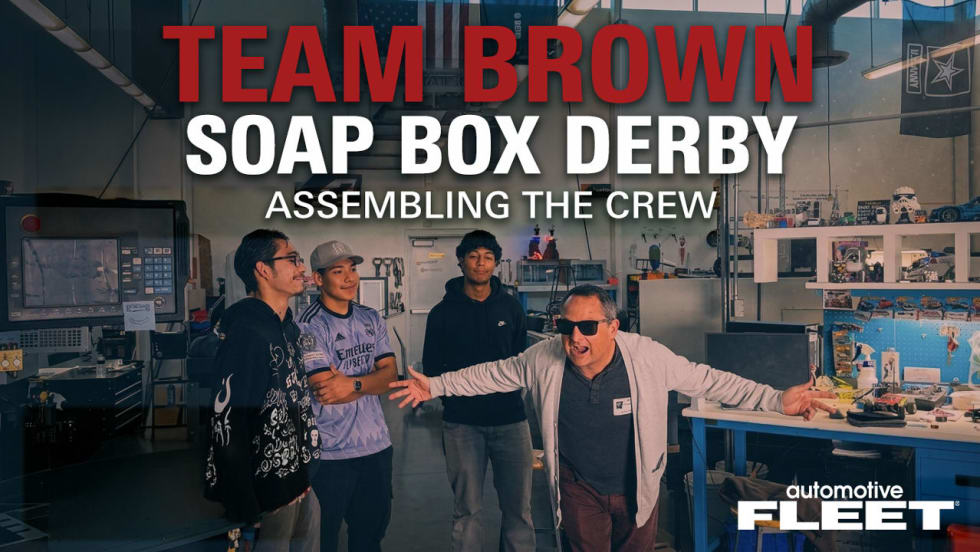
Soap Box Derby Challenge: Assembling the Crew
Meet Gabriel, Matthew, and Angel — the team helping bring this soap box derby build to life.
Read More →