




How to Avoid Professional Obsolescence
It’s been a long time since anyone needed a “buggy whip,” and those eight-track tapes belong in a museum. Don’t allow yourself to be added to the list; avoid professional obsolescence by taking a few key steps.


It’s a frightening phrase — professional obsolescence — and it should be. If you or your job becomes obsolete, you or it will be replaced. It’s that simple. Business today moves so quickly and changes so radically over short periods of time that obsolescence is not a luxury a company can afford.
What is even more inexcusable is when a manager allows himself or herself to become obsolete. Complacency, laziness, arrogance — whatever the cause, your industry can pass you by very quickly if you aren’t paying attention. This career sin can be avoided, however, and here are some steps you can take to remain state of the art.
Change Isn’t Bad, It’s Just Different
To grow and prosper, business must learn to deal with change. The pace of change has become dizzying in recent years, as technology outpaces the ability of many businesses to adapt.
The same holds true for fleet managers. Although the basic mission of fleet management hasn’t changed — the safe and cost-efficient management of company-provided vehicles — the means by which this is accomplished, as well as the vehicles themselves and the laws and regulations governing them, undergo change nearly every day. Keeping up with such changes, and learning to apply them to the job, is at the same time more difficult today. The pace of change is so much faster than it was decades ago — as well as easier — and tools available to fleet managers are much more advanced.
If a fleet manager becomes complacent, comfortable in a routine, in the way things are, obsolescence is inevitable.
What Is ‘Obsolete?’
Merriam-Webster defines something as obsolete very simply: “No longer in use, or no longer useful. Of a kind or style no longer current.”
When change is inevitable, and the pace of change rapid, a fleet manager can become obsolete in the same way that the buggy whips and eight-track tapes did. No longer current, no longer in use, and no longer useful.
Professionally, obsolescence comes when either the job being done is no longer current, or the means by which the current job is done is no longer in use or useful. How can this happen to a fleet manager?
As mentioned, the basic mission of fleet management remains unchanged, just as the basic mission of, for example, a batter in baseball. Fleet managers are to provide, and manage, company-provided vehicles in the safest, most cost-efficient manner possible. The change of which we speak is broad, however. The vehicles of today would hardly be recognizable to a fleet manager of 30 years ago, or even 15. The technology available to fleet managers — communications, reporting, the gathering, storage, and use of data — is far more sophisticated, and the laws and regulations under which a fleet must operate are more numerous and more complex.
Thus, there are a number of ways that fleet managers can risk professional obsolescence:
Vehicle technology: Much like a mechanic who hasn’t progressed beyond kingpins, points, and condensers, a fleet manager who fails to remain current in vehicle technology renders himself or herself obsolete. It doesn’t matter that some technology may not impact the fleet directly. Someday, it may. And someday, also, there may be a career opportunity that requires that knowledge.
Legislation and regulation: Governments at all levels have passed and imposed more regulation related to vehicles, drivers, and driving in the past 10 years than at any time previously. Changing speed limits, new CAFE requirements, emissions controls, the use of mobile devices — the list of things that lawmakers and bureaucrats seek to limit or control gets longer every year. Once again, just because a law or regulation isn’t immediately applicable to your fleet doesn’t mean you don’t need to stay current on what is new, and how existing laws have changed.
Business technology: The pace of change and advancement of business technology is little short of dizzying. As little as 30 years ago, the primary means of communication were via telephone and the U.S. Postal Service. Then came faxes, followed by e-mail, and now the options for communication are remarkable: webcasts, instant messaging, all manner of social media (Twitter, Facebook, LinkedIn, Skype, etc.), and the hardware that can be used goes well beyond computers to cell phones, tablets, BlackBerrys, and more. In addition, the means by which companies and managers use and mine data have expanded as well, from the first spreadsheet software to online tools, lessor “dashboards,” and the Internet.
Business models: Twenty years ago, if the company needed an accounts payable clerk, it found one in the local market, hired him or her, and sat him or her at a desk in the corporate office. A fleet manager had a cubicle or office in the same building. Now, however, the concept of the “virtual office” has become more accepted, primarily due to the use of new technology. Documents can be scanned (and thus have become more and more legally acceptable), teleconferences and webcasts replace meetings held in conference rooms, and the large majority of tasks nearly every employee must address each day can be done from the comfort of a home office. Not only does this save the company money, but it provides a far wider talent pool from which to choose the best candidates for the job.
So, the pace of change can, if a fleet manager doesn’t keep up, render either the job or the person obsolete. What then, can be done to avoid it? How, with the day-to-day responsibilities fleet managers have, is there time to remain relevant in light of all the changes that occur?
[PAGEBREAK]
Get ‘Social’
It is likely that the most effective and useful activity in which a fleet manager can engage to remain relevant to the job is networking. The fleet industry, a relatively small niche among business disciplines, has always been a fertile ground for networking.
Developing networks of like-minded peers and suppliers is relatively simple. Trade organizations, such as the NAFA Fleet Management Association, Automotive Fleet & Leasing Association (AFLA), and others bring fleet managers and suppliers together regularly.
Find those who either have fleets in your industry, of similar size, or use similar vehicles for similar missions. Exchange business cards. Follow up with a call, and make such contact a regular part of each working day.
The same goes for suppliers (lessors, fleet service companies, manufacturers, etc.). The more people you come to know, the more opportunities you have to gain new ideas, and to learn how problems and issues you face may already have been resolved. When you learn of something new — a new regulation, new technology, or a new model you’ve tried in your own fleet — share it with those in your network, and ask them to do the same.
Use social media, such as Twitter, Facebook, and LinkedIn. The latter is geared toward exactly the kind of professional networking that can be key in maintaining currency in the job. Set up a Facebook page for your industry, or your type or size of fleet, and use it. Accumulating these kinds of contacts can make communication simple and fast.
Know Where to Go for Info
With change occurring at such a rapid pace, fleet managers today are fortunate to have a vast array of information available to them at the click of a mouse. The Internet is a remarkable tool for businesses and employees to keep up with any and all information about what they do.
Using the Internet is easy; using it efficiently is another thing altogether. Mindlessly surfing page after page or simply using search engines can take hours, unless the user knows the ins and outs of how to use them efficiently. For example: most e-mail providers allow the user to receive alerts, via e-mail, on whatever subject, person, or company they choose. If your company is using an “ABC Motor” minivan, you can sign up for alerts for this particular model, for the company, or for minivans in general. (Note: Be careful. You don’t want to clog up your e-mail in box with too much useless information; be specific about what you are looking for). You can then browse the e-mail alerts you receive for information that is useful to you in the job.
Also, learn how to use search engines. If you simply put in the words “high-mileage minivan,” you are liable to get a link to a source saying “high in the mountains, Mary Sue got a lot of mileage out of her interest in goats, and loaded her findings in the back of her minivan.” Searching for “high+mileage+minivans” will get you results more suited to your search.
The social/business networking site LinkedIn allows users to “follow” a company, join groups of like-minded professionals, and participate in discussions, all of which can make membership into a tremendous source of information, which can be customized to separate the wheat from the chaff.
All in all, with an ocean of information available to you, you can use the Internet to stay current on products, services, laws, regulations, and people, all of which will help stave off obsolescence.
Don’t Stop Learning
Don’t be afraid to go back to school — both literally and figuratively. Most companies offer webinars, or online presentations and classes geared toward customers and others, where you can learn more about subjects critical to the job. Ask your suppliers if they can spend a day with you to go over some specific area of interest or concern. Most of them are happy to interact with you in a consultative relationship, to keep you informed.
Local repair shops (particularly chains) sometimes have classes geared toward customers to help them understand the basics of automotive technology and systems. So, too, do local junior colleges, offering adult study classes that can help round out your basic education.
Learn how to use software you haven’t formally used yet — products such as Microsoft’s Office suite, which includes PowerPoint, Excel, Access, and Word. You may not have to make presentations now, but someday your job may well require it, so learning how to construct a PowerPoint presentation or build an Excel spreadsheet are things that can help not only today, but in the future. Local computer retailers often offer such courses, and so do many companies (not to mention tutorials you can study online).
Take a course in finance or accounting, if your college major was English literature — or a refresher. Most colleges and universities now offer special “businessperson” MBA degrees, which can get you an MBA nights, weekends, and at home.
The point is, once you decide you know it all, you become de facto obsolete. Everyone, from the freshly minted college graduate to the 20-year veteran of the fleet industry, can always learn more. You really can never become obsolete if you are determined not to. Use that determination to help build your career, and you’ll find yourself in demand until the day you retire.
The search for knowledge, the desire to learn new things, the need to remain current never ends. To avoid obsolescence, fleet managers should:
Build a network of people, friends, colleagues, and business associates, and communicate regularly.
Utilize information sources, such as e-mail alerts, social media in all its forms, and know how to find what you’re looking for via search engines.
Utilize company resources or local educational outlets to increase your education.
Get formal training in areas that may not be a direct part of your job.
More Operations
Managing Fleet Costs in an Era of Permanent Volatility
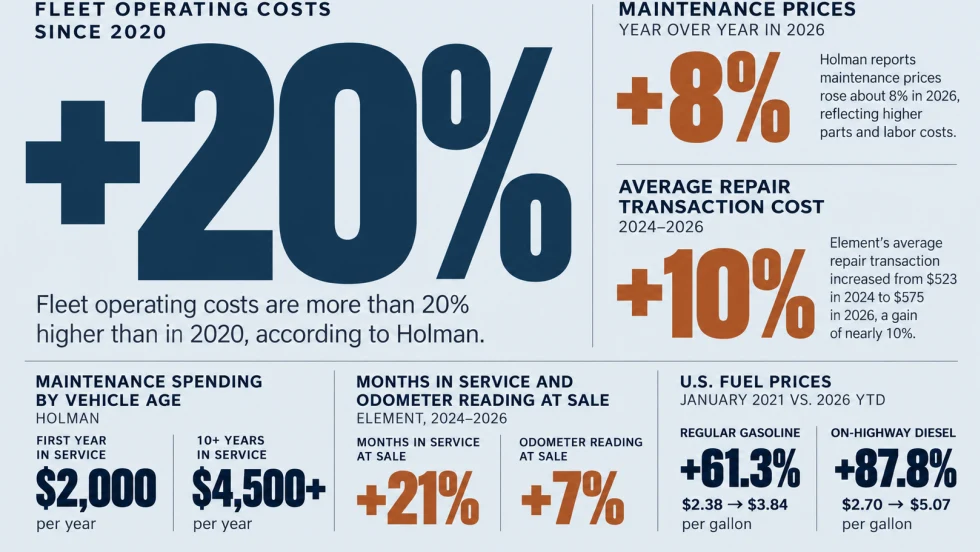
Fleet operating costs have risen more than 20% since 2020, raising a key question: When does extending a vehicle's service life stop making financial sense?
Read More →
The Next Evolution of Fleet Management: Autonomous Operations
This opening keynote session at the Fleet Forward Conference highlights the future of autonomous driving for fleets.
Read More →
How to Reduce the Total Cost of Risk From Catalytic Converter Theft
A stolen catalytic converter can cost fleets far more in downtime and lost productivity than in repairs. A total-cost-of-risk approach can help fleet managers quantify their exposure and prioritize theft prevention.
Read More →

Personal-Use Charges Rise as Vehicle Values Fall | AF News Recap
Personal-use charges are climbing, wholesale used-vehicle values are declining, and commercial fleet sales growth is slowing. This week, we're breaking down the latest fleet data, plus how Element Fleet Management is helping Waymo prepare for its first Canadian robotaxi market.
Read More →
Here's When You Should Make an Exception to Fleet Policy
Fleet policies are designed to create consistency, but not every driver or situation fits neatly within standard rules.
Read More →
AI-Native or AI-Acquired: What Should Fleet Managers Look for in an AI Platform?
Six questions can help fleet managers look beyond AI marketing claims to evaluate integration, data access, and real-world operational performance.
Read More →
A buyer's guide to fleet management software in 2027
Buying fleet management software in 2027 means looking beyond features and price. As fleet operations, technology and expectations evolve, this guide explores what today’s fleet professionals should consider when choosing a system that can deliver value now and adapt to what comes next.
Read More →
What Will Shape the Next Era of Fleet Management?
EVs, AI, and autonomous vehicles are reshaping fleet management. Discover what’s ahead—and how fleet leaders can prepare for the next era.
Read More →
How Fleets Can Recruit and Train Veterans for Technician Roles
Here's how the technician shortage has affected uptime for fleets, and what to do about it.
Read More →
Avis Budget Group Deploys Neology Toll Management Technology Across Major Brands
Neology’s neoFleet platform will manage toll transactions and toll-authority operations for vehicles across Avis, Budget, Payless, Budget Truck and Zipcar.
Read More →