





Related: Top 10 Things to Know About Parking Lot Collisions
How to Avoid Parking Lot Crashes
Although the increased prevalence of rear-view cameras in vehicles has made it easier to safely back out of parking spaces, there are a number of low-tech tools and techniques drivers should also use to prevent collisions in parking lots.
February 6, 2015
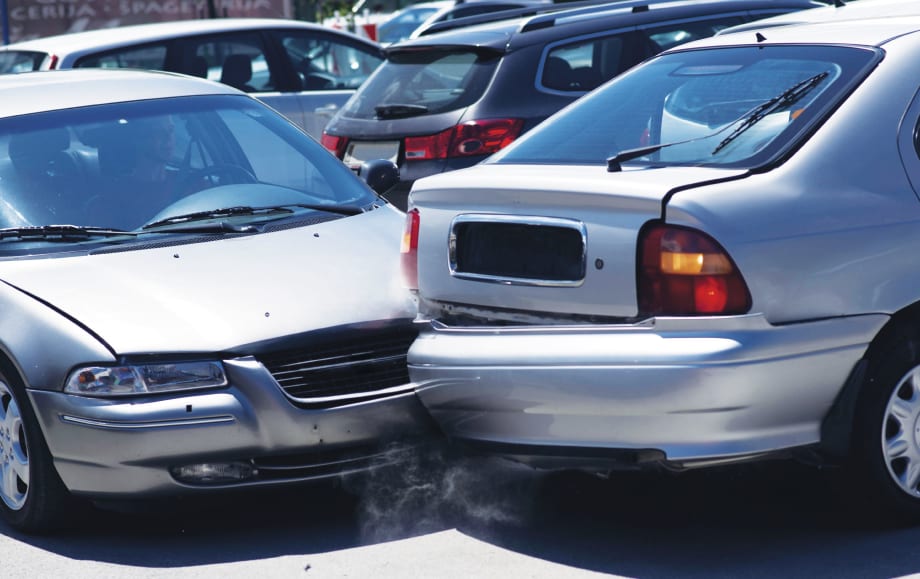
About 14 percent of all vehicle collisions that result in damage occur in parking lotsm according to the Insurance Institue for Highway Safety (IIHS). Photo via istock.com
3 min to read
About 14 percent of all vehicle collisions that result in damage occur in parking lotsm according to the Insurance Institue for Highway Safety (IIHS). Photo via istock.com
Parking can be a nerve-wracking experience for fleet drivers, and for good reason: About 14 percent of all vehicle collisions that result in damage occur in parking lots, according to the Insurance Institute for Highway Safety (IIHS).
It’s true that the increased prevalence of rear-view cameras in vehicles has made it easier for drivers to safely back out of parking spaces, and the National Highway Traffic Safety Administration (NHTSA) has mandated that all new automobiles include some type of rear-view camera by 2018. However, rear-view cameras alone are not 100-percent reliable when it comes to avoiding parking lot collisions.
Scanning the Surroundings
According to Art Liggio, president of Driving Dynamics, apart from rear-view cameras, it is crucial for drivers to be fully aware of their surroundings while driving in and out of parking lots due to all of the quick and unpredictable activity that can take place, such as vehicles backing out and pedestrians walking through the parking aisles.
“The best thing drivers can do, as they’re entering a parking lot, is to keep their eyes up, focus farther ahead, and let their peripheral vision assist them with the activities that are close by. This way, they can identify outside movement seconds earlier and adjust their driving accordingly,” Liggio said.
Another strategy Liggio recommended for avoiding parking lot crashes is finding parking areas where drivers can move up to the forward space if it is not occupied by another vehicle, and if the parking lot is straight and not angled. According to Liggio, Driving Dynamics trained the 800-driver fleet of a Florida-based public utility company to follow the “pull-through” parking method when possible. The result: A 96-percent reduction in the company’s accident rate for backing and parking over a 15-month period.
“It is the one of the simplest ways to avoid incidents in lots, especially for large vehicles, or utility vehicles or trucks, that do not have a useful mirror system set up,” Liggio noted.
In addition, Liggio suggested that drivers, if they have time to do so, try to find parking in sections of a lot where there are more spaces available and less competition for those spaces — specifically, the middle or rear of a parking lane instead of the front of the lane.
“It always amazes me that people so often circle around and around trying to find the closest spot to the building that they’re going to. That is where all the heavy congestion is,” he said.
Liggio recommended a number of other tips for backing out safely, including:
Doing a quick walk-around to make sure there are no obstructions near the vehicle.
Determining if people in the immediate area are getting in or out of their vehicles.
Honking the horn a couple of times when backing up.
Turning on emergency flashers if it is daytime, since back-up lights may not be as noticeable to other drivers.
Opening up the driver- and passenger-side windows to hear the nearby surroundings.
Liggio acknowledged that rear-view cameras are having a significant impact on reducing parking lot crashes, but added that they should be used in conjunction with traditional safe backing-up methods instead of as a replacement for those methods.
“People tend to become over-reliant on technology, and there are times where technology just cannot do the job. For example, you could have dirt on your sensors, or rainy weather or sun glare could affect the sensors,” Liggio said.
Ultimately, Liggio’s advice for avoiding parking-related crashes can be summarized in one simple phrase: “Do what you can to identify and be identified.”
Subscribe to Our Newsletter
More Safety

What’s Next for Fleet? Safety, AI & Industry Recognition | AF News Recap
Could your company's culture be encouraging distracted driving? This week, we're exploring how workplace expectations affect driver safety, what AI, EVs, and autonomous vehicles could mean for the future of fleet management, and how fleet professionals can strengthen their award nominations.
Read More →
Does Your Fleet's Culture Encourage Distracted Driving?
What happens when the people responsible for enforcing safety rules are the ones setting the wrong example? The answer may reveal why some of the biggest risks to fleet drivers have little to do with what's written in the employee handbook.
Read More →
Sponsored•October 1, 2026
Fleet Manager’s Ultimate Playbook: Navigating the New Standard in OEM Connectivity
Rising operating costs, driver safety concerns, and unplanned downtime are putting unprecedented pressure on modern fleets. Discover how fleet managers use embedded OEM connectivity and real-time vehicle data to cut TCO, prevent downtime, and protect drivers without aftermarket telematics hardware.
Read More →
From Driver Well-Being to EV Charging | AF News Recap
Mental health belongs in the fleet safety conversation. This week, we’re looking at five ways fleets can support employee well-being before a crisis, plus Holman’s expansion in Mexico, new one-day Fleet Forward passes, and why EV charging demand is outpacing infrastructure growth.
Read More →
Nexar-Nauto Merger Aims to Give Fleets Better Safety Intelligence Through Larger Driving Dataset
Stefan Heck tells Automotive Fleet that combining more than 10 billion miles of driving history with Nexar's AI models will give fleets deeper insights into driver risk and roadway conditions than either company could provide independently.
Read More →
Don't Wait for a Crisis: 5 Ways to Build Mental Health Into Your Fleet Safety Program
For Suicide Prevention Month, fleet and safety leaders have an opportunity to put mental health where it belongs: at the center of workplace safety.
Read More →
How Camera Data Can Strengthen a Fleet’s Insurance Renewal
Insights from a commercial insurance carrier and a broker show how fleets can turn video telematic data, driver coaching, and improved claims results into a stronger case at insurance renewal.
Read More →
The Safest Fleets Aren’t the Ones with the Most Technology
You’ve made the telematics investment. Here’s how to capture the other half of its value and build the safest fleet on the road.
Read More →
Sponsored•August 7, 2026
Hidden in Plain Sight: Fleet Compliance Risks
Fleet compliance isn't just about having policies — it's about consistently enforcing them. This practical guide reveals six hidden compliance risks common in public sector and shared fleet operations and outlines proven strategies to improve visibility, accountability, and audit readiness
Read More →
NETS Sets 2026 Fleet Safety Benchmark Conference for Indianapolis
The Sept. 15–17 program will feature fleet benchmarking data, case studies, emerging technologies, and implementation strategies while running alongside the NSC Safety Congress & Expo.
Read More →