




How to Avoid Mistakes in Upfitting Your Next Vehicle
Upfitting your vehicles can be a nightmare or a pleasure. Examining the possible problems before they occur can save you. Avoid the headaches and expense by listening to the experts.
If you have ever ordered a vehicle with an upfitted box, body, or hoist of some configuration or another, you realize what a unique situation you are in. All of a sudden you're in another world and seemingly have little or no control over your destiny.
You have stepped into the realm of the upfitter, a world where statements like "You want it when?" and "Not to worry" are commonplace. But it doesn't have to be that way. With the help of some of the experts in the field of boxes, bodies, and other goodies, we're going to show you ways to avoid some of the pitfalls of ordering truck bodies and related equipment.
Earl Maag, national leasing and fleet manager for Adrian Steel in Adrian, MI, said, "Fleet managers have more options than before; however, circumstances usually dictate the right way to go. Vehicle availability, how the vehicle is procured, the time of the model-year, and your own sense of urgency dictate how you should proceed, and in some instances, what you should realistically expect with reference to delivery time." The body upfitter is not trying to test your resolve by seeing how long you can wait to receive your completed vehicle, but consider these points:
Did you plan on securing the chassis for your upfitted unit from a body company's bailment pool? If you did order under that premise, you should get your completed vehicle much sooner than poor old Joe who ordered his through a fleet management company, directly from the manufacturer. One kicker, though, Joe may have received a different fleet incentive than you and probably ordered the chassis exactly as he wanted it, instead of having to accept whatever the bailment pool had to offer at that time.
You might also want to consider the time of year you're placing your order. Placing your orders early in the model-year can really help, but if you slip up and wait until later in the model-year to place your orders, you face the possibility of delays in build due to large numbers of orders ahead of you, depleted vehicle inventory, and component shortages such as engines, transmissions, or accessories. "Timing can be everything," Maag said.
There is another area that can definitely affect when, where, and with whom you place your order. That is the priority you place on the quality of the product and workmanship, turnaround time, and of course, cost. All of these must be considered and, practically speaking, it's not likely you can have the best of all three.
Roger Hess, president of Marathon Industries Inc. of Santa Clarita, CA, said, "Customers that are not really sure of what they want and don't take the time and opportunity to have a salesperson assist them will usually experience delays in production. This can be due to incorrect measurements, improper designation of exactly what product the customer wants, and last-minute dickering over pricing.
"Proper planning in advance can alleviate the majority of problems and make the purchase and delivery process as painless as possible," added Hess.
Hess feels that, as far as problems from the manufacturers' perspective are concerned, next to customer satisfaction and aftermarket service, the primary challenge seems to be how to offer low and competitive pricing and still provide a quality product.
Another problem that can affect virtually all upfit vendors is the delayed or canceled delivery of chassis that are required for the upfit. As mentioned earlier, timely ordering of required chassis can eliminate the majority of your upfit problems. Vehicle manufacturers are not always able to predict the reception their products will receive on the open market and, in some cases, greatly underestimate sales, thus directly affecting the delivery of ordered vehicles. Early and planned ordering is the fleet manager's best defense.
In some instances, bodies and other upfitted equipment such as hoists, high lift beds, or bucket lifts can be refurbished and re-used, eliminating the need for a completely new unit. This is a sound business practice, but as with everything else involved with vehicle order and upfit, it should be completely thought through. You must ensure that a replacement chassis ordered to replace the one for a refurbished/rebuilt box, body, or hoist, is the proper one for that application. You can make as many, if not more, mistakes when retrofitting and refurbishing equipment as you can when ordering new.
More Operations

How Fleets Can Recruit and Train Veterans for Technician Roles
Here's how the technician shortage has affected uptime for fleets, and what to do about it.
Read More →
Avis Budget Group Deploys Neology Toll Management Technology Across Major Brands
Neology’s neoFleet platform will manage toll transactions and toll-authority operations for vehicles across Avis, Budget, Payless, Budget Truck and Zipcar.
Read More →
Fleet Personal-Use Charges Edge Higher in 2026
Nearly eight in 10 surveyed fleets allow personal use of company vehicles, while just over half of respondents report charging employees for the privilege.
Read More →
The Future of Fleet + What’s Changing Right Now | AF News Recap
Could developments overseas offer a preview of what’s coming for U.S. fleets? This week, we’re looking at the future of AI, autonomy, and electrification, plus Ford Pro’s new certified pre-owned program, smarter vehicle offboarding, and a new way for fleets to manage toll expenses.
Read More →
How to Handle Vehicle Offboarding
What do fleet managers need to do when a driver leaves?
Read More →
Fleet Manager’s Ultimate Playbook: Navigating the New Standard in OEM Connectivity
Rising operating costs, driver safety concerns, and unplanned downtime are putting unprecedented pressure on modern fleets. Discover how fleet managers use embedded OEM connectivity and real-time vehicle data to cut TCO, prevent downtime, and protect drivers without aftermarket telematics hardware.
Read More →
U.S. Bank Adds Verra Mobility Toll Management to Voyager Fleet Platform
The integration allows U.S. Bank Voyager fleet customers to manage toll payments and violations alongside fuel, EV charging and maintenance expenses.
Read More →
ADAS Prevents Crashes. But Repairs Cost More | AF News Recap
ADAS-equipped vehicles may crash less often, but they can cost more when they do. This week, we’re breaking down what that tradeoff means for fleets, plus Subaru’s first Forester Wilderness Hybrid, Nissan’s new e-POWER Rogue, and why Calstart has become Catalyst Mobility.
Read More →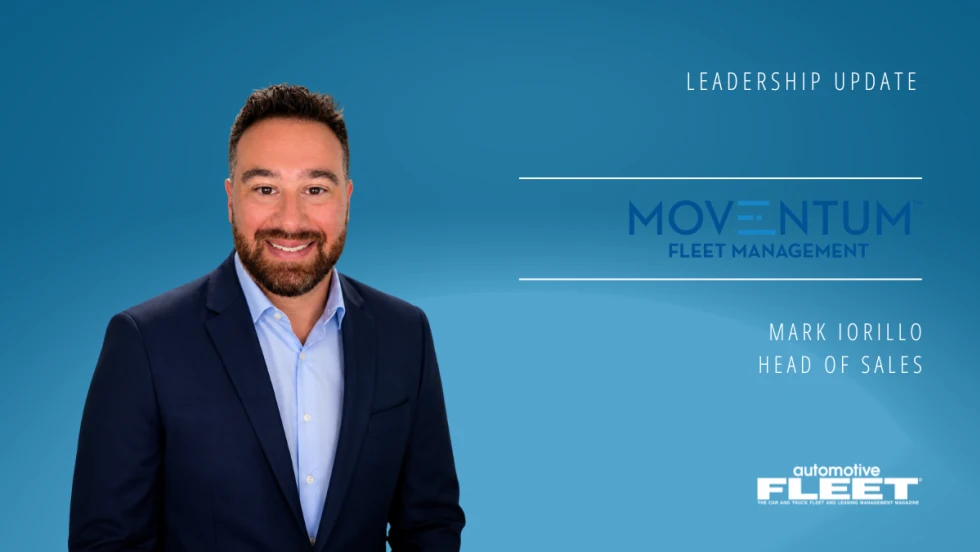
Moventum Fleet Management Names Mark Iorillo Head of Sales
Iorillo brings nearly 20 years of fleet management and sales experience to the role, including previous positions at Element Fleet Management, CEI, Donlen and Ryder.
Read More →
Fleet Has a Talent Pipeline Problem. What Comes Next? | AF News Recap
Where will fleet’s next generation of leaders come from? This week, we’re looking at the industry’s talent pipeline, what certification can add to a fleet career, how to build an award-worthy track record, and the return of Automotive Fleet’s Personal Use Survey.
Read More →